
Dique Luján, Tigre, Buenos Aires, Argentina
2018
Private Residence
Total Area: 100 m²
Project designed and developed at FRAM Arquitectos by David Aliberti, Architectural Designer – Project Team Member.
2018
Private Residence
Total Area: 100 m²
Project designed and developed at FRAM Arquitectos by David Aliberti, Architectural Designer – Project Team Member.
MEMORY:
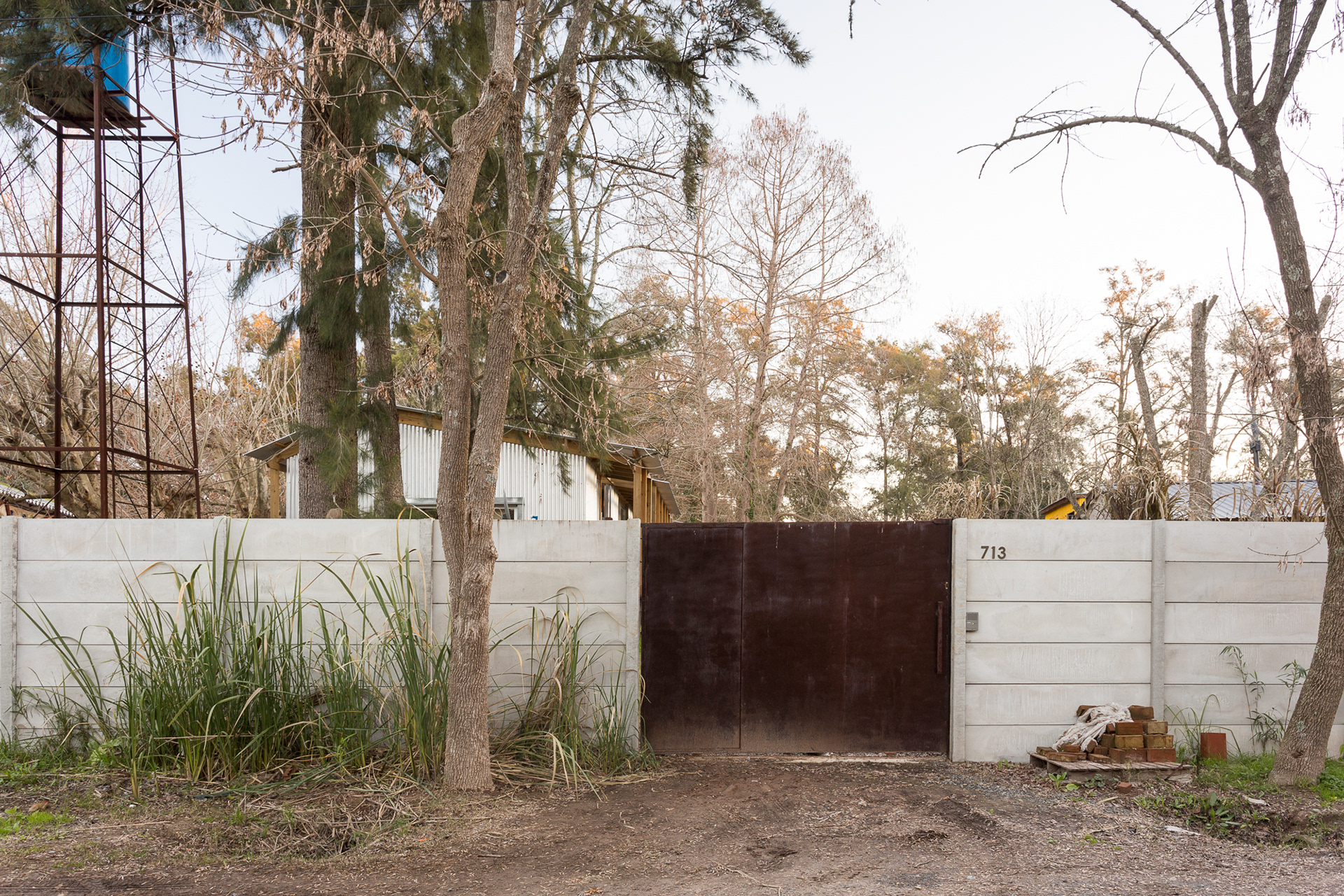
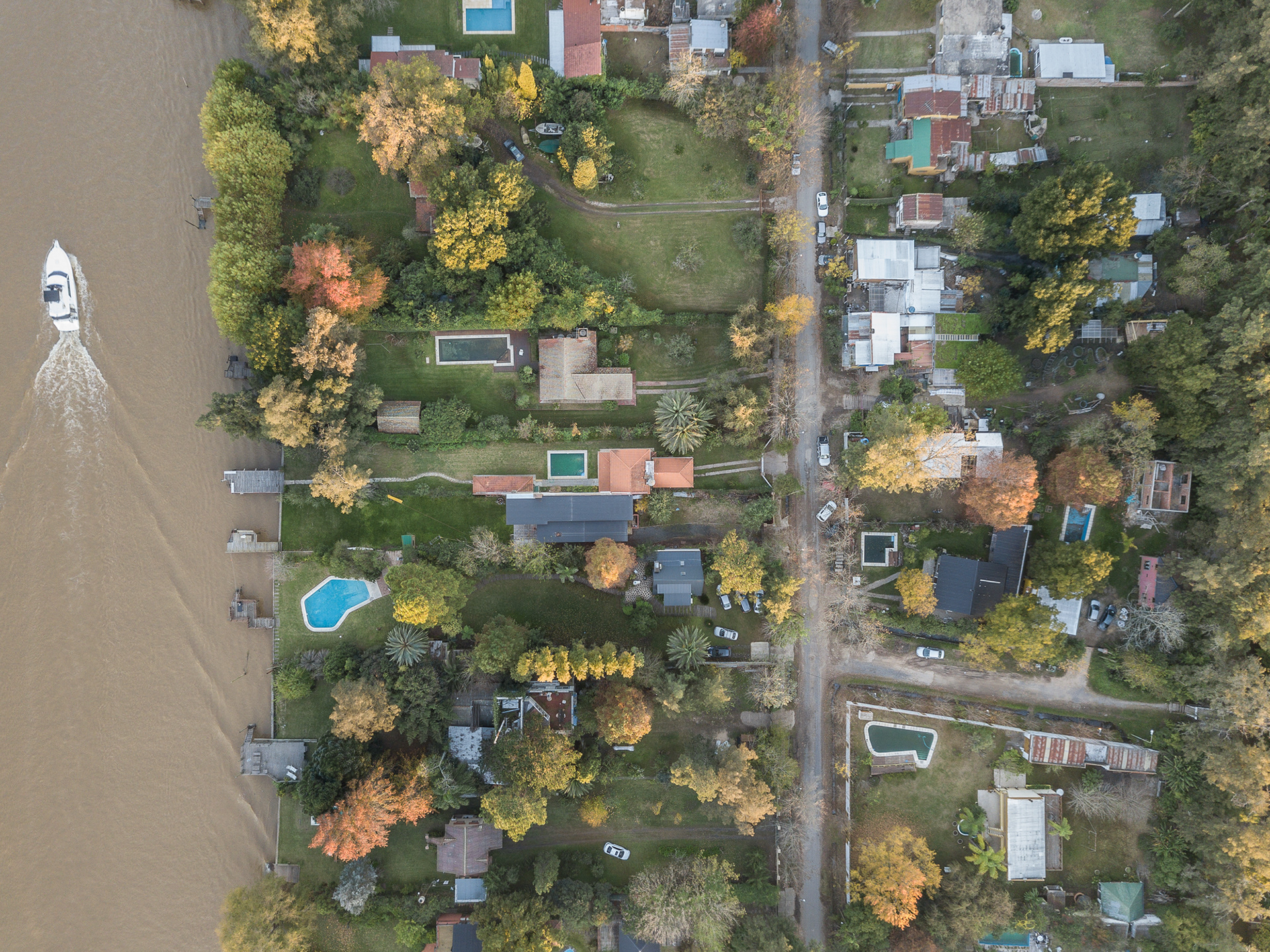
Dique Luján is a small town in the Province of Buenos Aires, located within the Delta region and characterized by low-lying land surrounded by large bodies of water. This particular geography fosters abundant vegetation and a humid, almost tropical environment, shaping what is commonly referred to as the “Delta Architecture.” These environmental conditions established the conceptual framework of the project and its dialogue with the natural context.
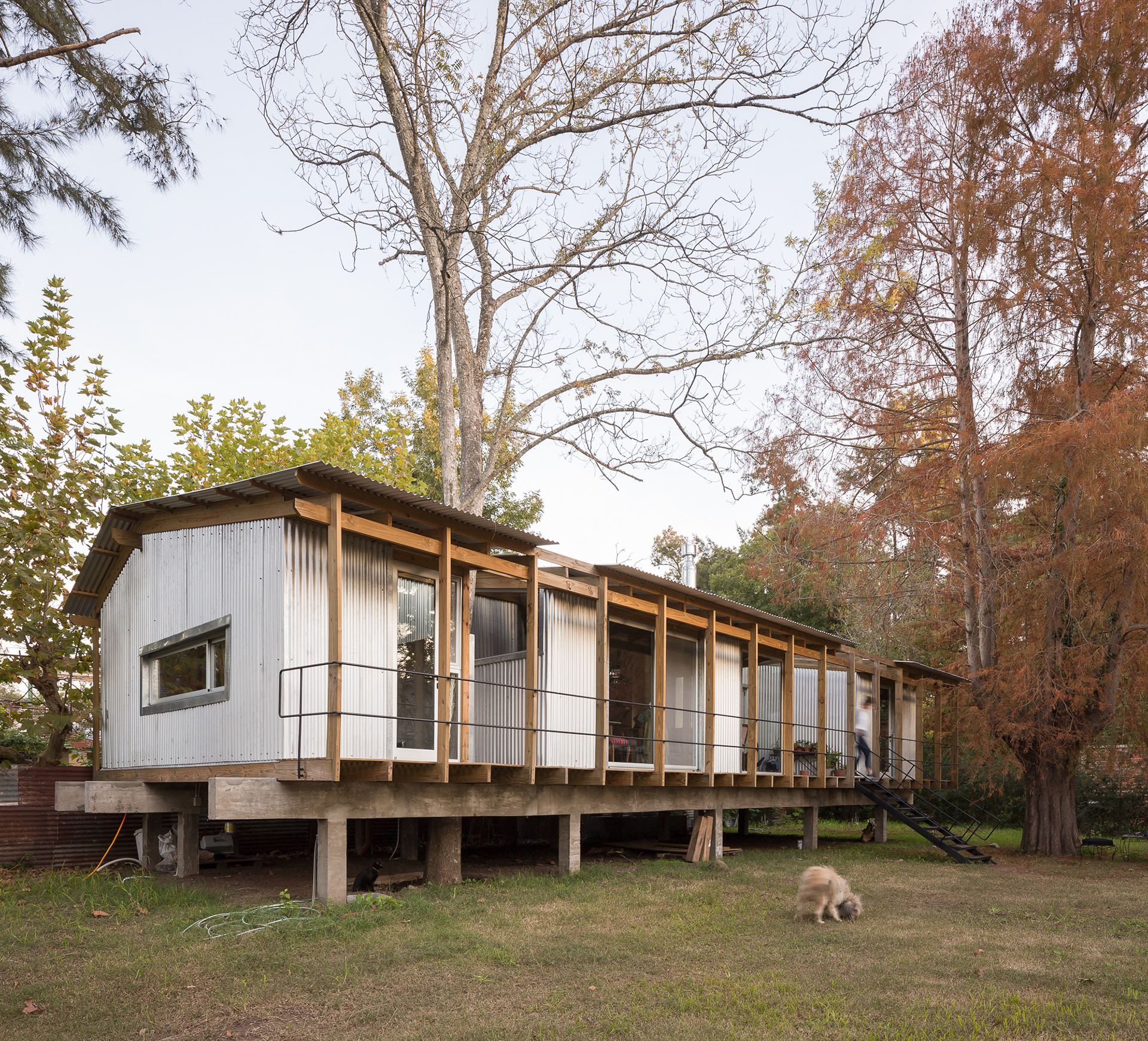
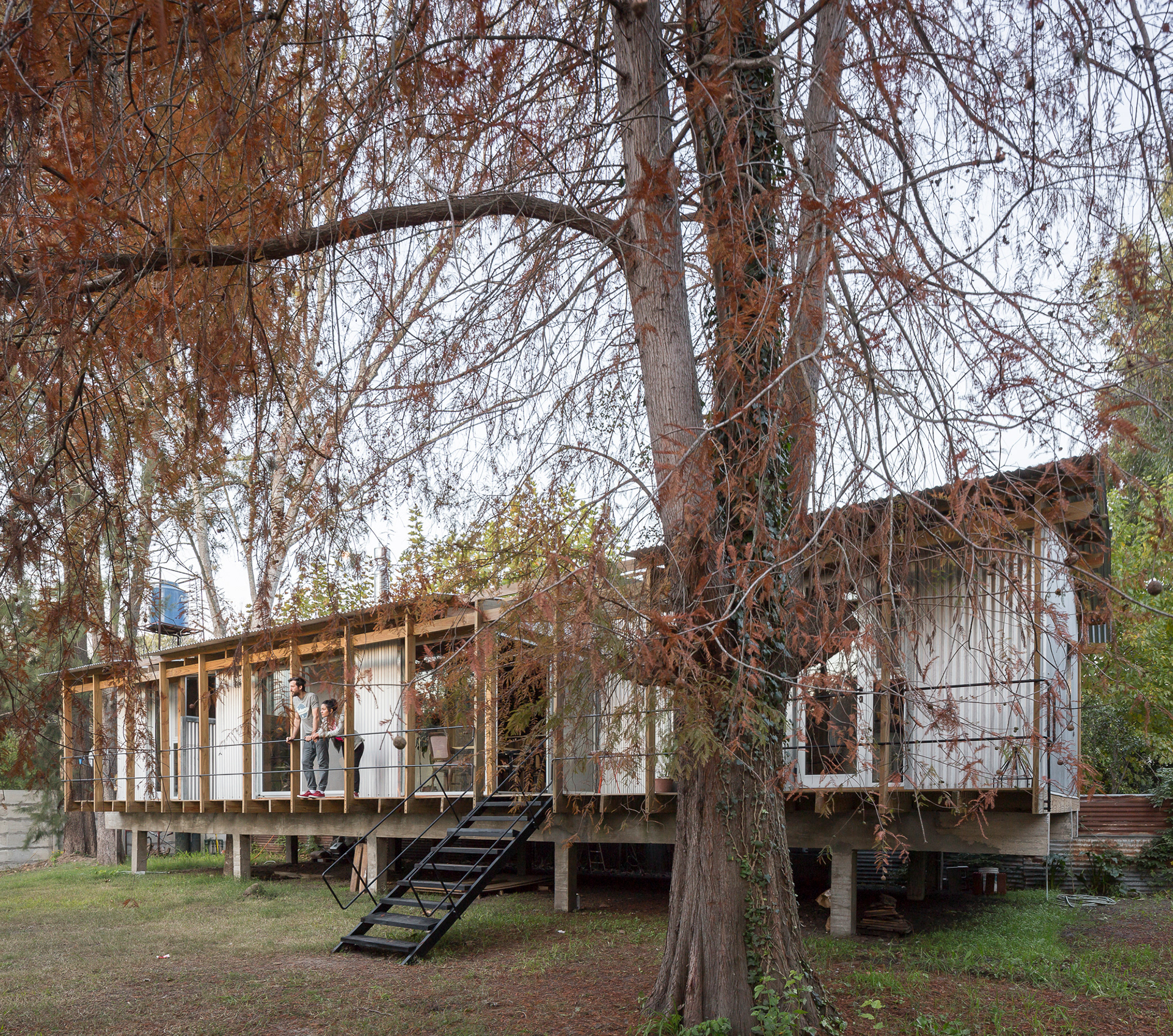
The plot is defined by its proximity to the Luján River—whose water level rises sporadically, reaching flood peaks of up to one meter above ground level—and by the presence of mature trees, including a pecan walnut and a bald cypress typical of the Paraná Delta. These factors guided the siting strategy, integrating existing vegetation and elevating the inhabitable floor above flood level, a condition directly linked to the region’s traditional construction logic.
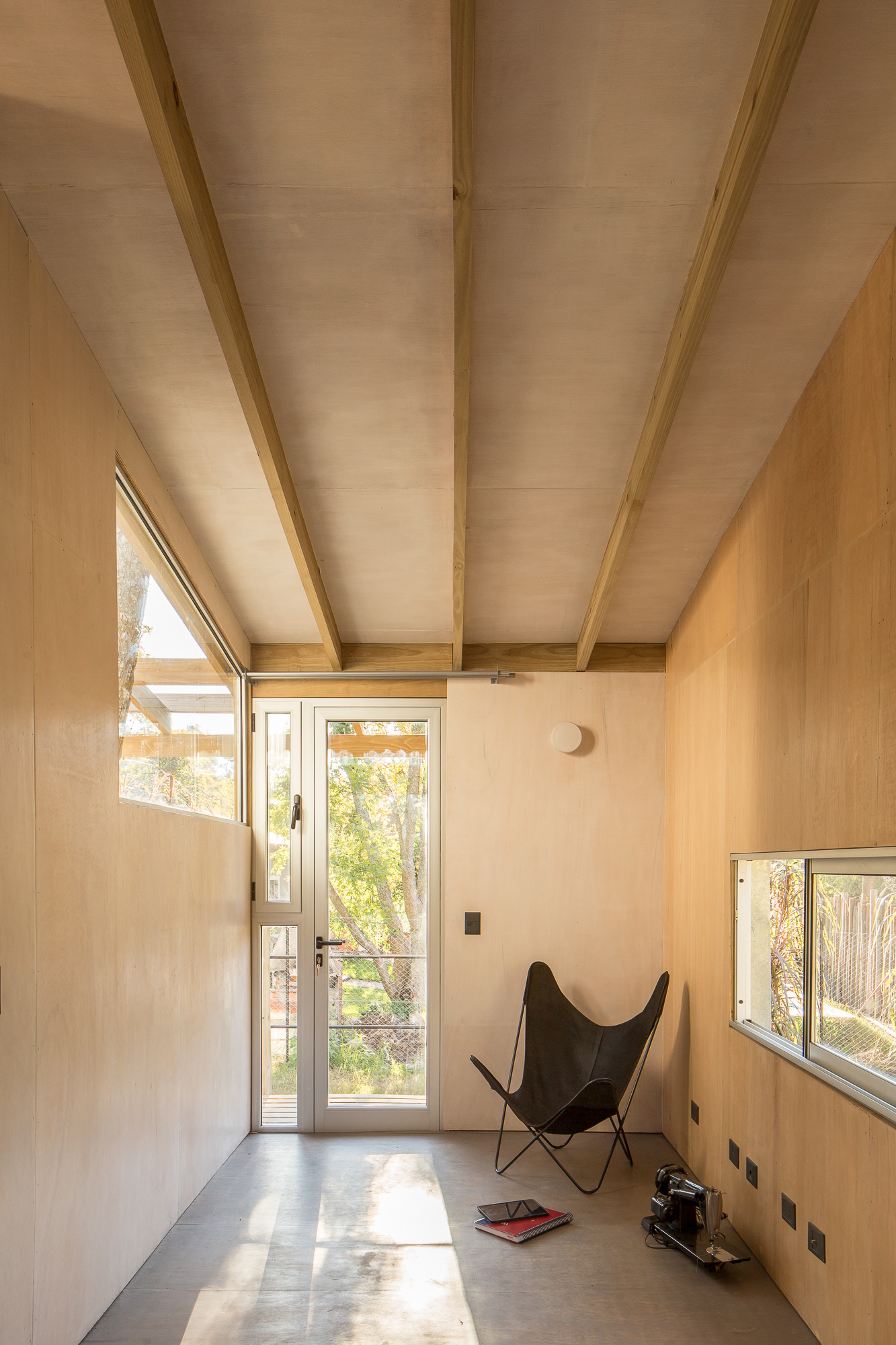
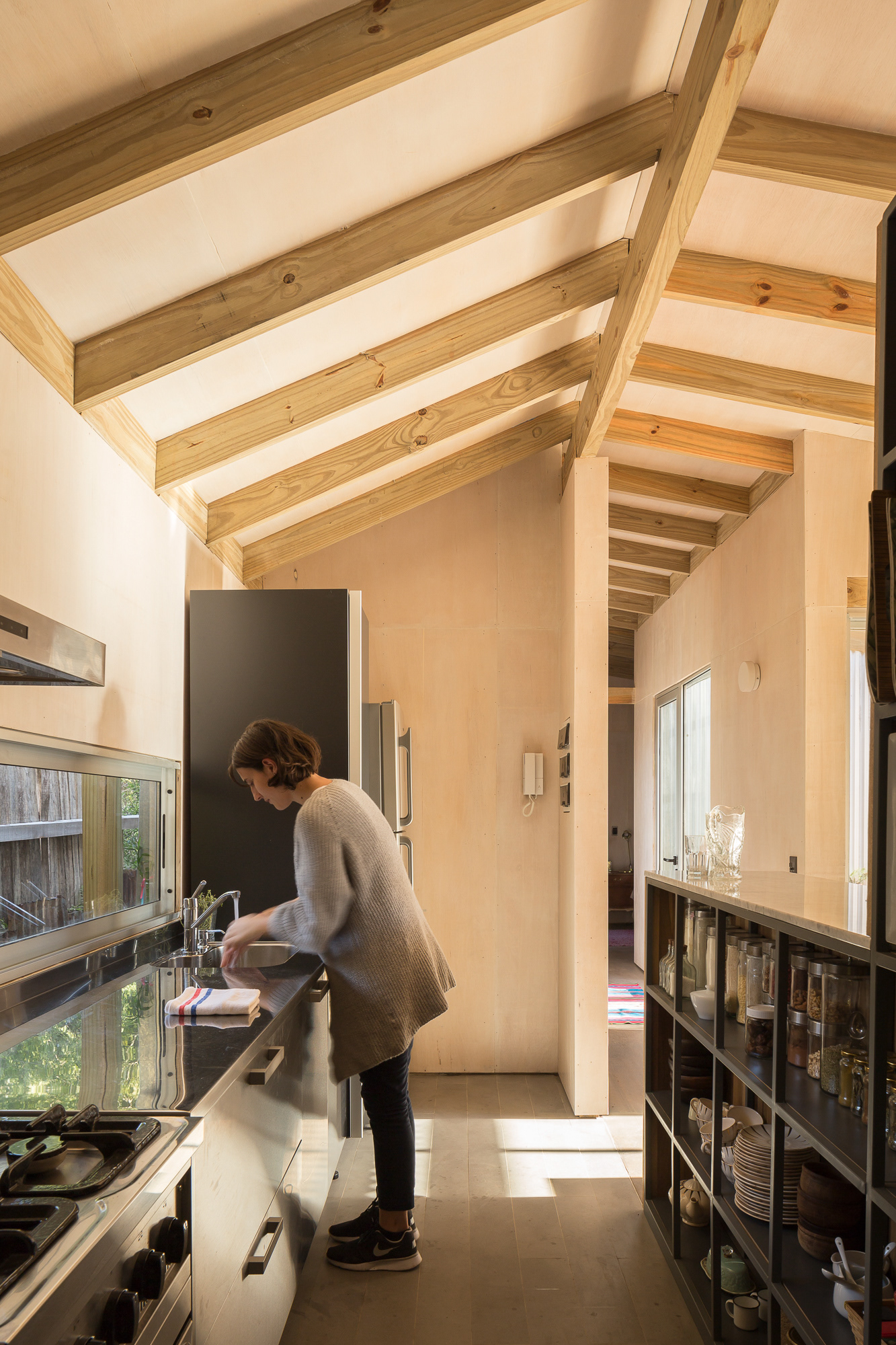
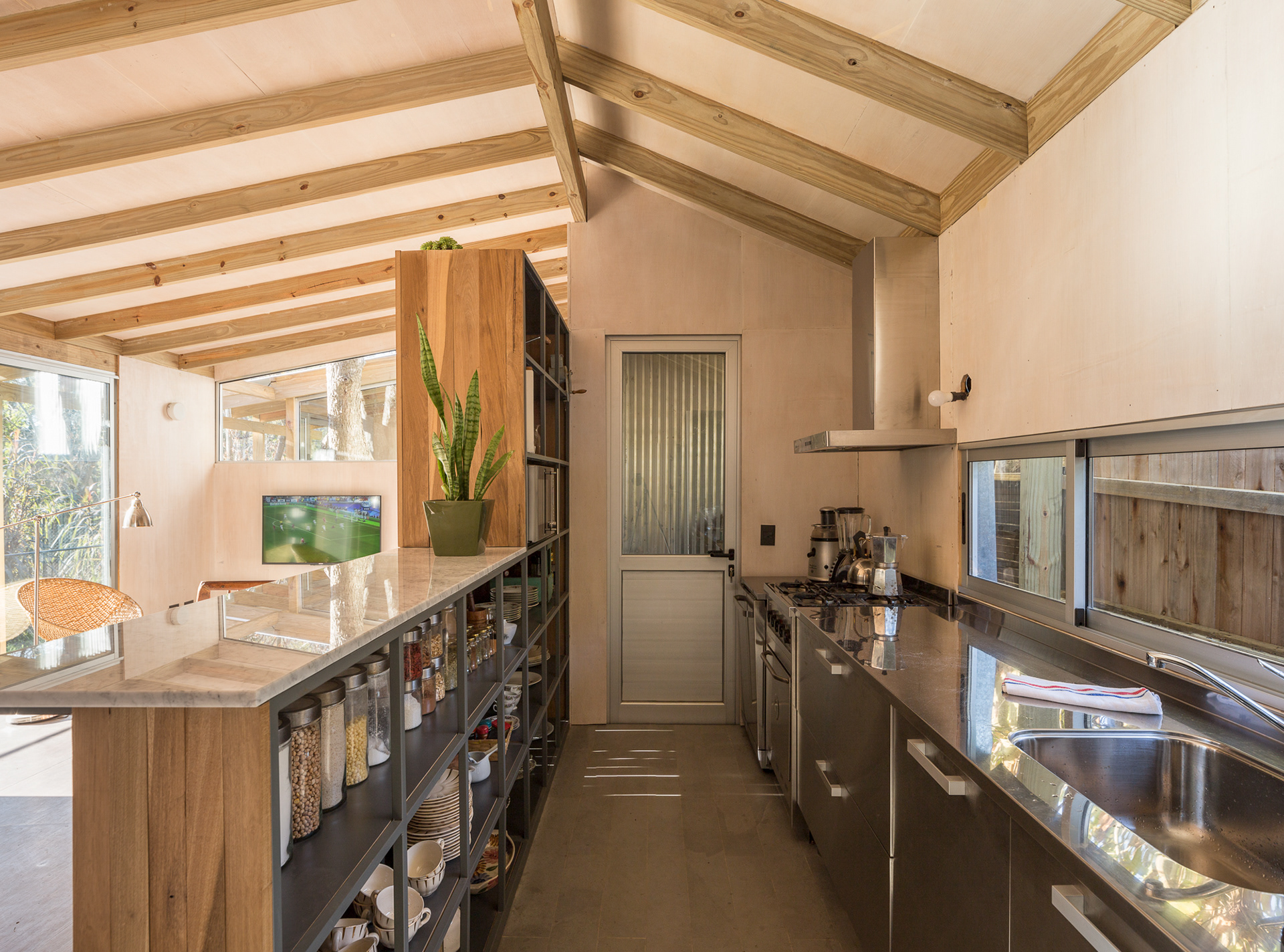
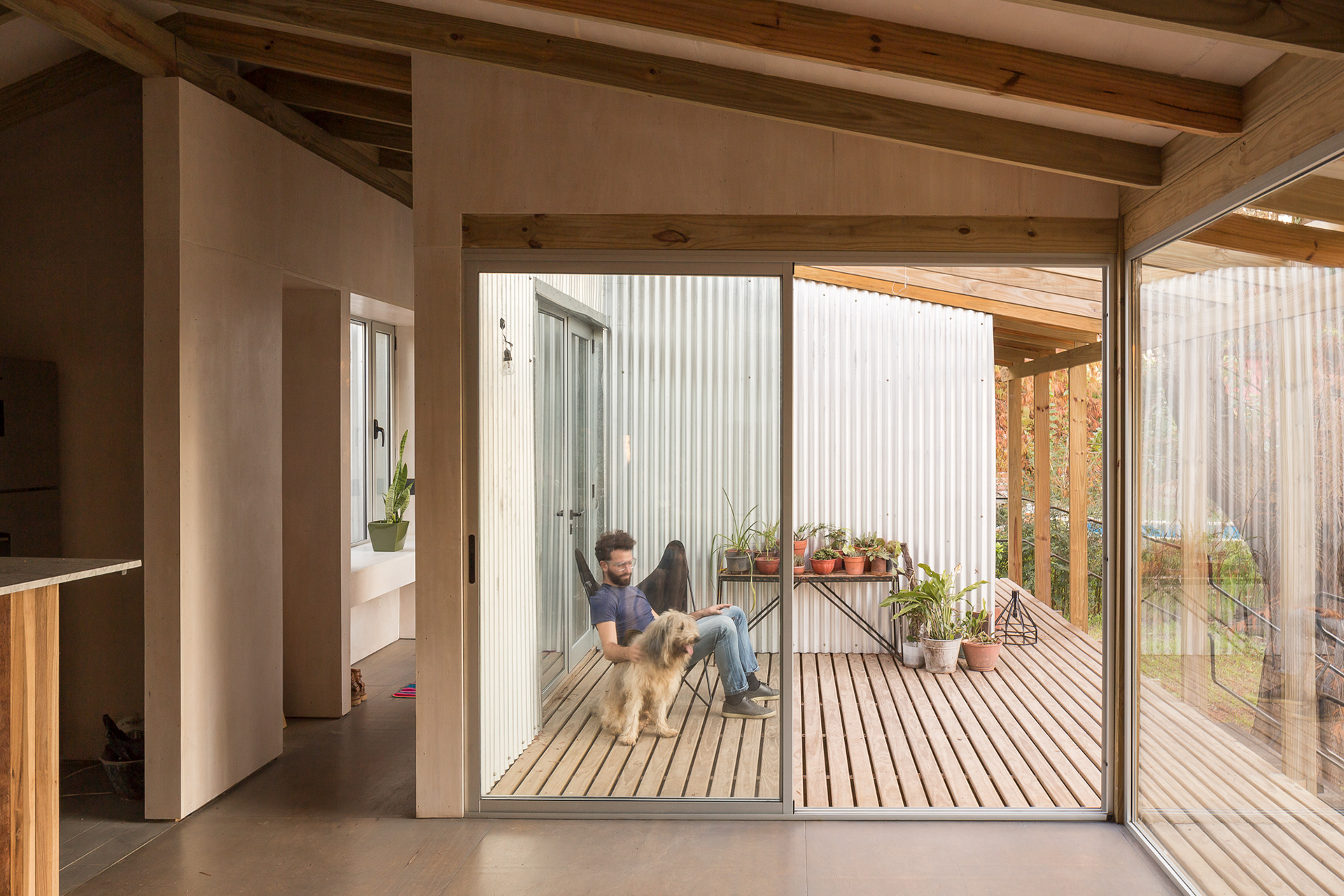
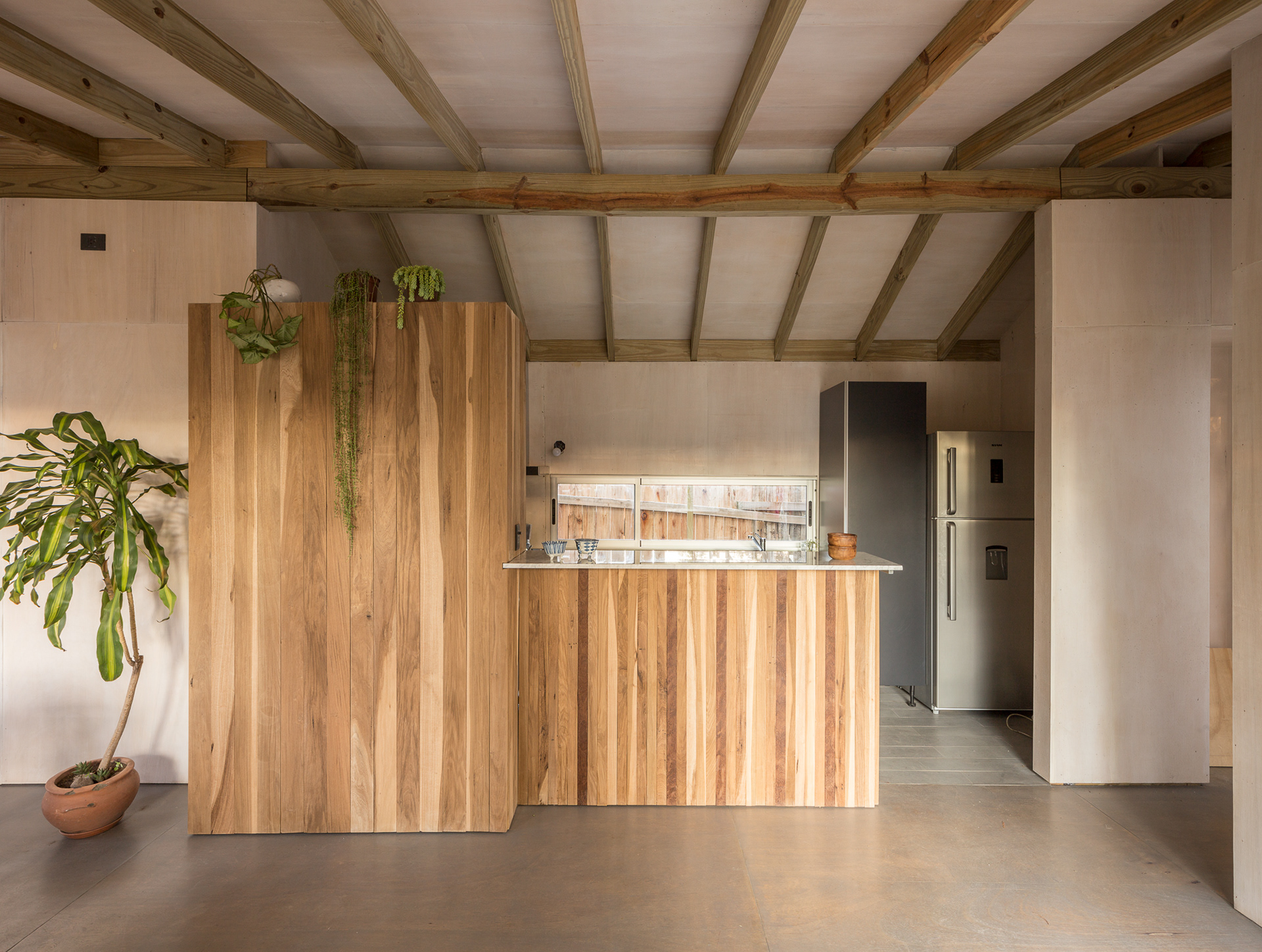
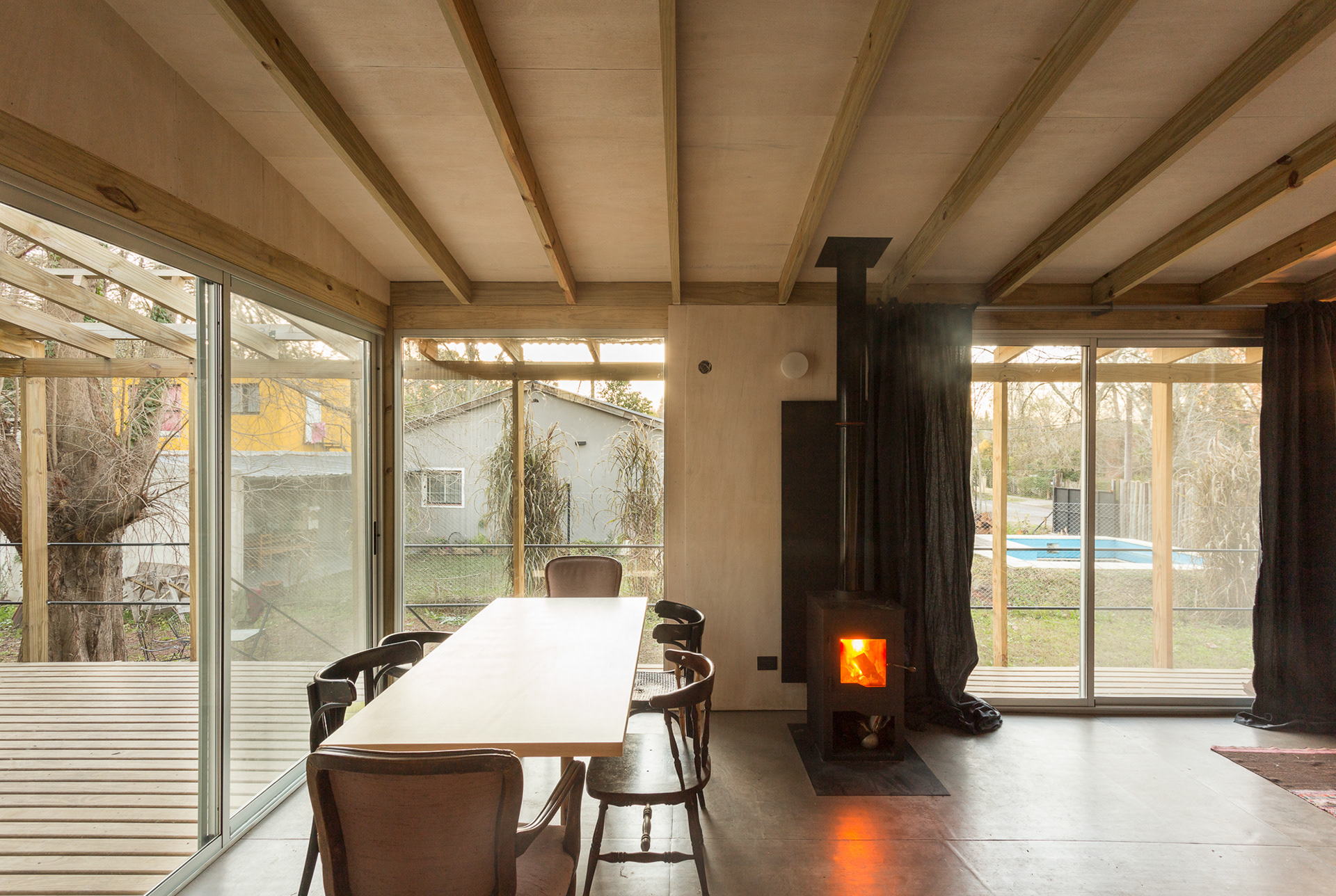
The house is arranged longitudinally along the southern edge of the plot, freeing the largest area of land toward favorable orientations. Service spaces are positioned along the southern boundary, while the main living areas open toward the garden. A longitudinal circulation axis organizes storage, distribution, and access, acting as a threshold between spaces of different scales and coinciding with the roof ridge. This decision generates an asymmetrical section, expressed through sloped roof planes designed for free water runoff beneath deciduous tree canopies.
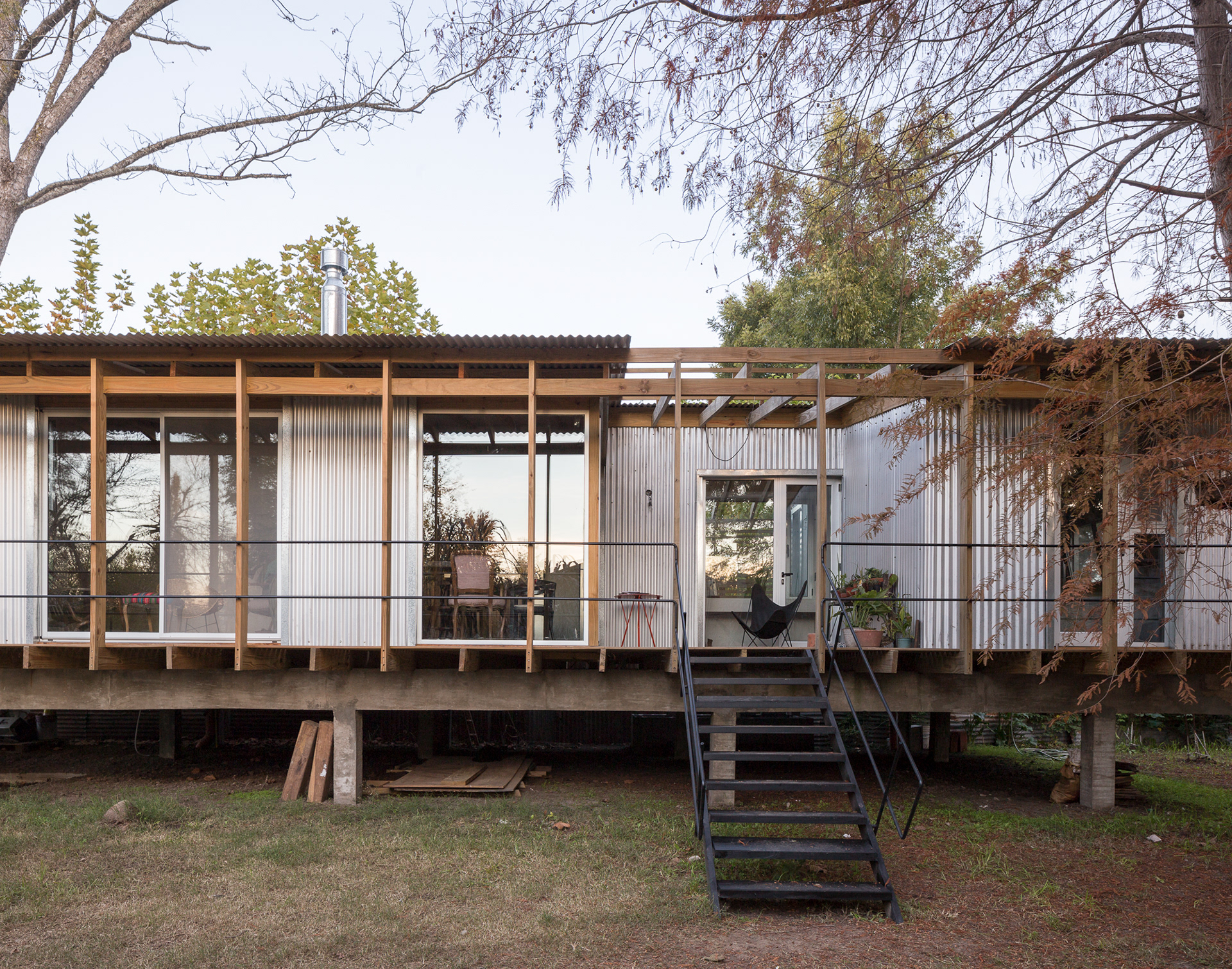
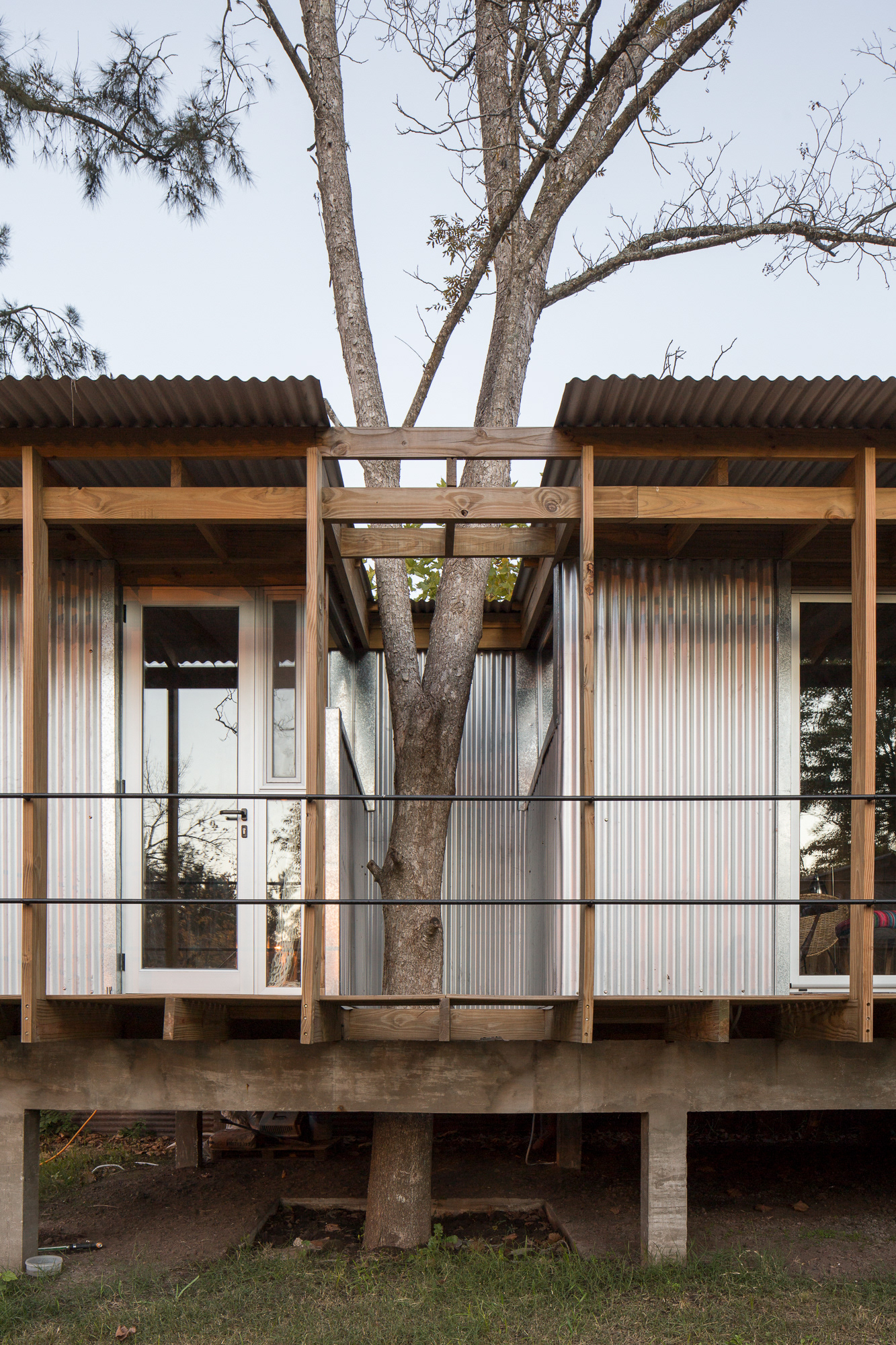
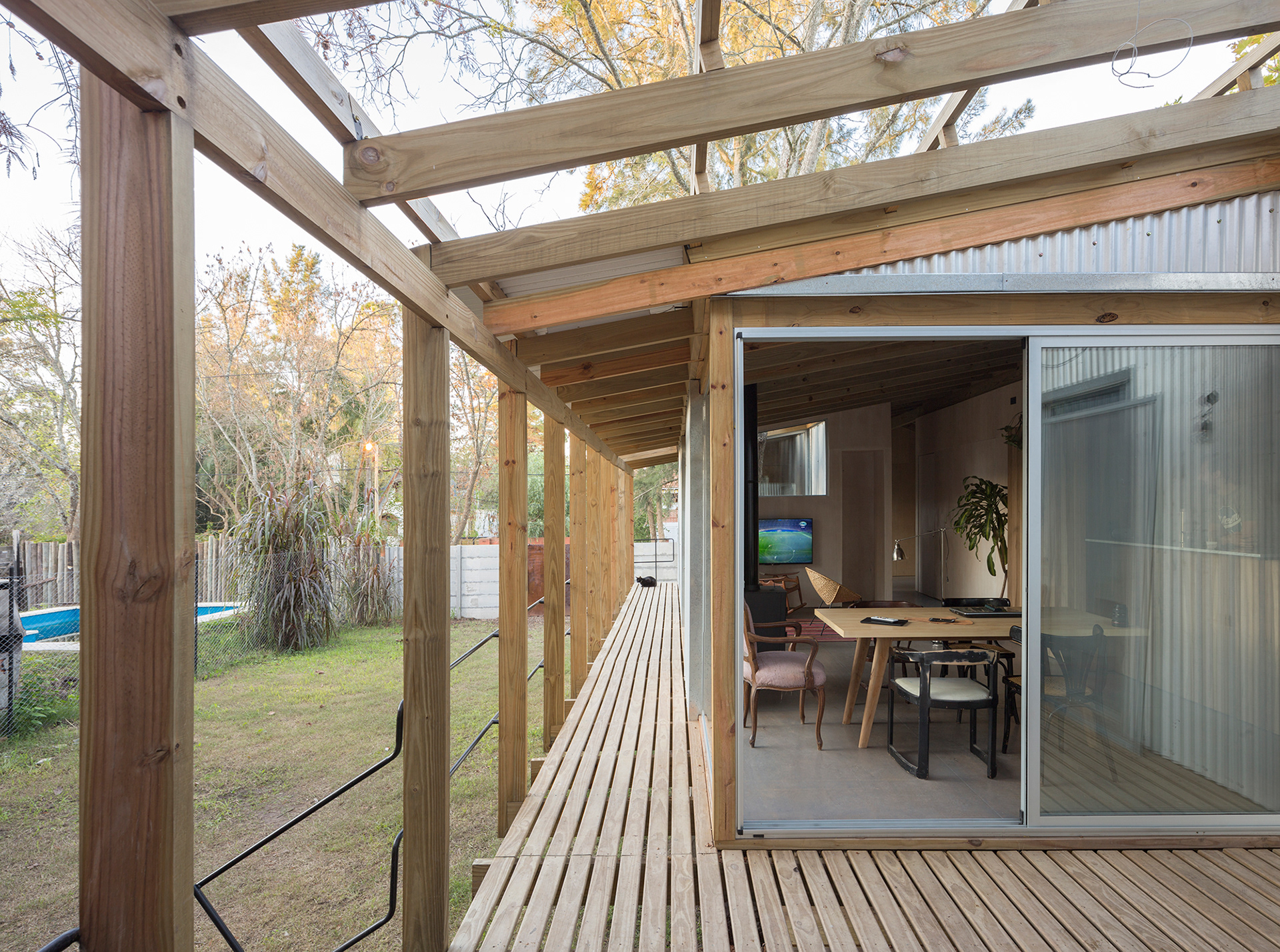
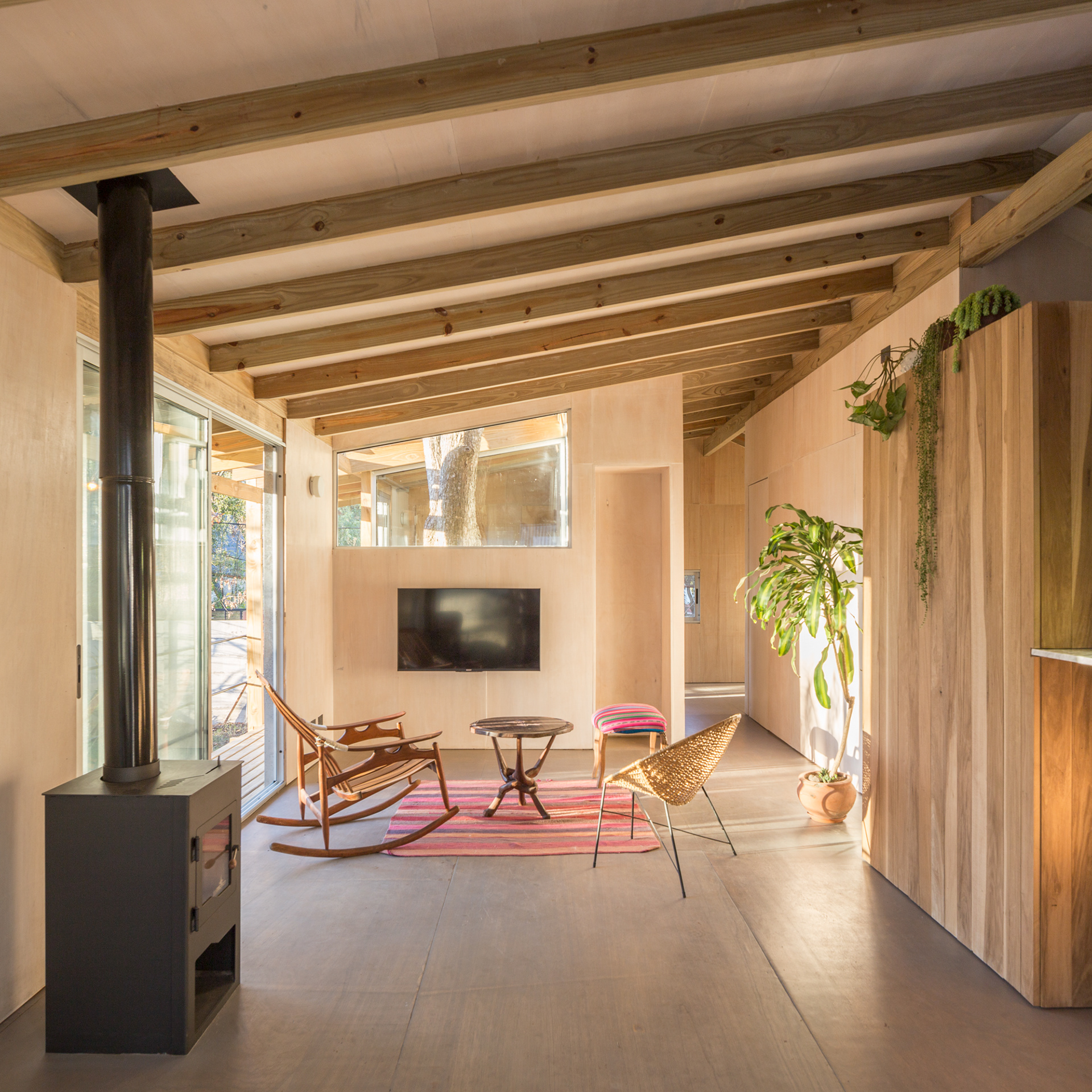
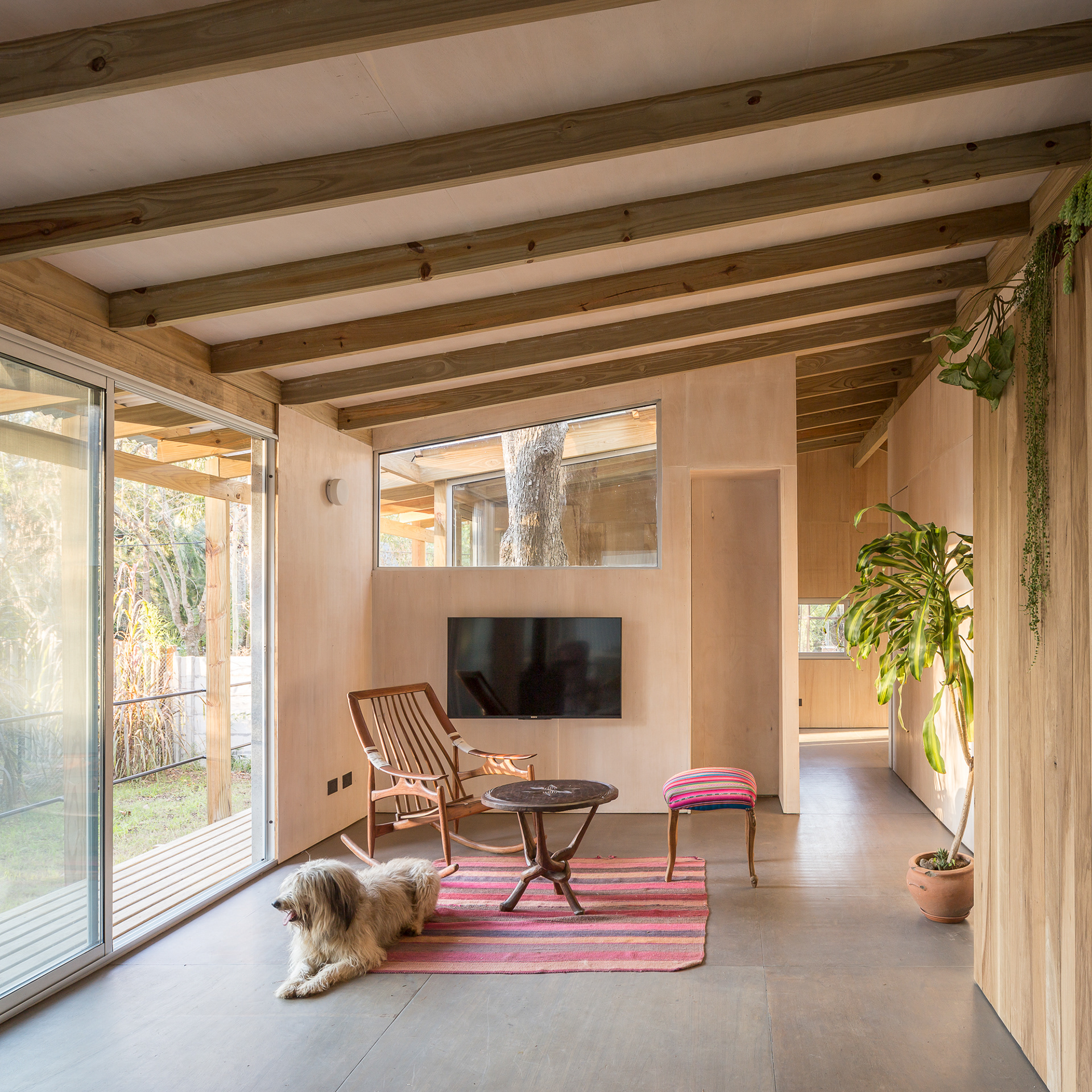
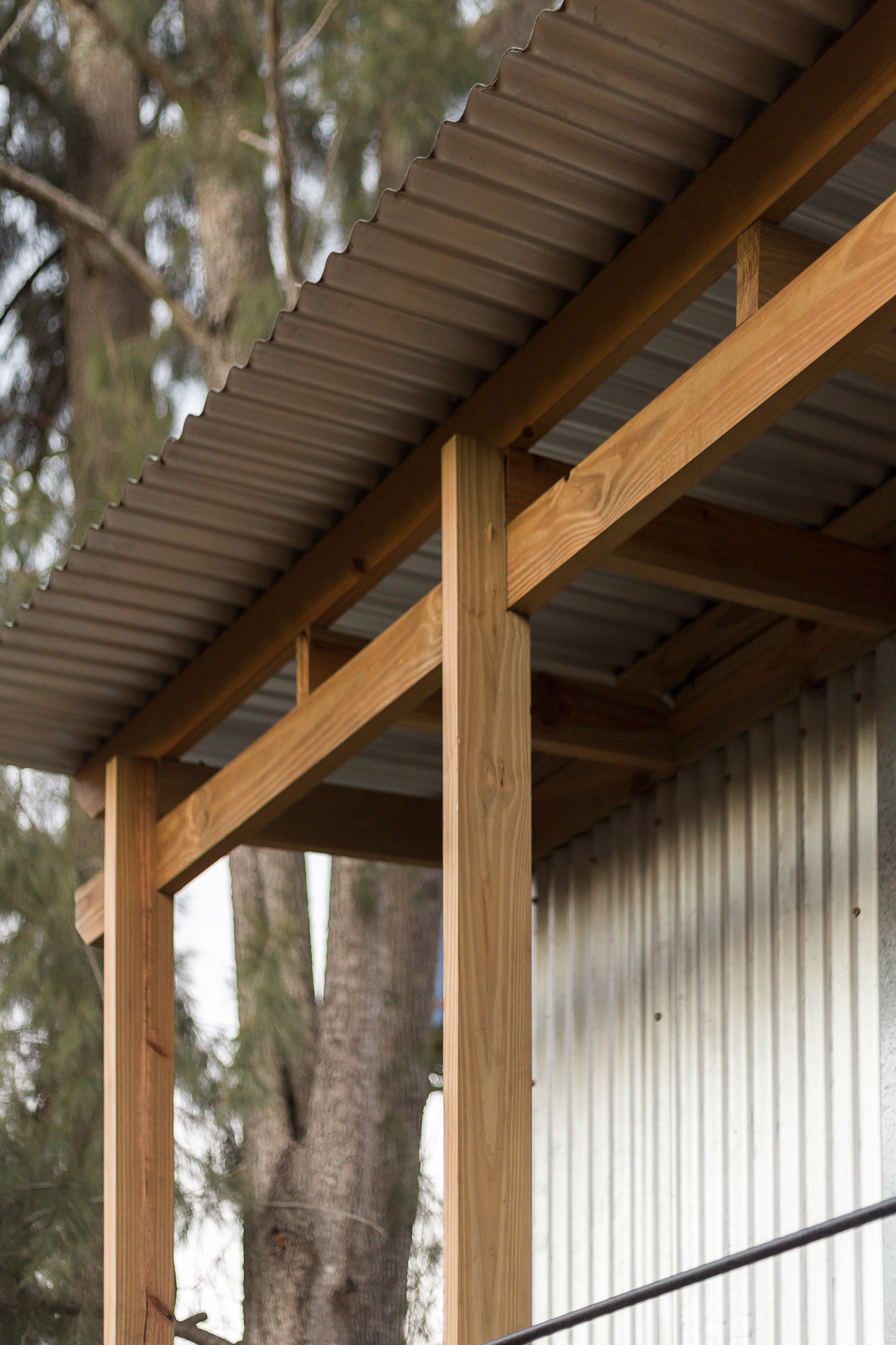
Three patios interrupt the roof continuity, introducing light, air, and spatial pauses. The largest marks the arrival from ground level and functions as an exterior expansion space. The “Walnut Patio” preserves the existing tree, incorporating it into the interior landscape, while a final void adjacent to the entrance hall filters visual relationships with neighboring plots. A continuous gallery runs along the front of the house, reinforcing its connection to local island architecture.
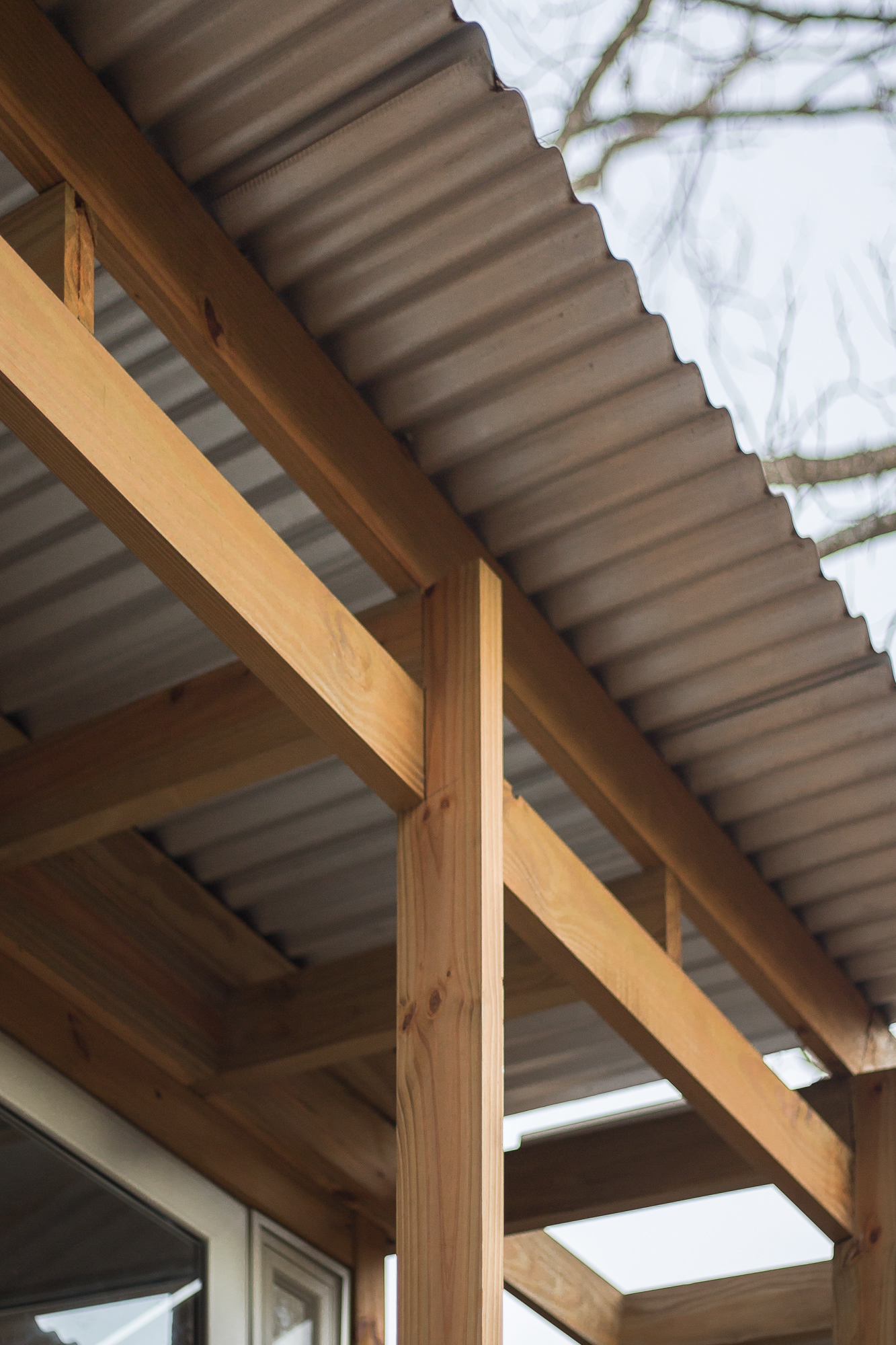
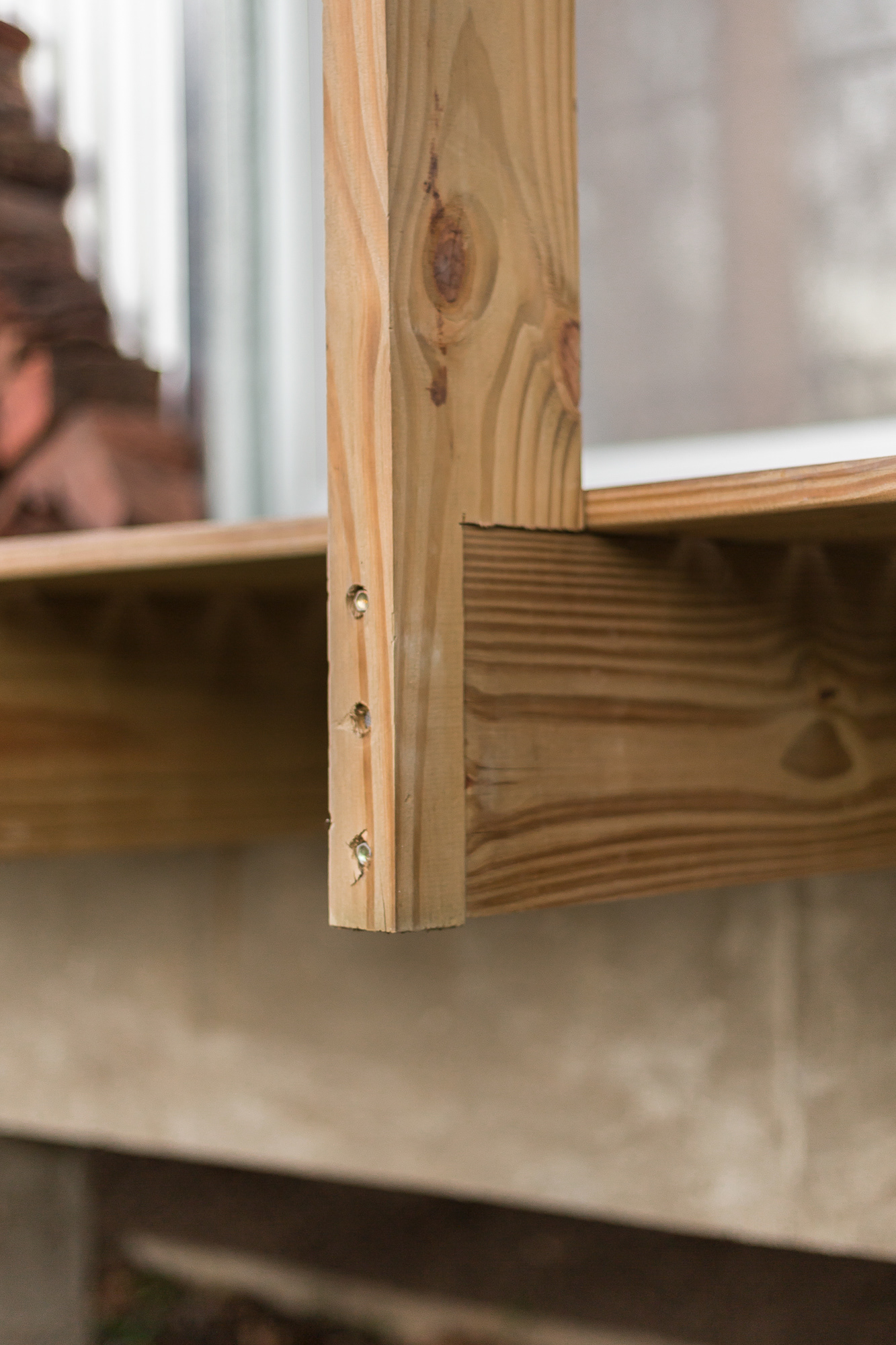
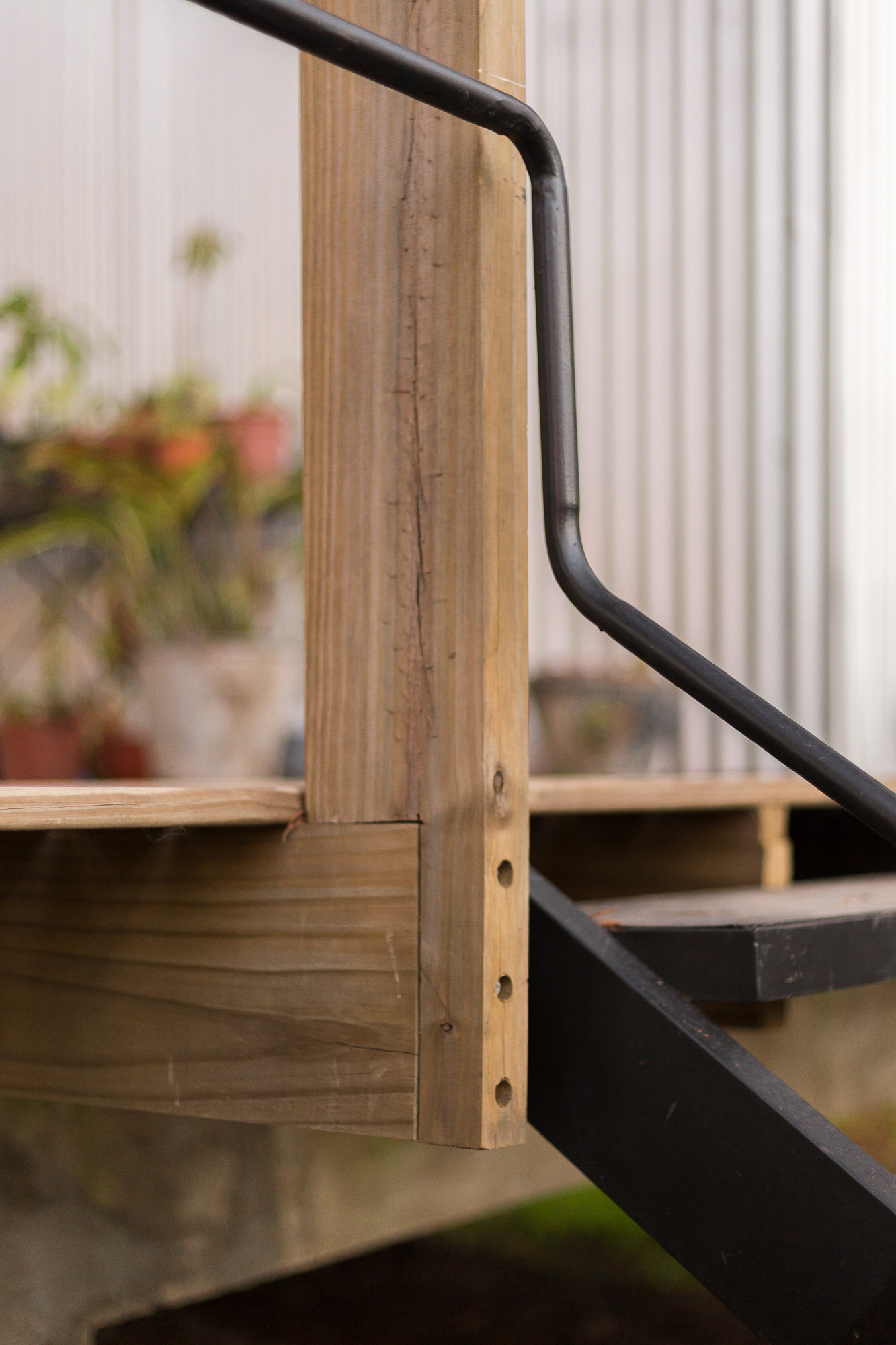
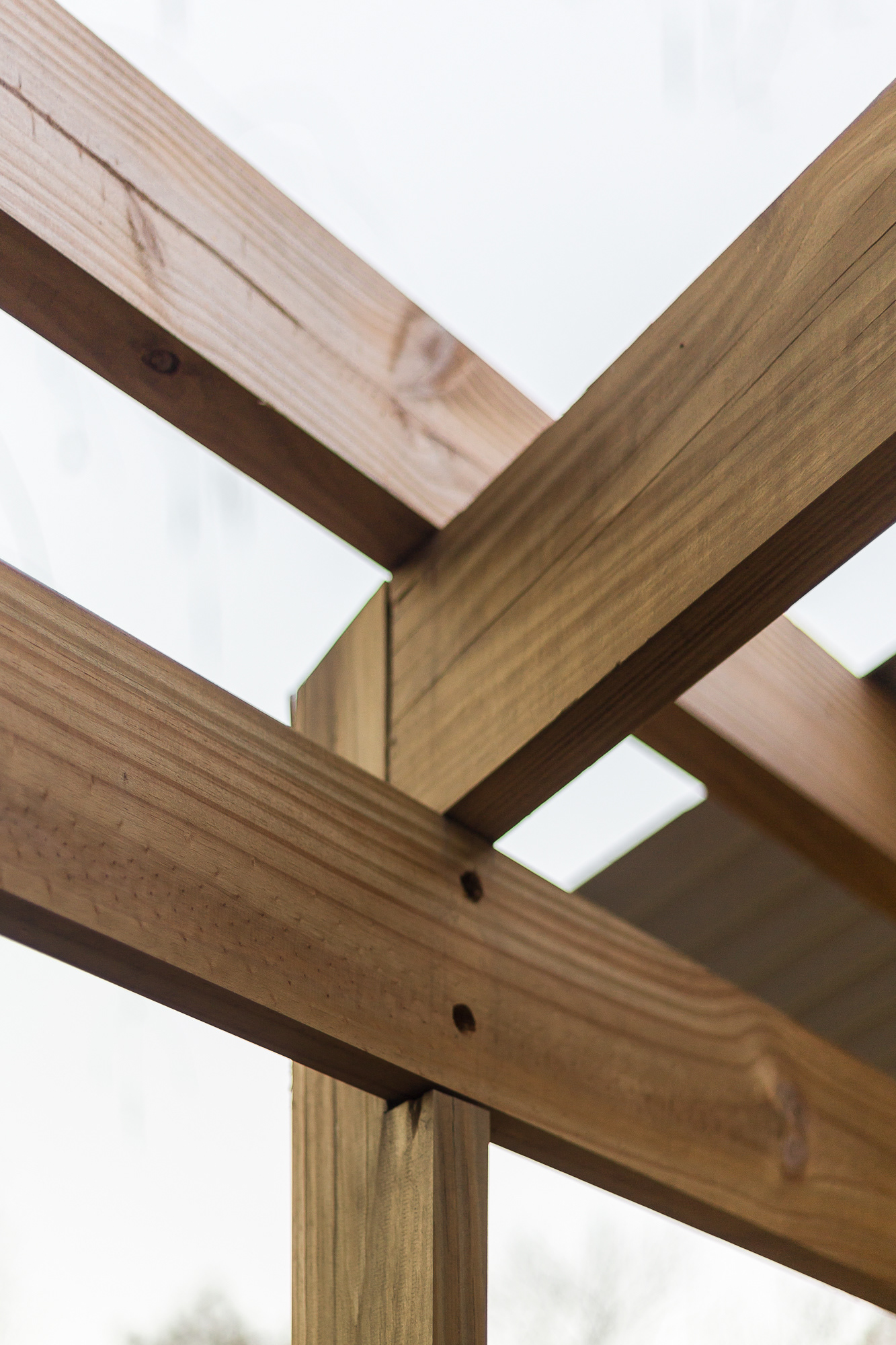
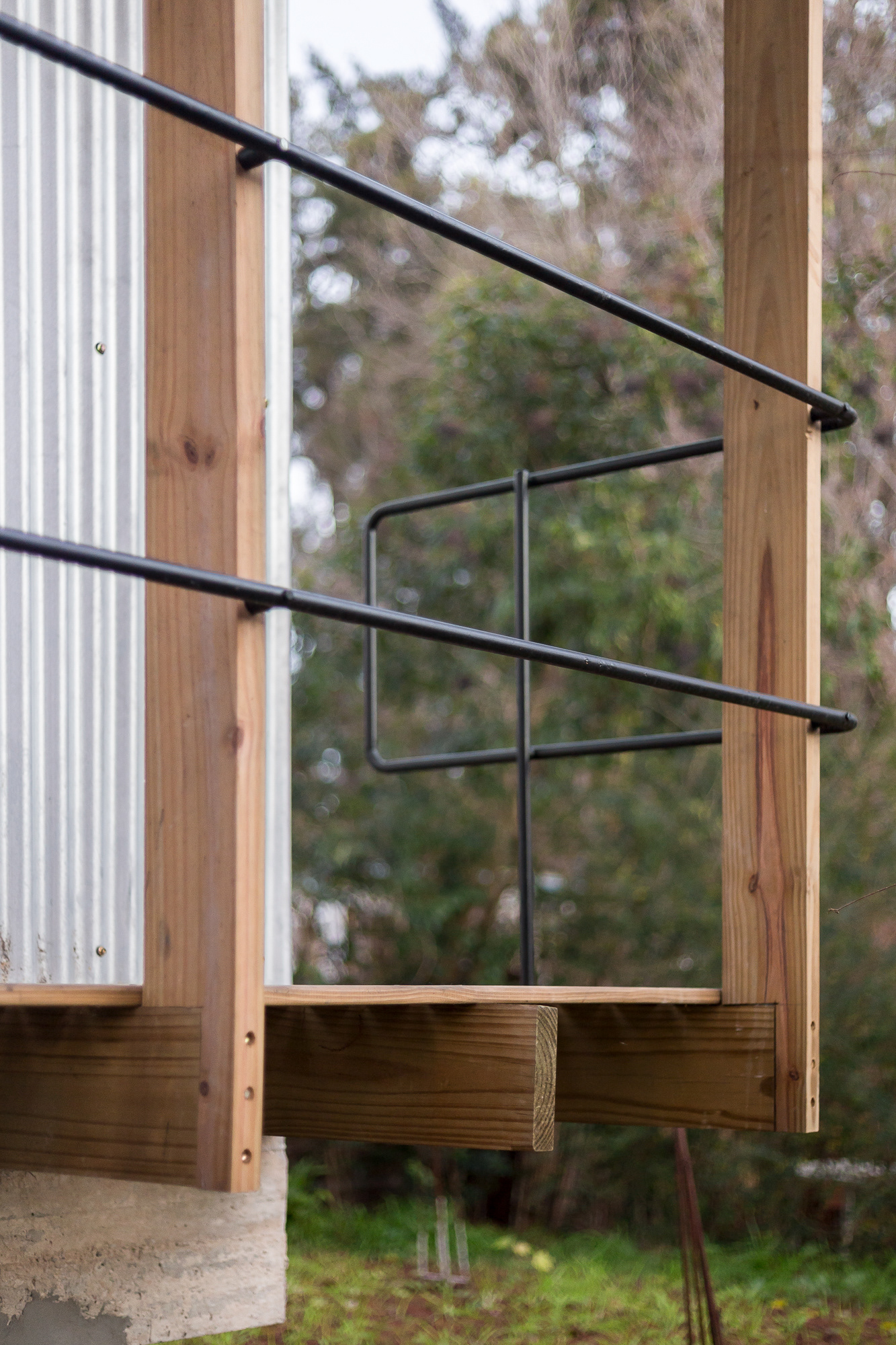
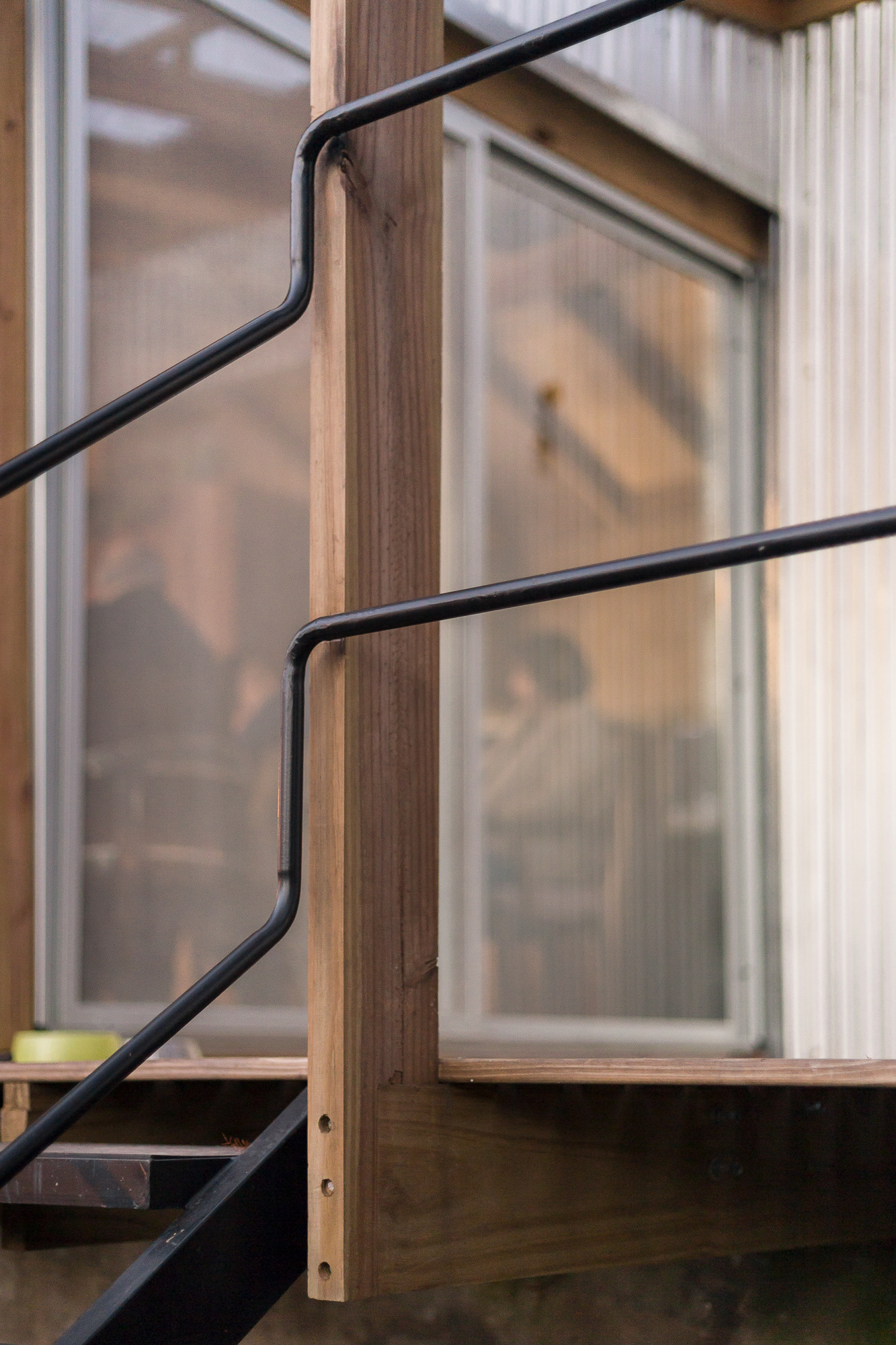
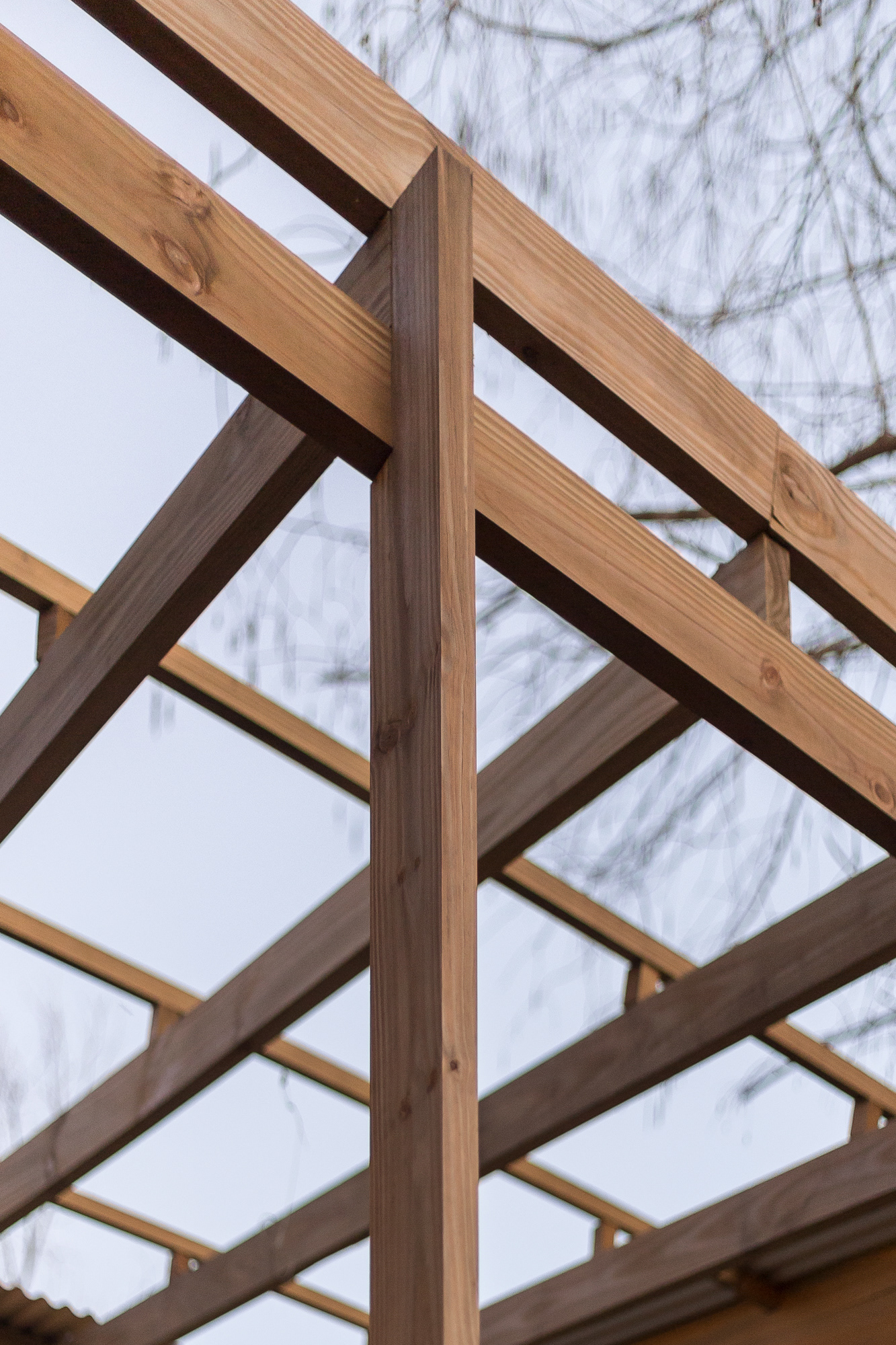
Structurally, the house is lifted from the ground by reinforced concrete beams supported on slender piers, recalling the traditional stilt houses of the Delta. Above this base, a sequence of timber structural frames defines both interior and exterior spaces, operating simultaneously as load-bearing and spatial elements. This system departs from conventional balloon-frame construction, allowing greater flexibility in spatial configuration and in the size and distribution of openings.