
Congreso, Buenos Aires, Argentina
2019
Private Residence
Total Area: 120 m²
Project designed and developed at FRAM Arquitectos by David Aliberti, Architectural Designer – Project Team Member.
2019
Private Residence
Total Area: 120 m²
Project designed and developed at FRAM Arquitectos by David Aliberti, Architectural Designer – Project Team Member.
MEMORY
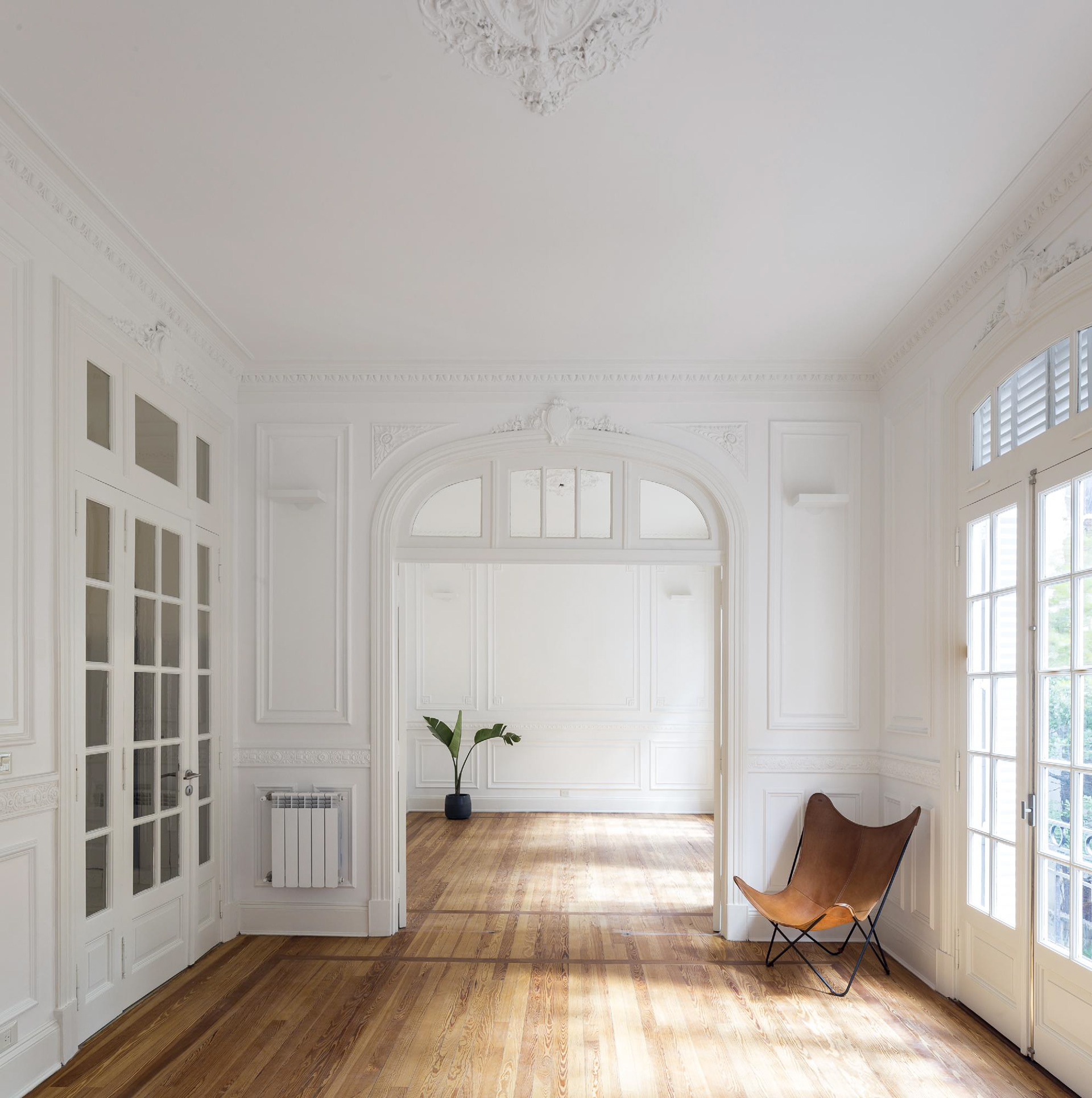
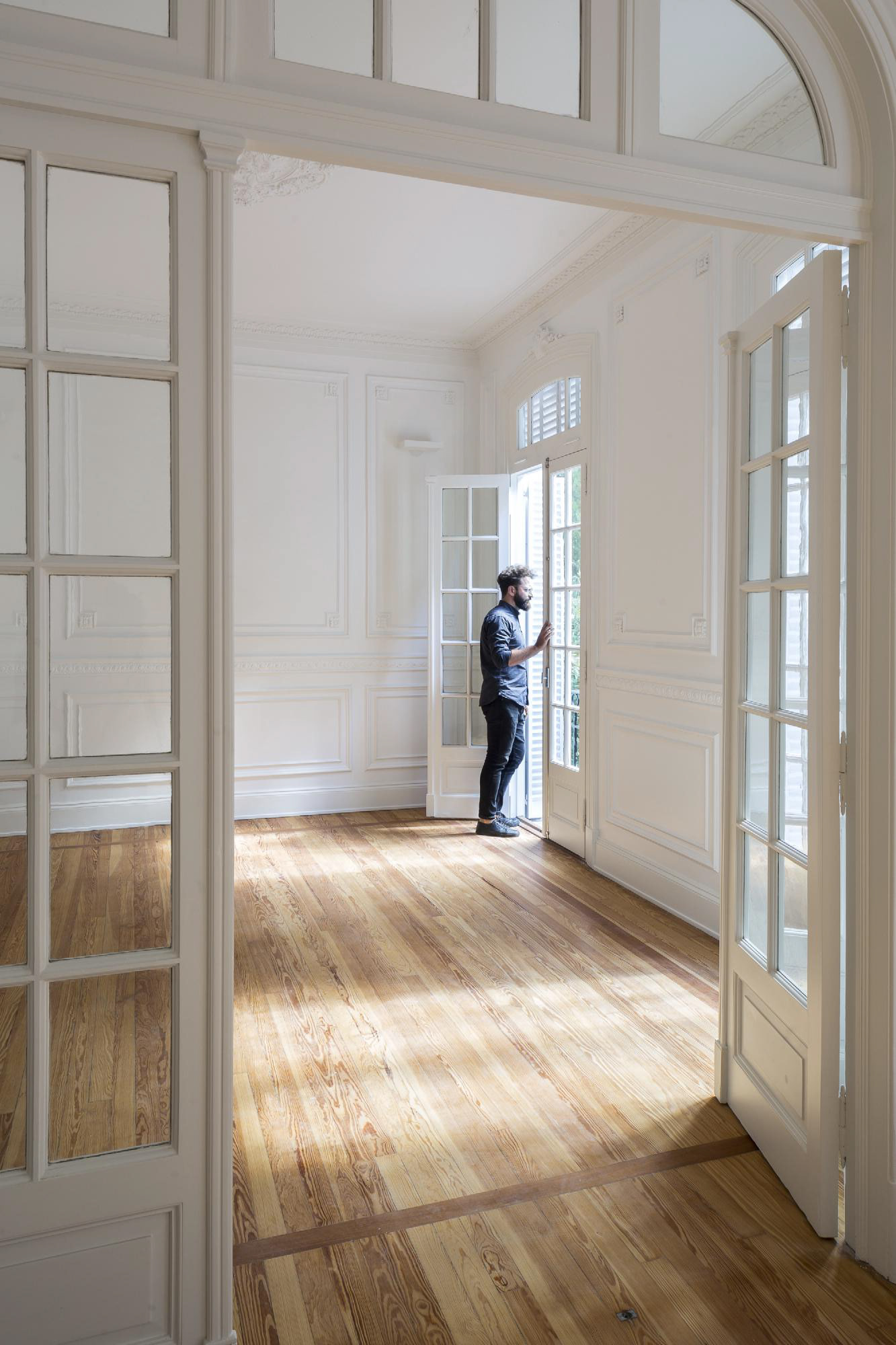
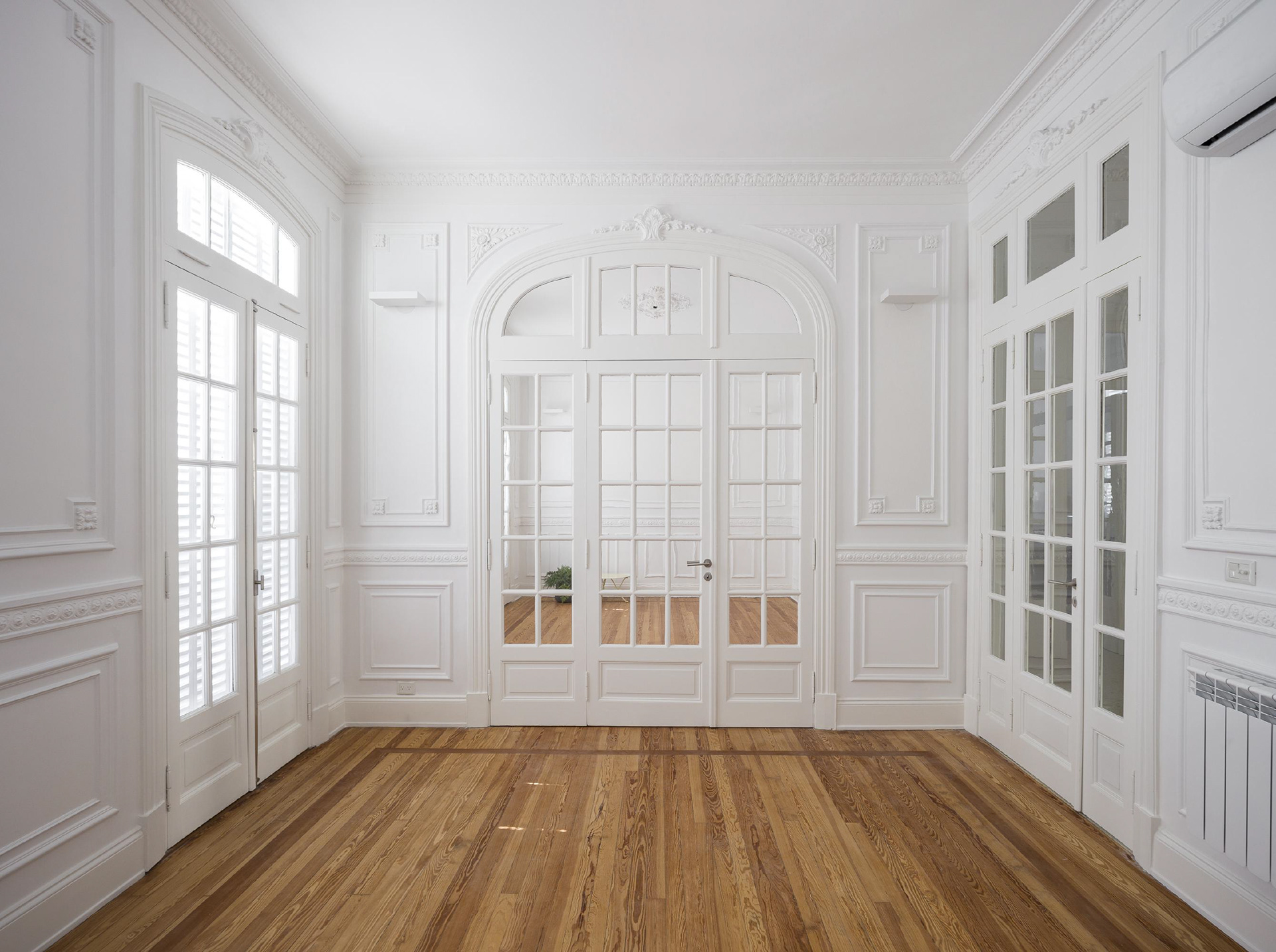
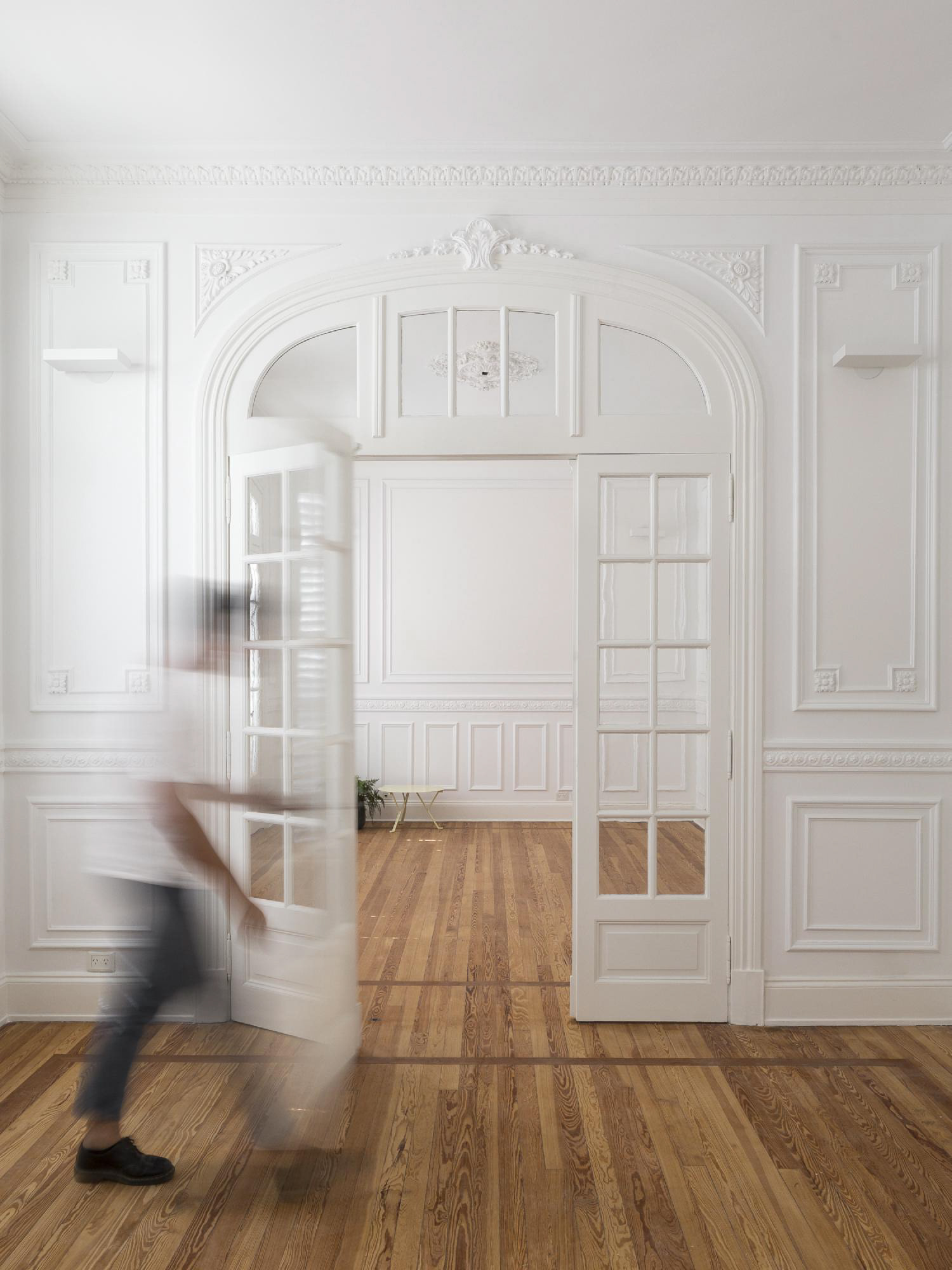
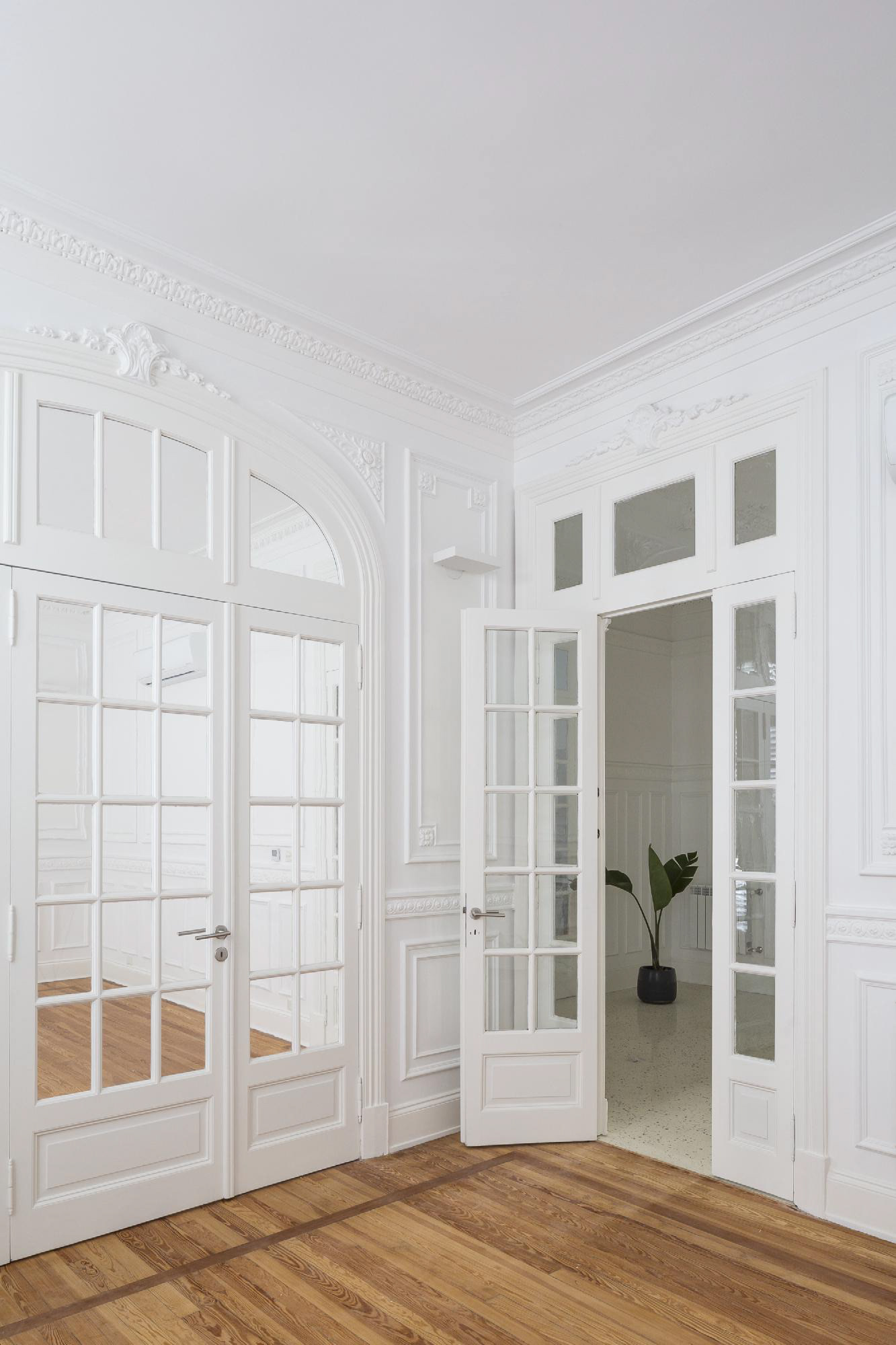
The project involves the refunctionalization and restoration of a 1920s apartment located in the Congreso neighborhood, in downtown Buenos Aires. Vacant for an extended period, the property was found in a poor overall state of conservation, despite having been originally built with high-quality craftsmanship and noble materials characteristic of the time, including spruce wood floors, marble baseboards, solid wood joinery, and handcrafted plaster moldings.
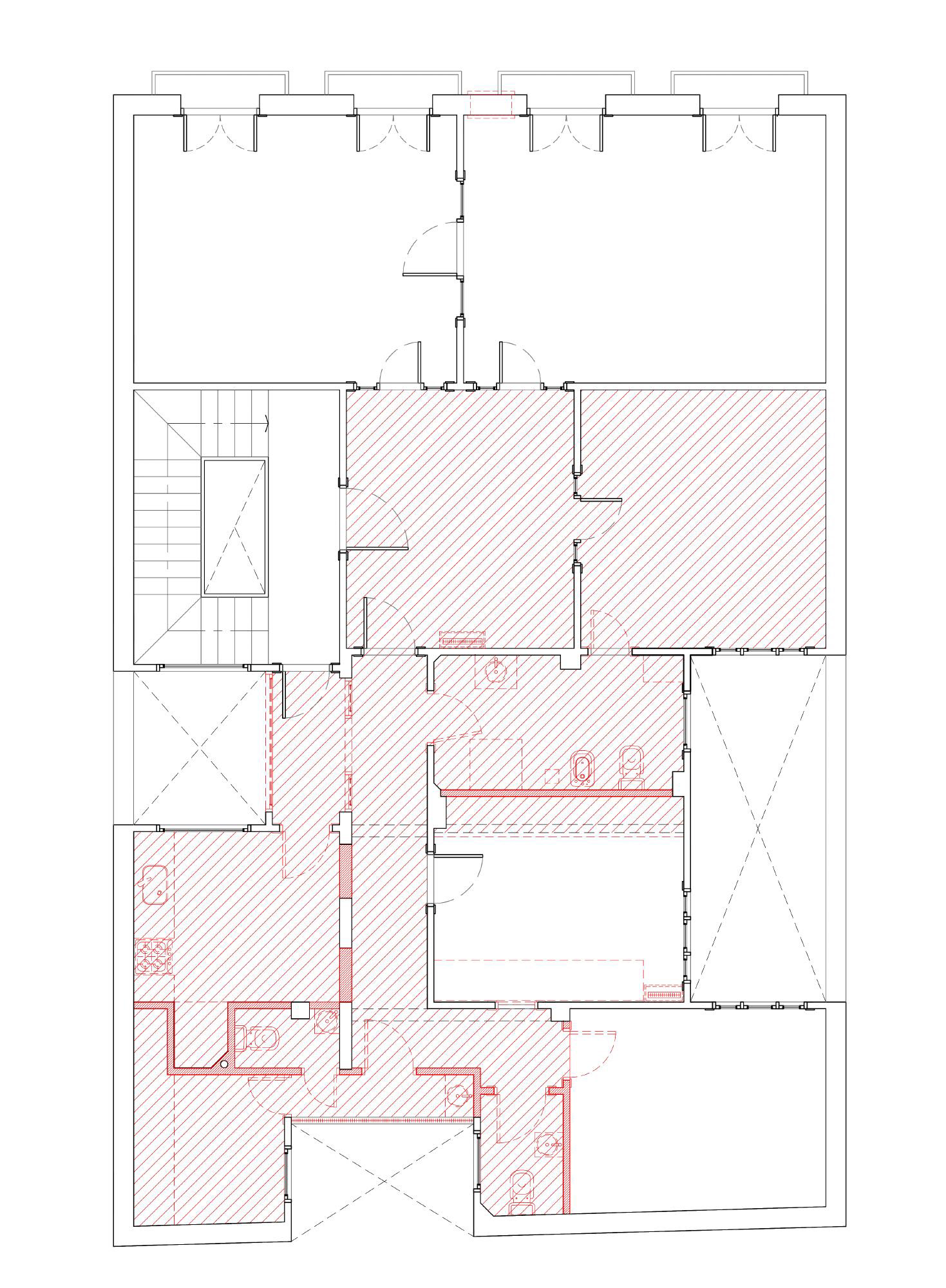
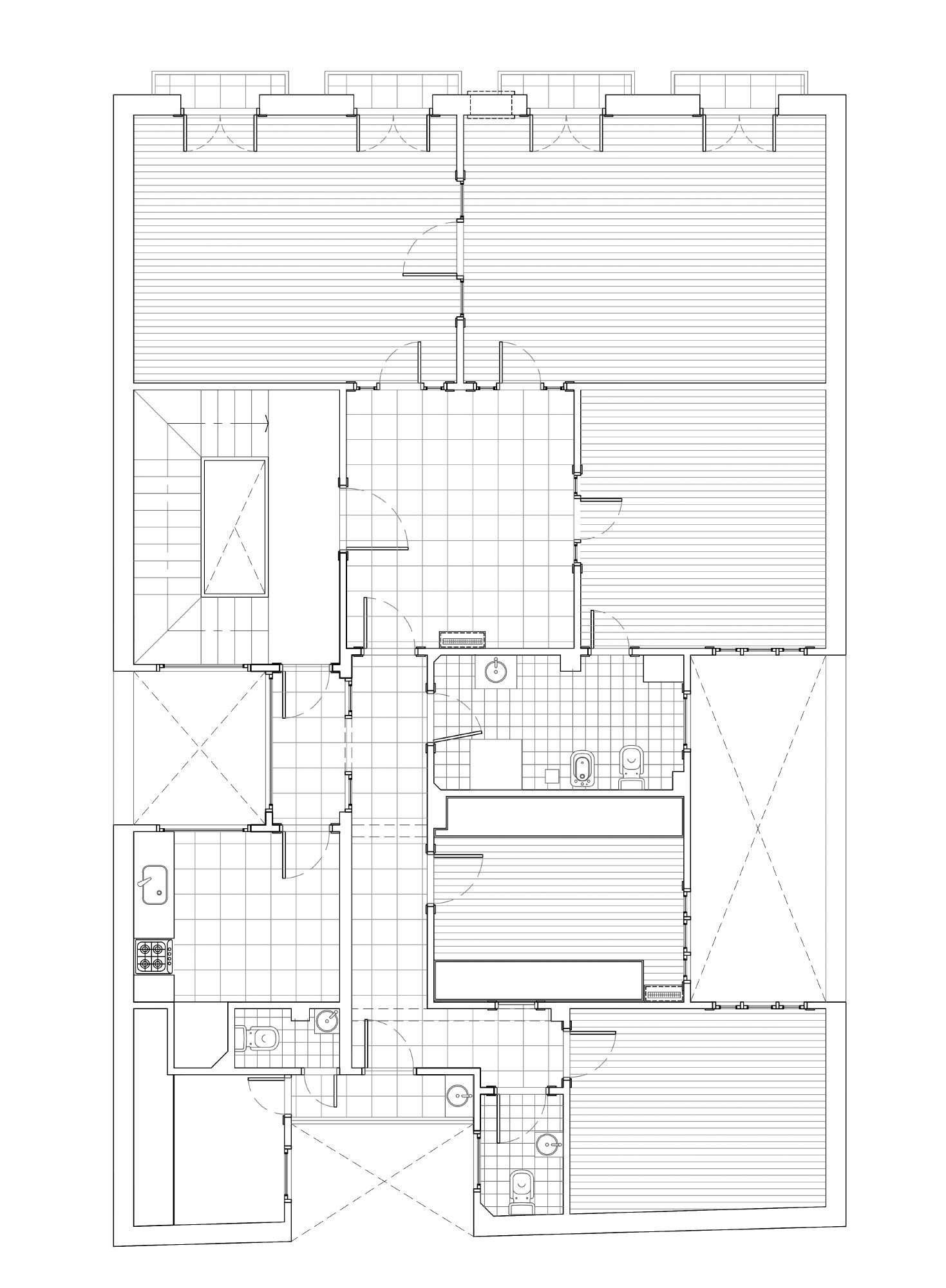
The original layout reflected outdated living patterns. Service areas and the kitchen were confined to spaces adjacent to an internal courtyard, lacking adequate sunlight, views, and spatial connection with the rest of the apartment. Meanwhile, the main room, located near the entrance hall, was directly exposed to public areas, and oversized bathrooms occupied strategic positions within the plan. Despite these limitations, the presence of three internal courtyards distributed across the floor plan, along with the street-facing façade, provided strong potential for natural light and cross ventilation.
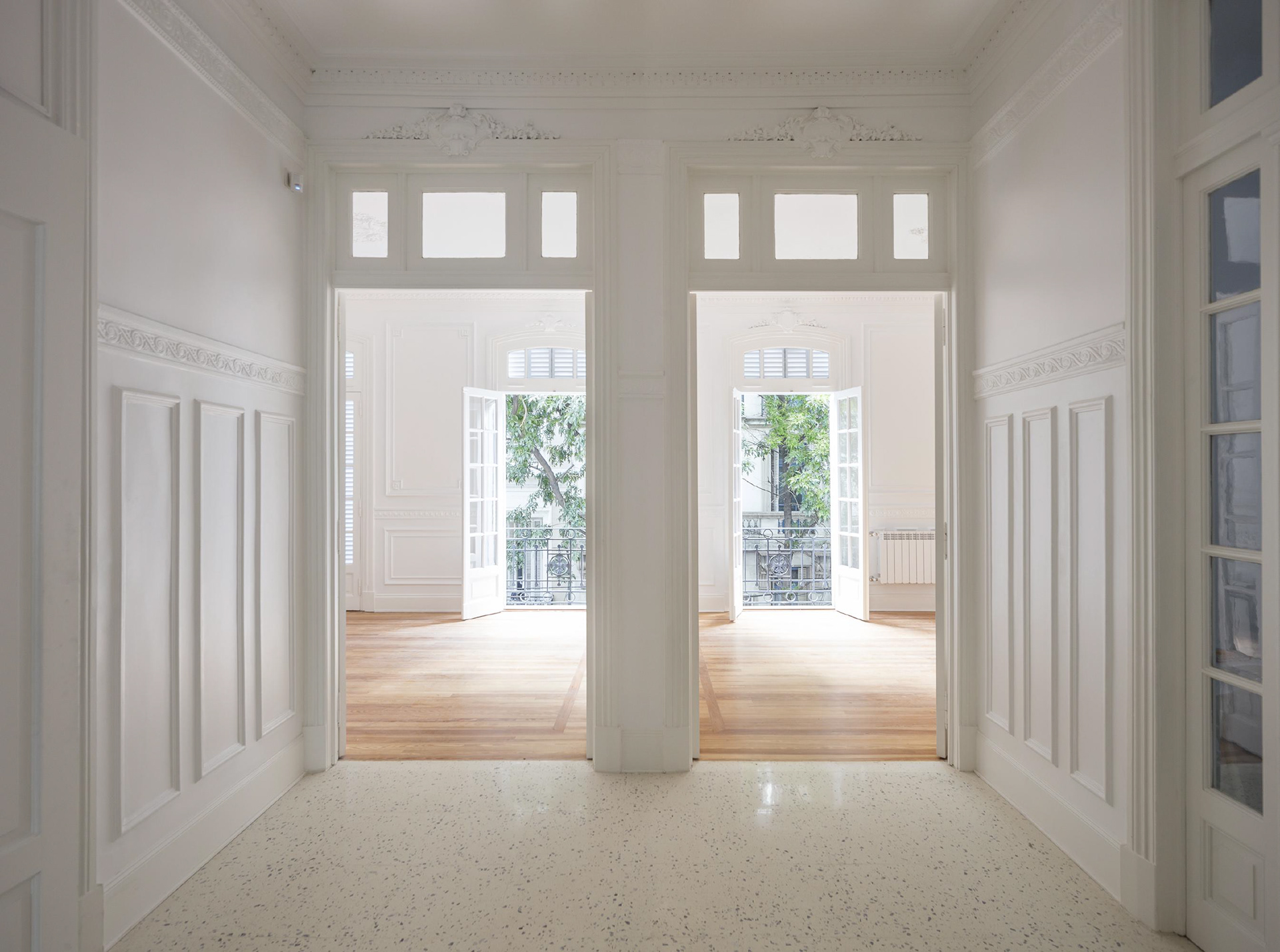
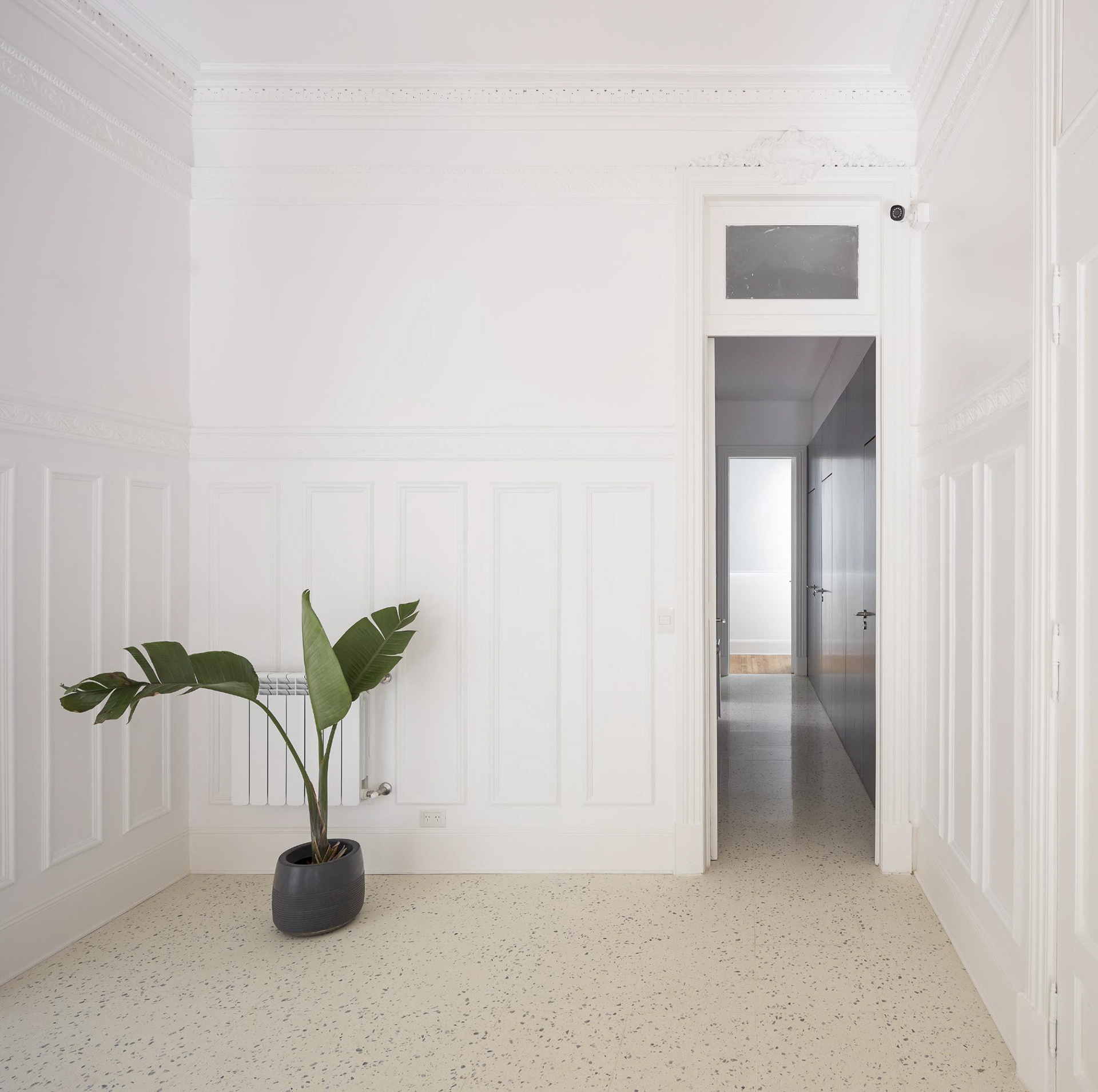
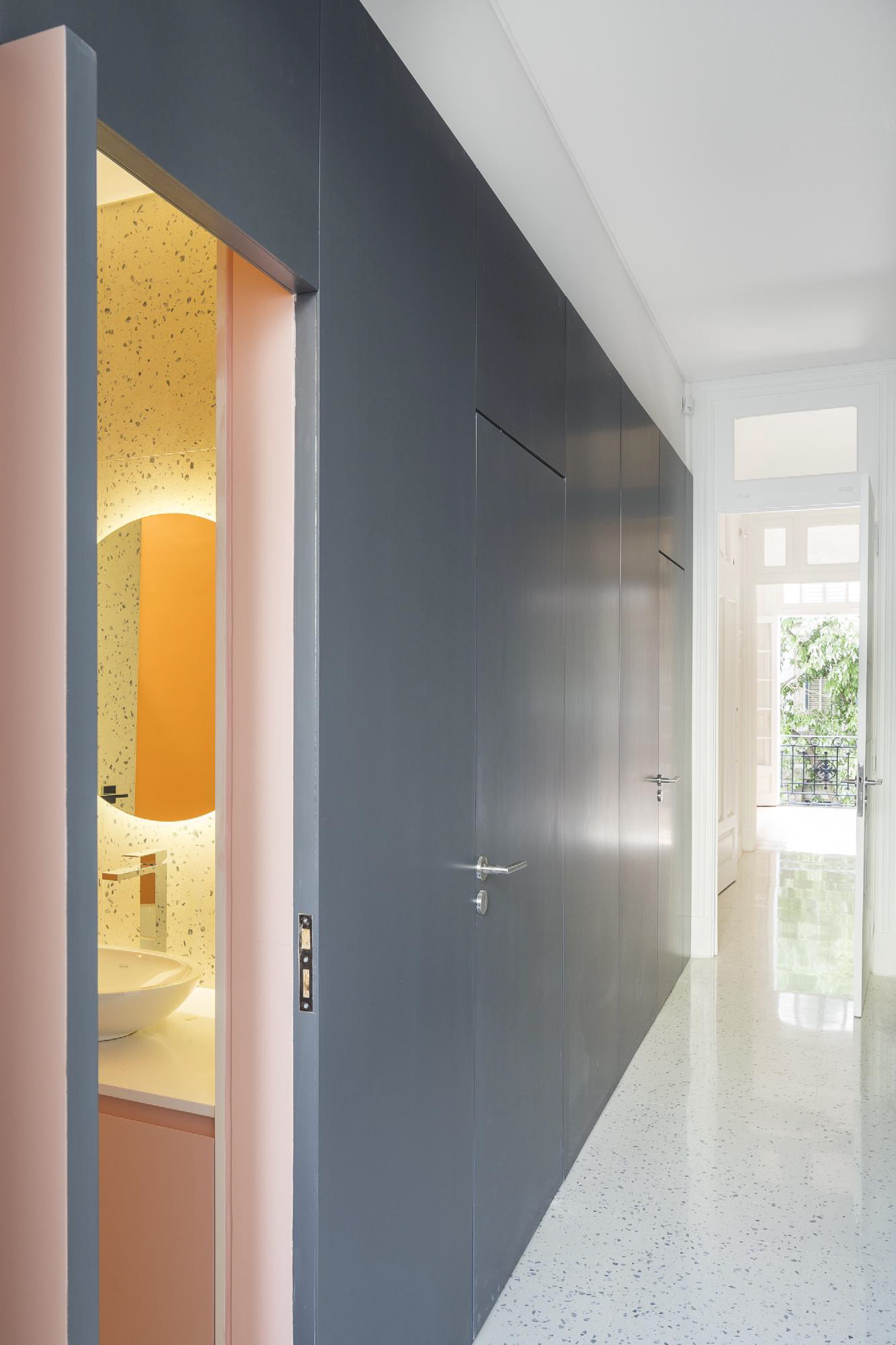
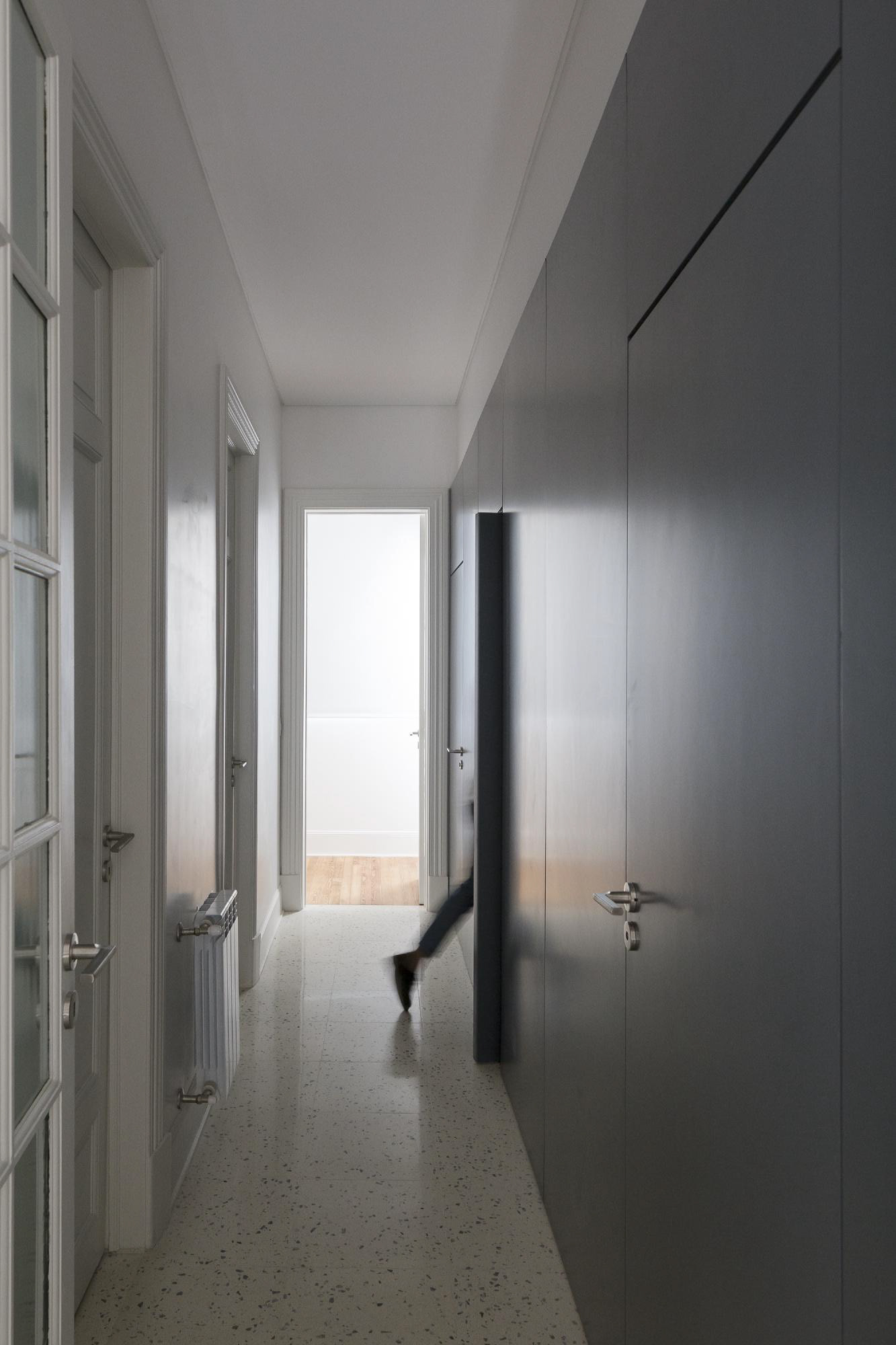
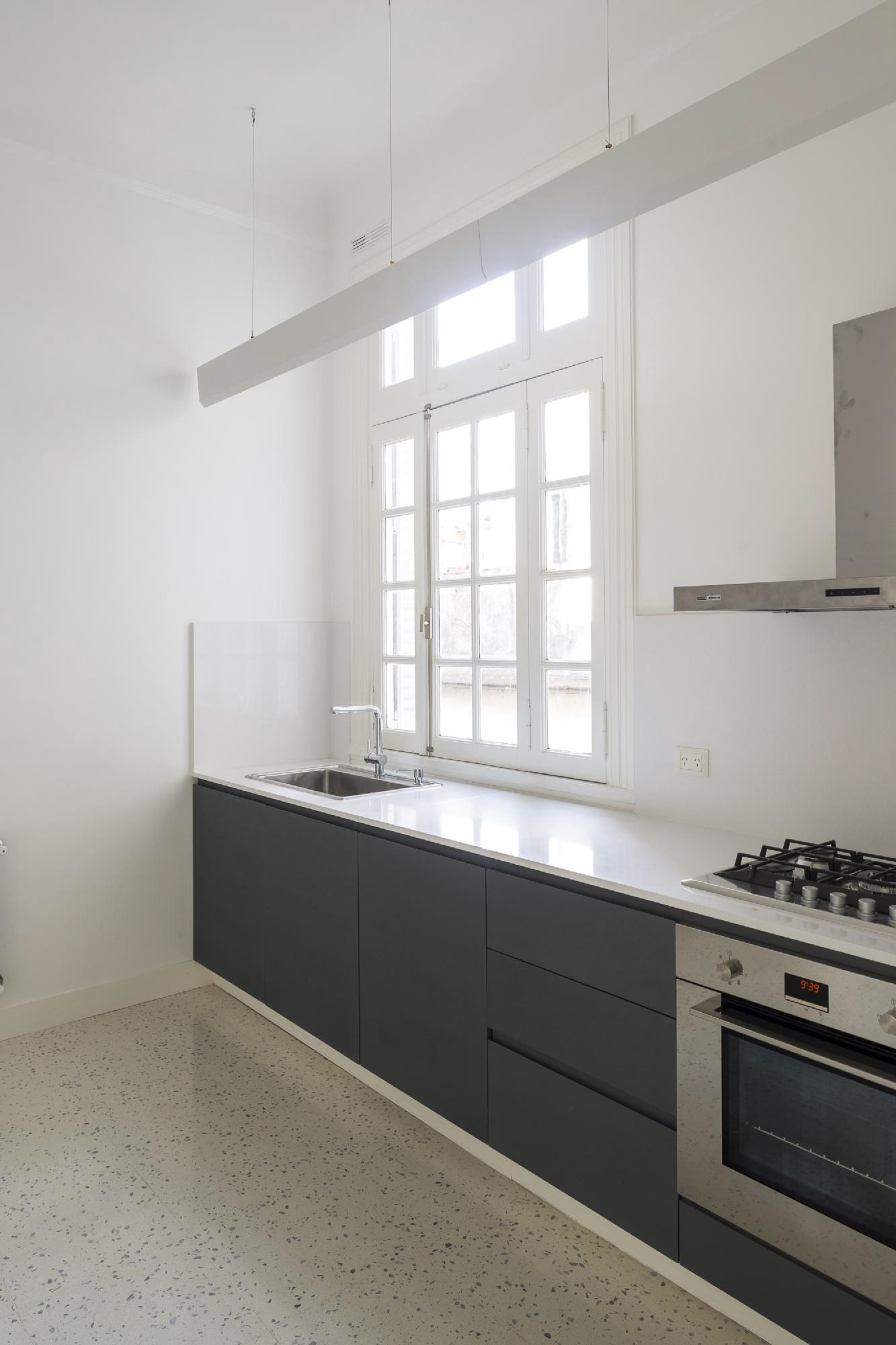
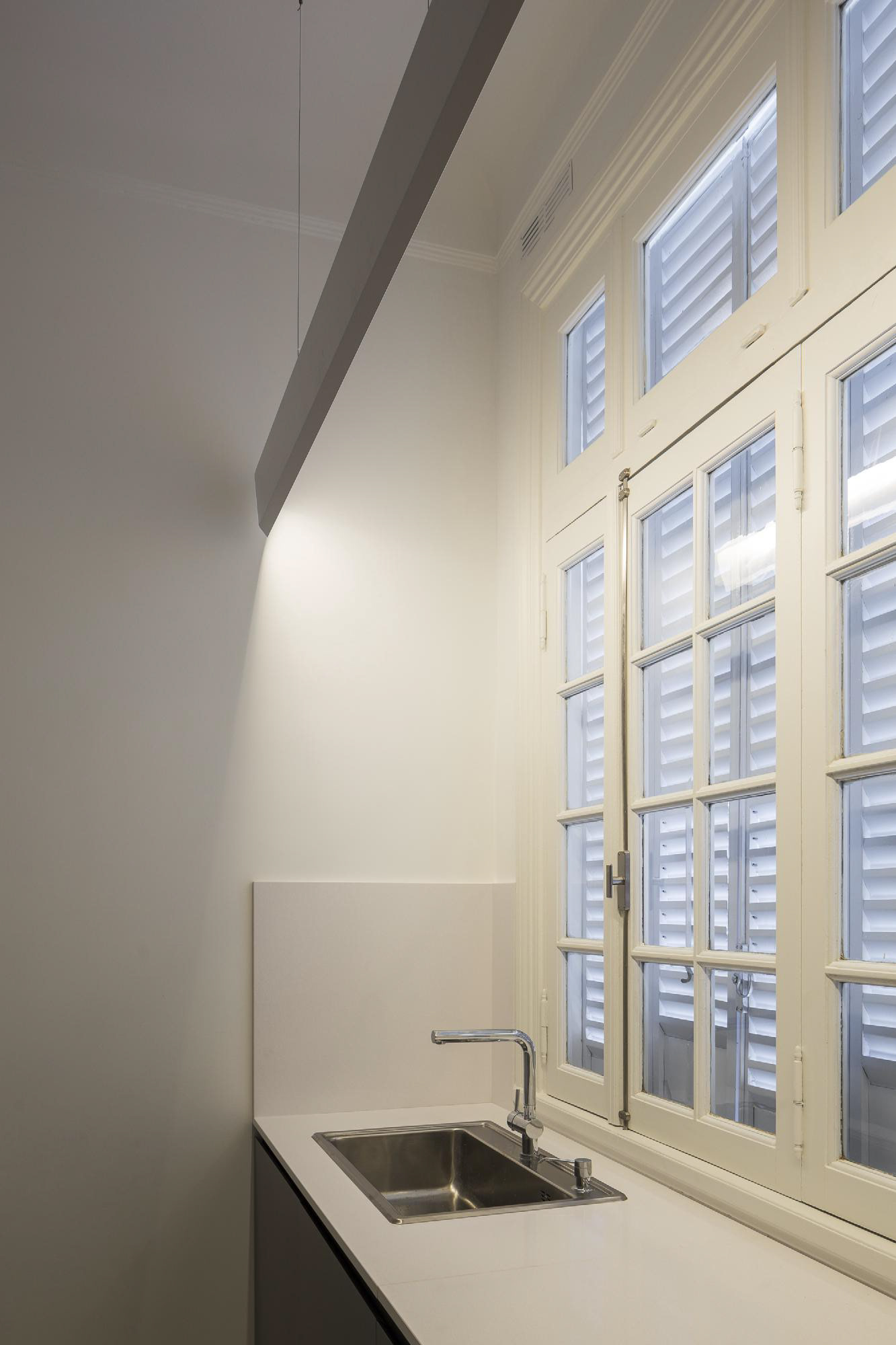
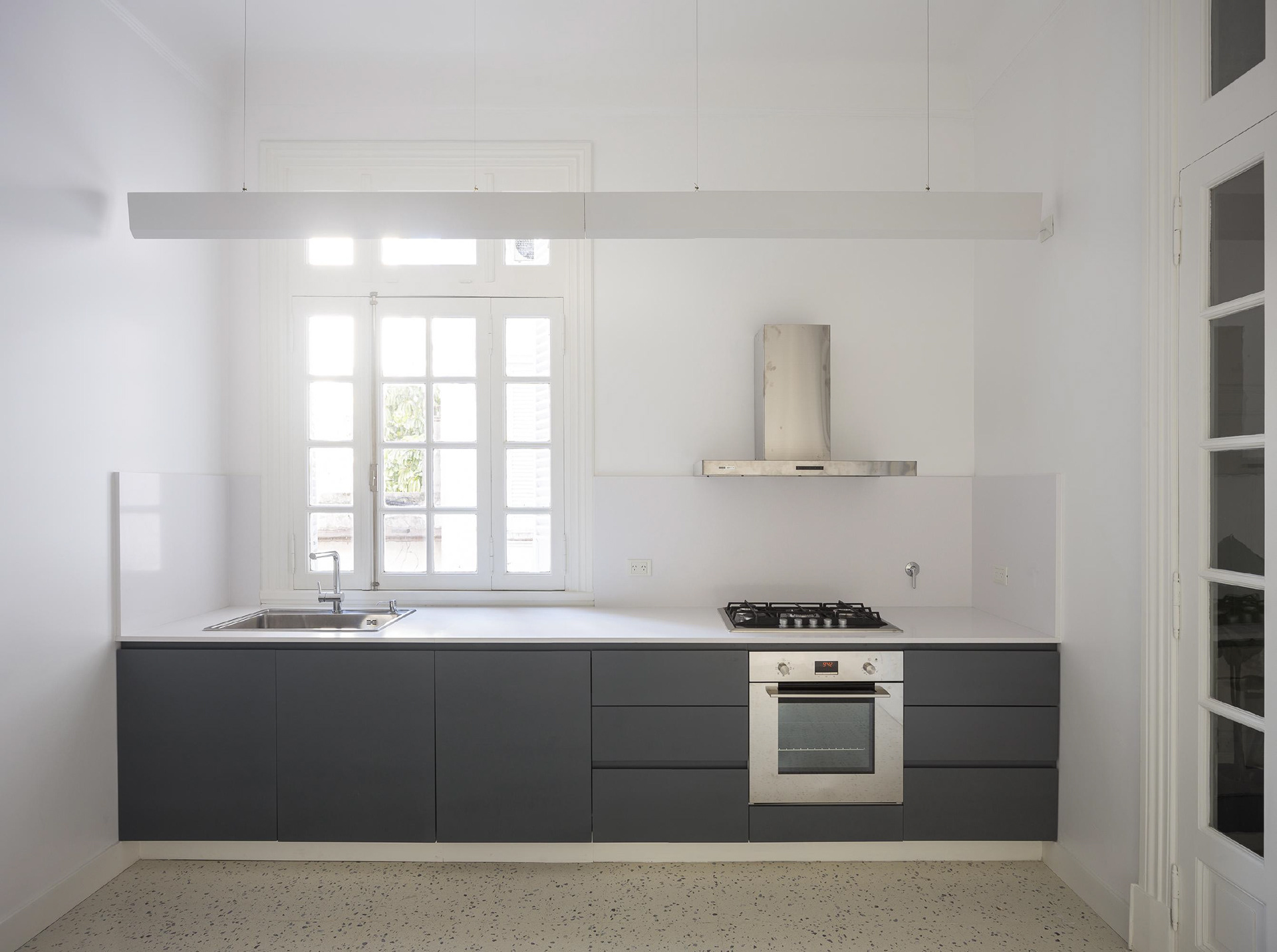
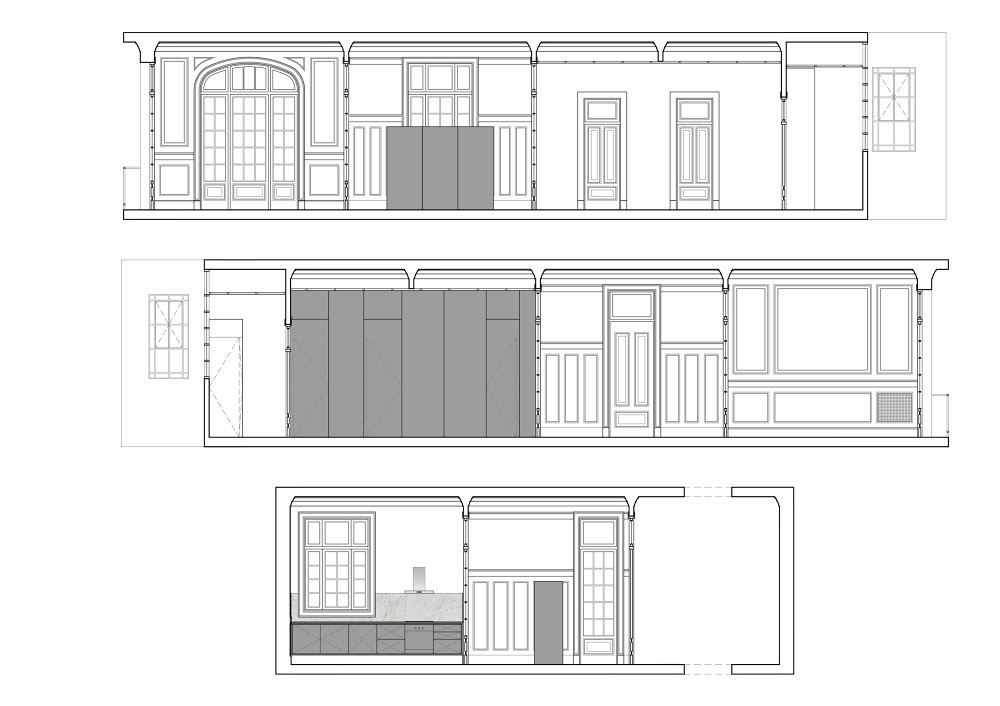
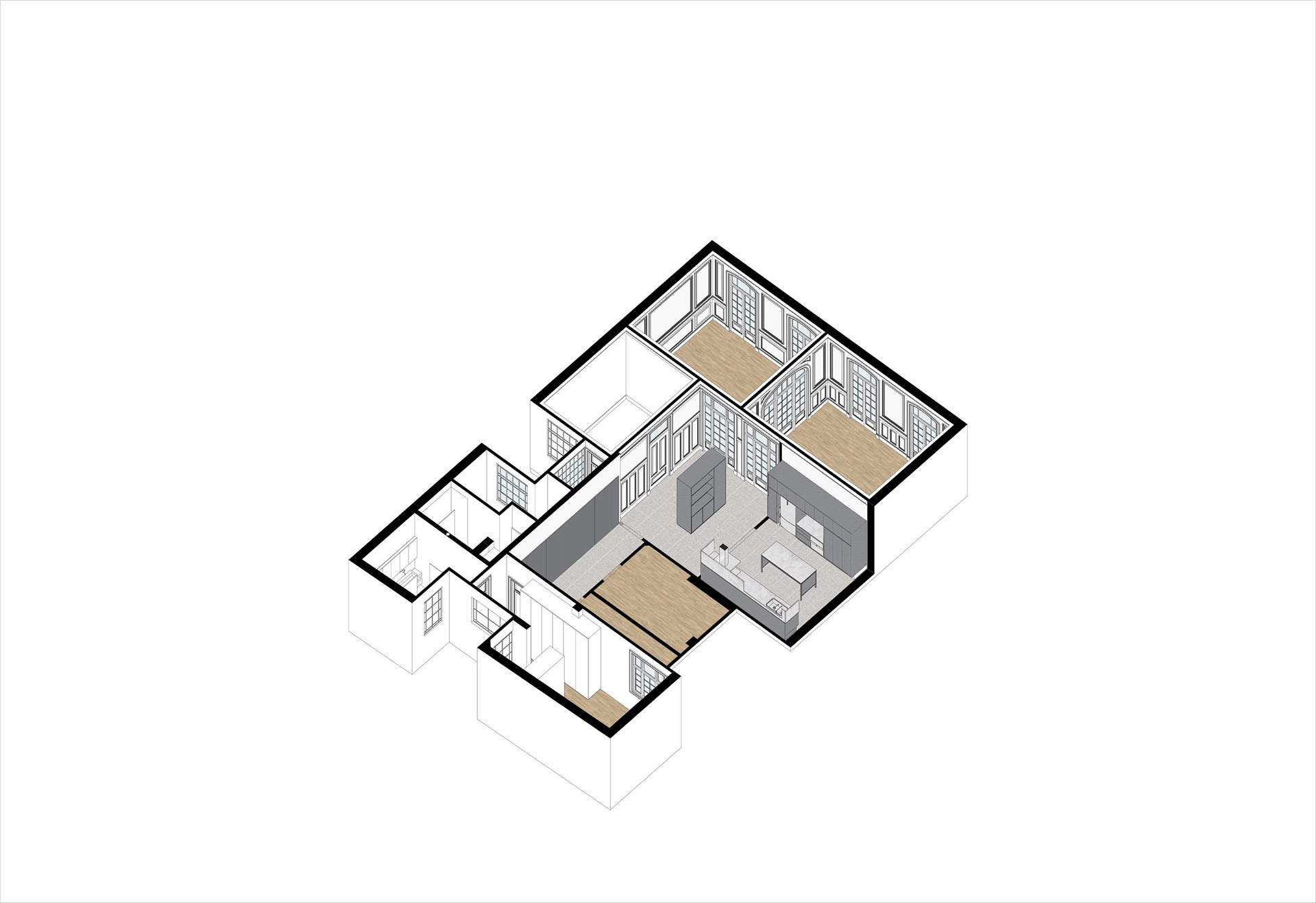
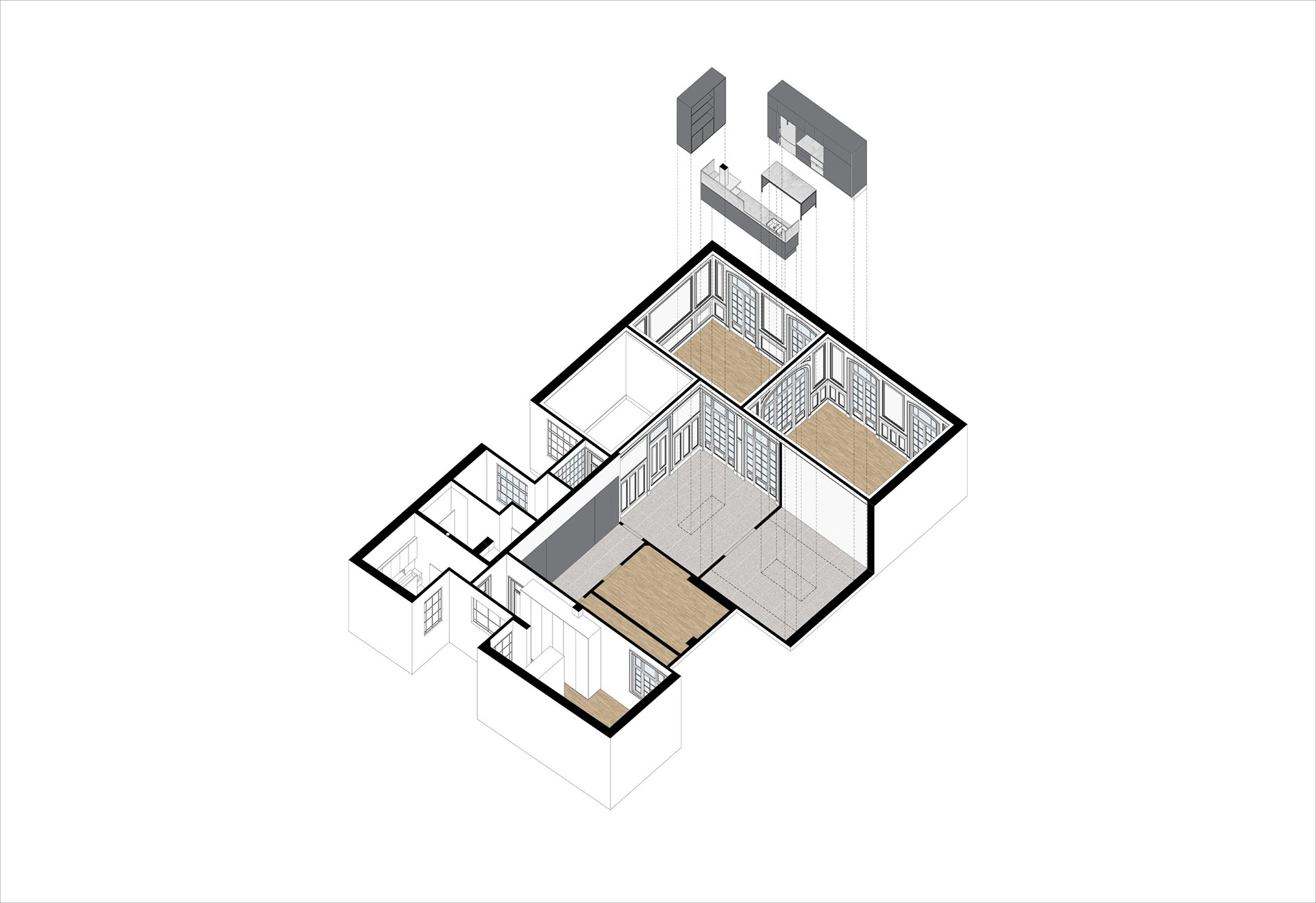
The intervention was guided by two main objectives: adapting the apartment to contemporary modes of living while preserving its original identity and construction quality. New elements were conceived using a restrained and coherent material language, subtly integrated into the existing fabric. Kitchen cabinetry and corridor doors were executed in dark gray lacquered wood, while areas containing irreplaceable original features—such as the entrance hall, living room, and dining room—were carefully restored element by element.
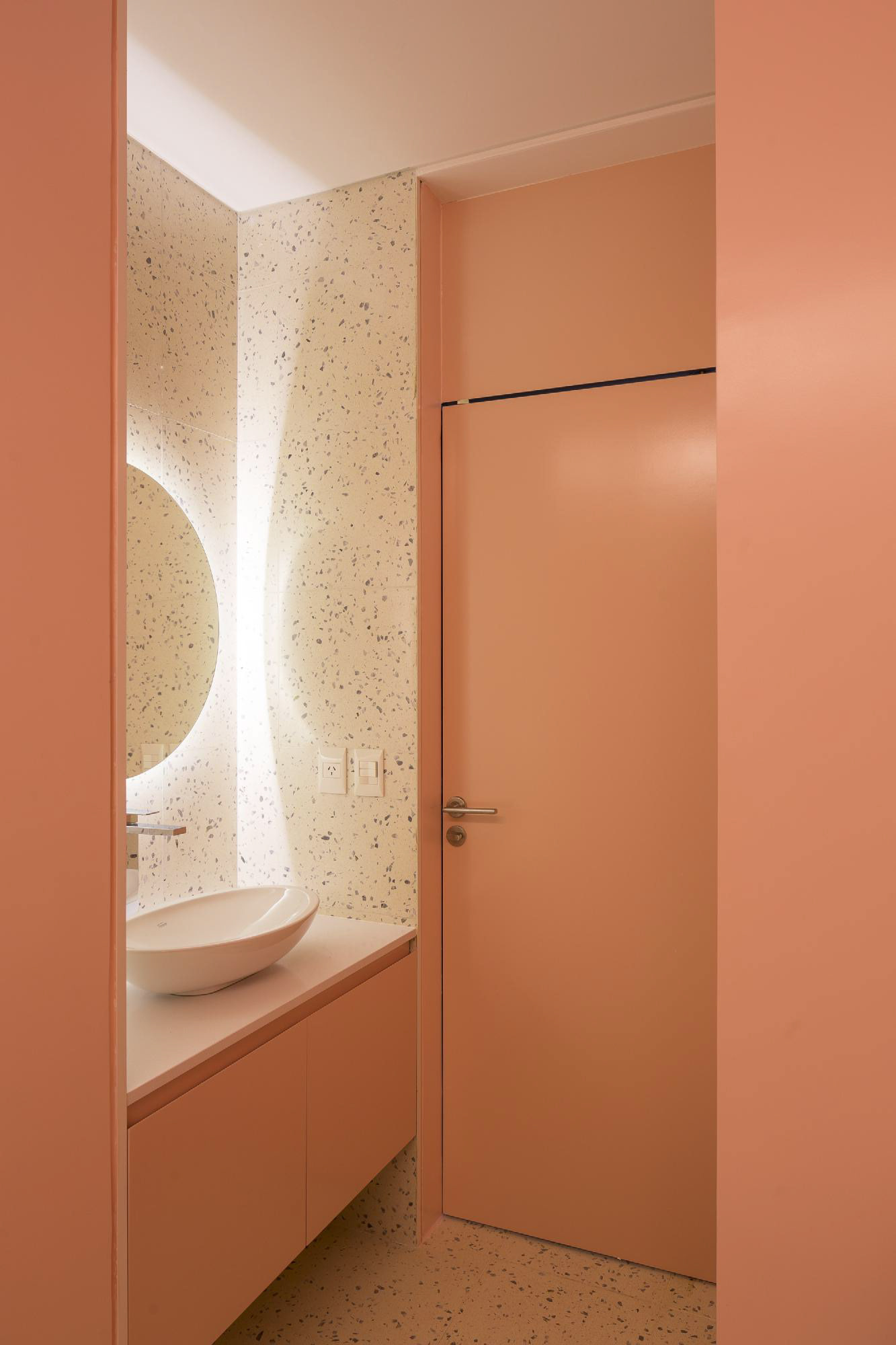
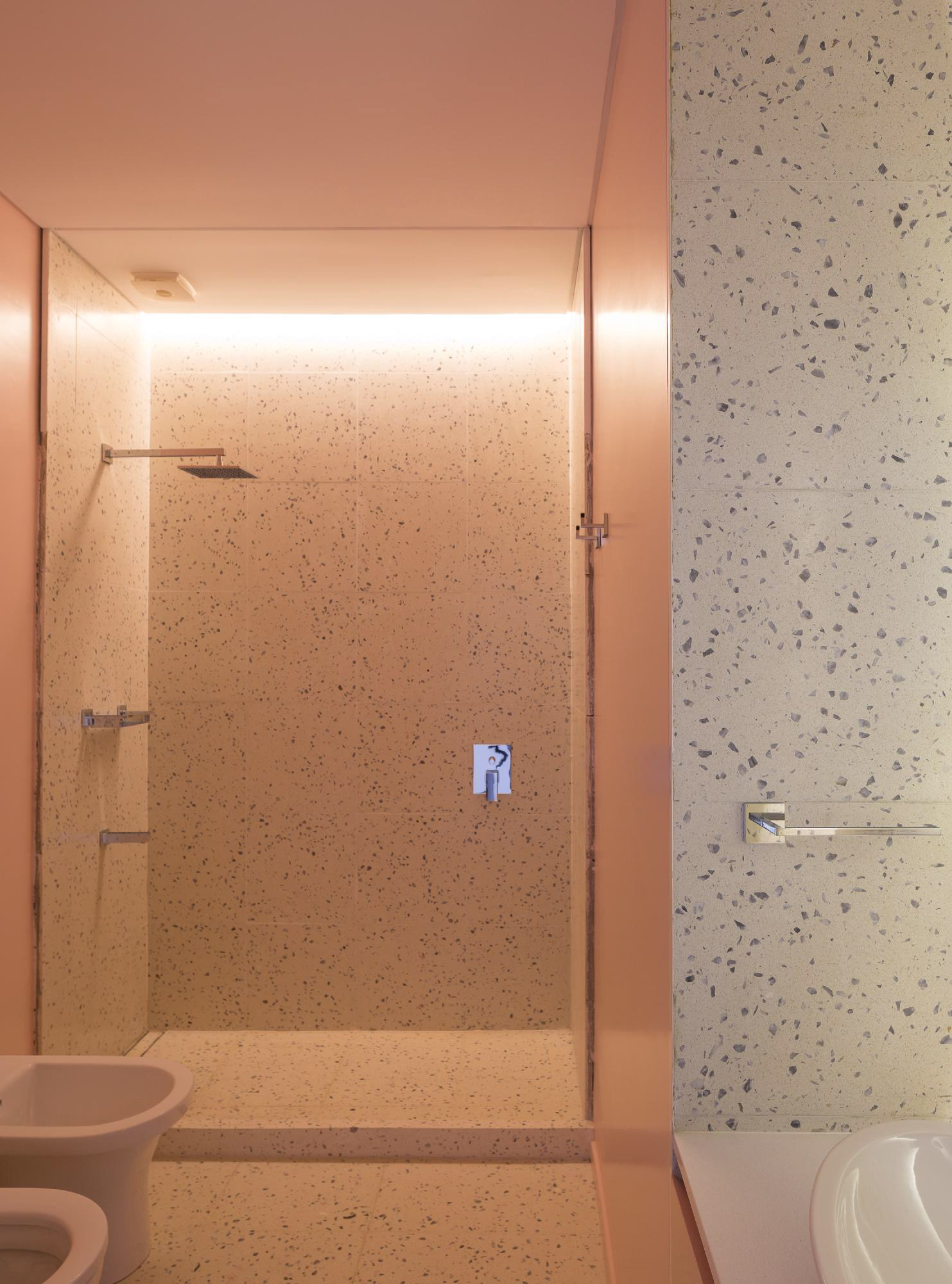
Finally, a continuous granite tile floor was introduced to unify the horizontal plane of the intervention, reinforcing spatial continuity while establishing a clear dialogue between past and present.
The original layout reflected outdated living patterns. Service areas and the kitchen were confined to spaces adjacent to an internal courtyard, lacking adequate sunlight, views, and spatial connection with the rest of the apartment. Meanwhile, the main room, located near the entrance hall, was directly exposed to public areas, and oversized bathrooms occupied strategic positions within the plan. Despite these limitations, the presence of three internal courtyards distributed across the floor plan, along with the street-facing façade, provided strong potential for natural light and cross ventilation.
The intervention was guided by two main objectives: adapting the apartment to contemporary modes of living while preserving its original identity and construction quality. New elements were conceived using a restrained and coherent material language, subtly integrated into the existing fabric. Kitchen cabinetry and corridor doors were executed in dark gray lacquered wood, while areas containing irreplaceable original features—such as the entrance hall, living room, and dining room—were carefully restored element by element.
Finally, a continuous granite tile floor was introduced to unify the horizontal plane of the intervention, reinforcing spatial continuity while establishing a clear dialogue between past and present.