
Villa Pueyrredón, Buenos Aires, Argentina
2022
Private Residential Building
Total Area: 5700 m²
2022
Private Residential Building
Total Area: 5700 m²
Project designed and developed at HC2P by David Aliberti, Project Leader.
MEMORY
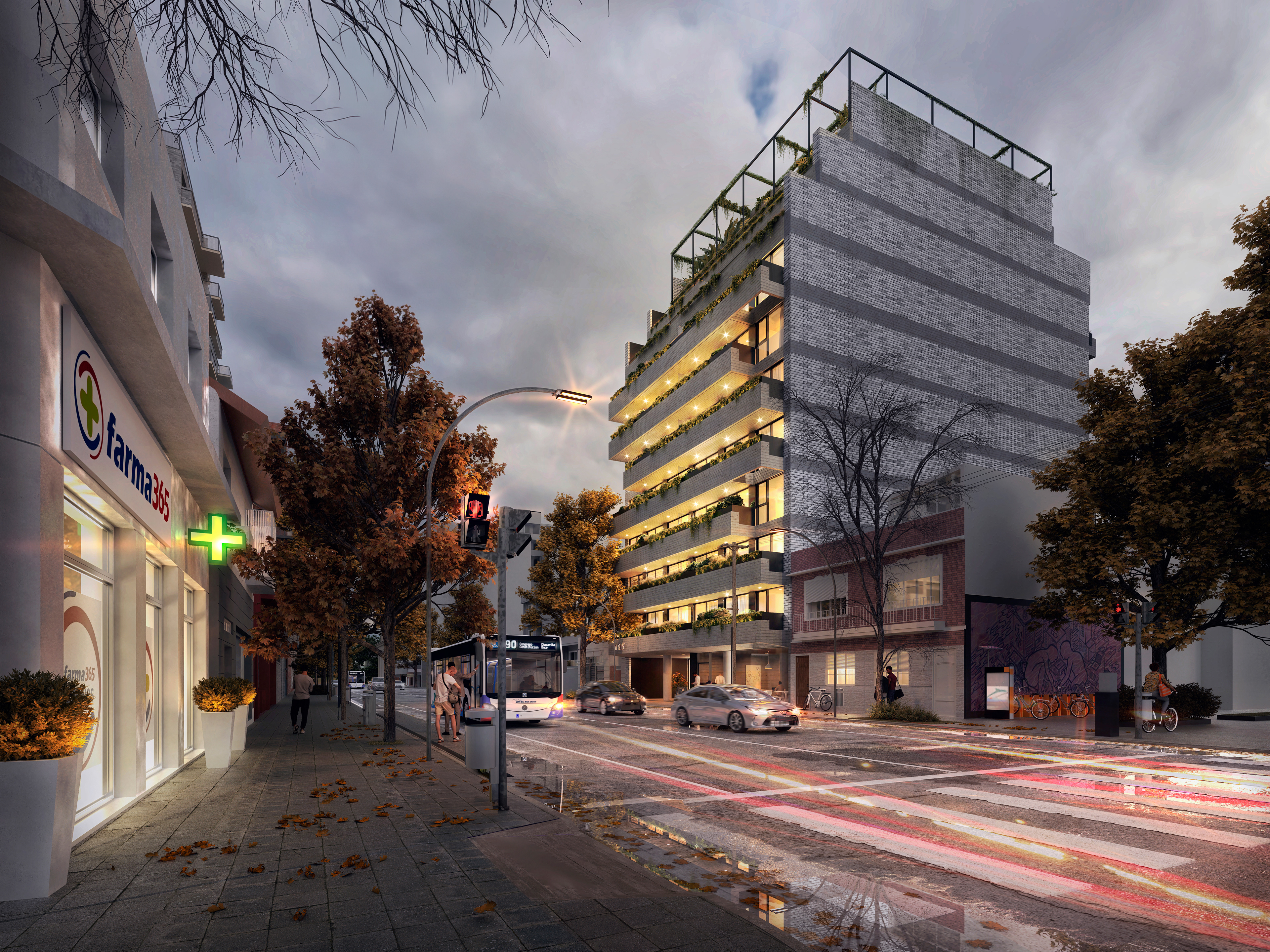
Mosconi 2151 is a residential building developed as a response to the growing housing demand within a historically low-density urban fabric. Located in Villa Pueyrredón, a neighborhood that originated during the major immigration waves of the early 20th century, the project seeks to densify the area while establishing a dialogue with its consolidated residential context.
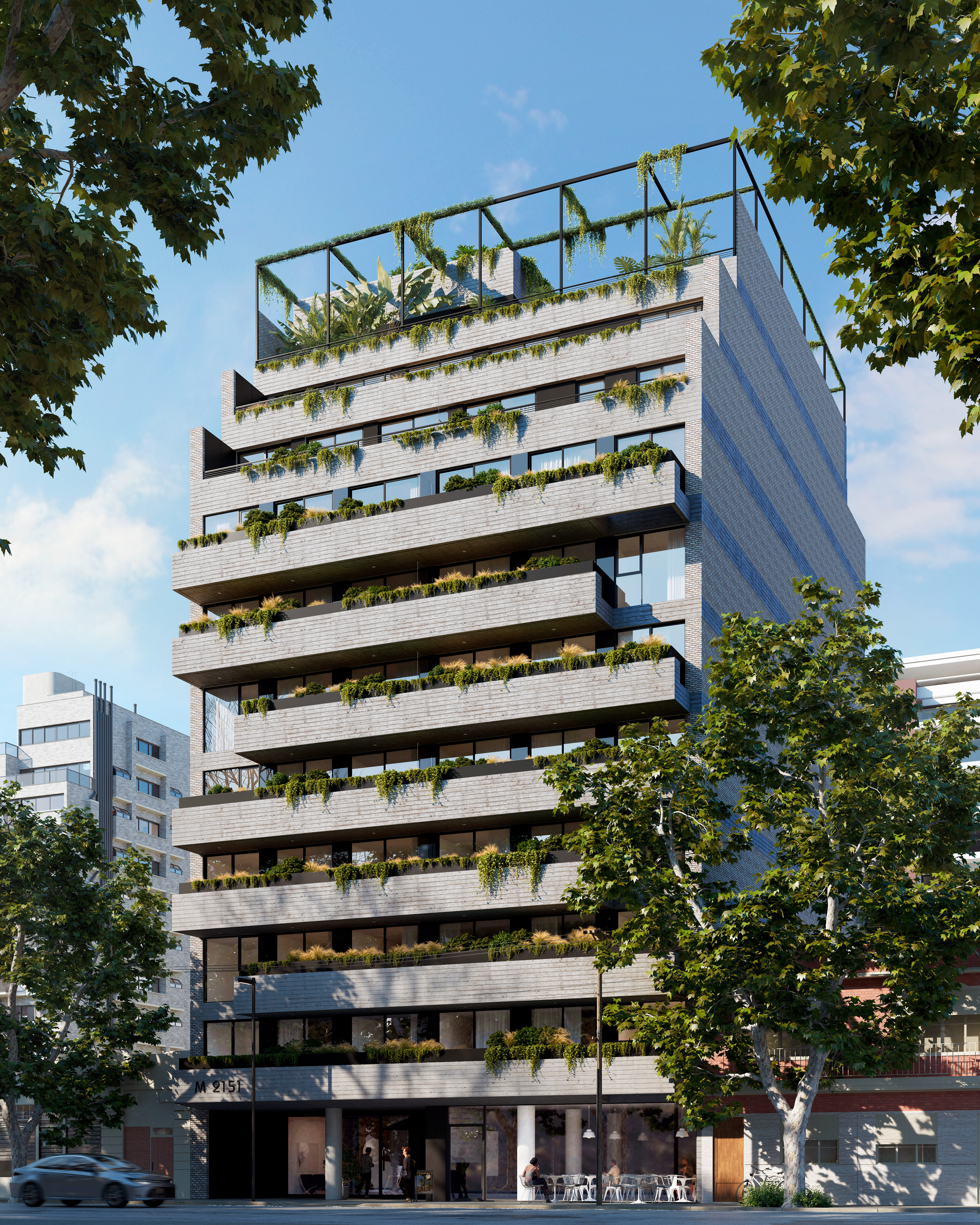
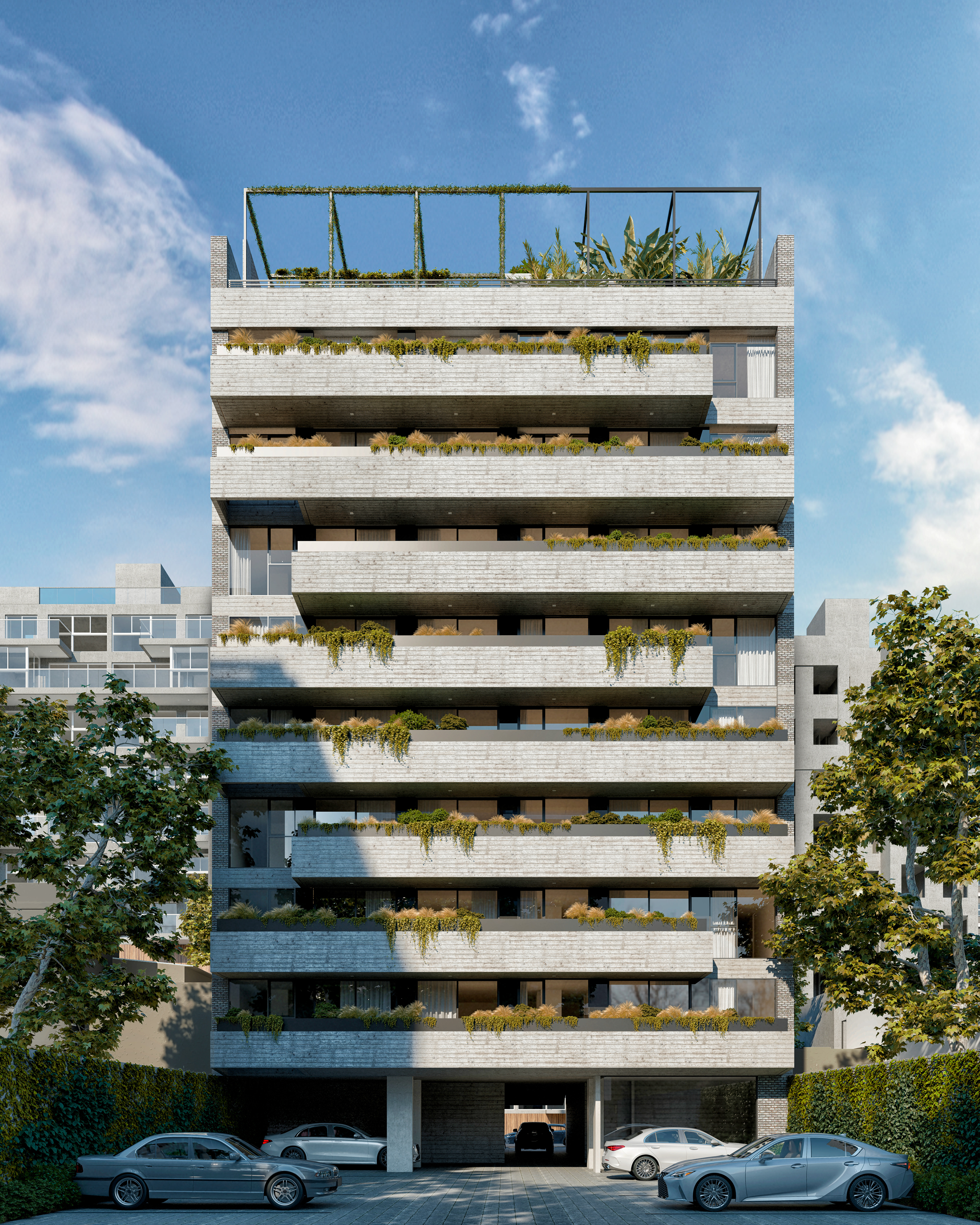
The immediate surroundings are characterized by one- and two-story houses, shaped by the diverse cultural backgrounds of the workers who originally settled the area, and by a noticeable lack of green spaces. In this context, the project addresses the contrast in scale between the existing fabric and the proposed building through a compositional strategy that emphasizes horizontality. Exposed concrete beams, continuous window bands and sheet-metal planters are used to visually break down the building’s height and integrate it into its surroundings.
The exposed beam system plays a key architectural role, generating a dynamic and playful rhythm that counters the inherent rigidity of concrete construction and repetitive floor plates. By shortening and extending the beams, and introducing voids in the slabs of the exterior expansions, the project creates double- and triple-height outdoor spaces that enrich the spatial experience and enhance the relationship between interior and exterior.
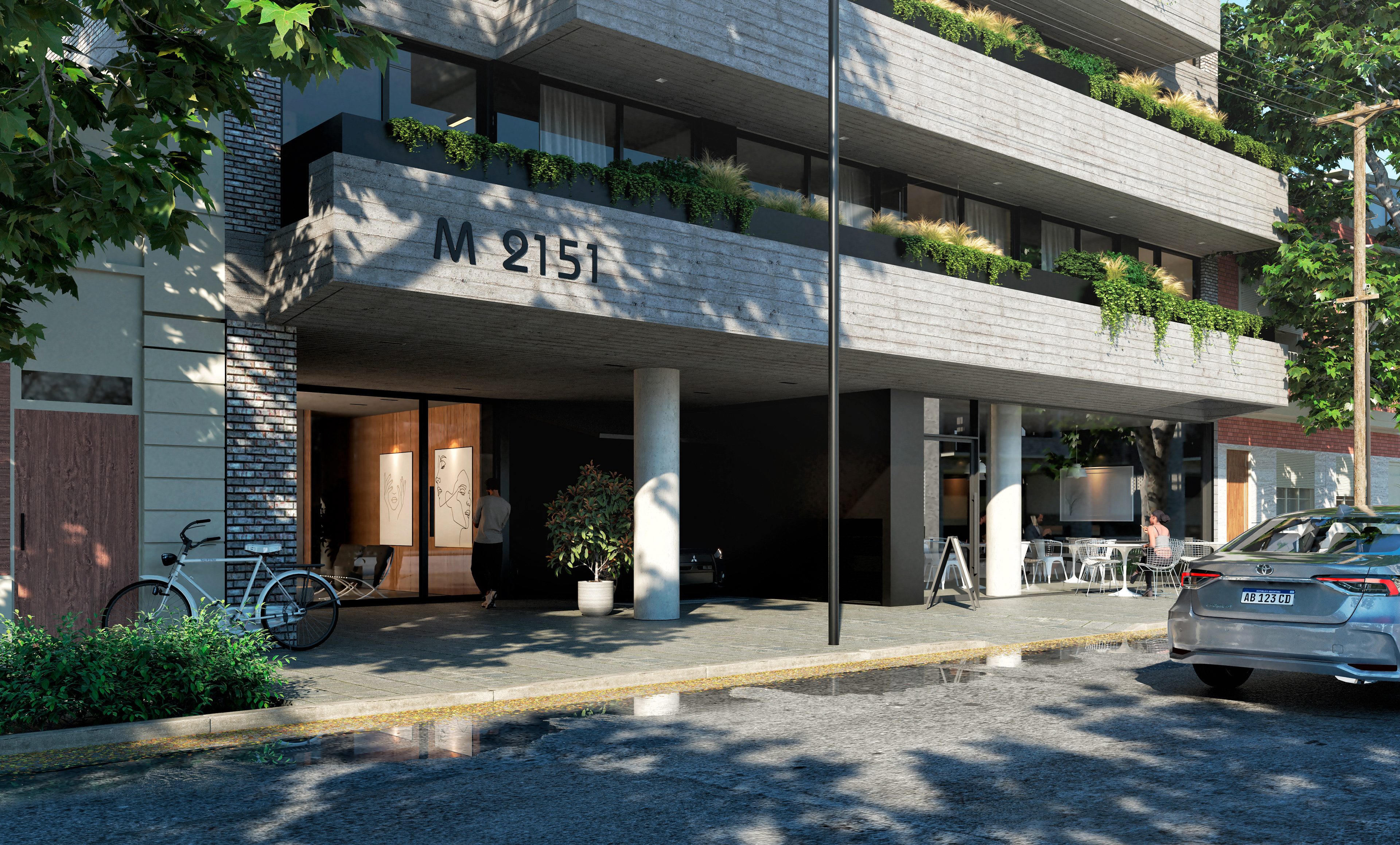
Concrete is treated not merely as a structural element but as an integral component of the architectural language. This approach is further expressed in the inverted ground-floor slab, which becomes part of the interior spatial expression, dissolving the conventional visual limits imposed by beams and enabling greater continuity between indoor and outdoor spaces.
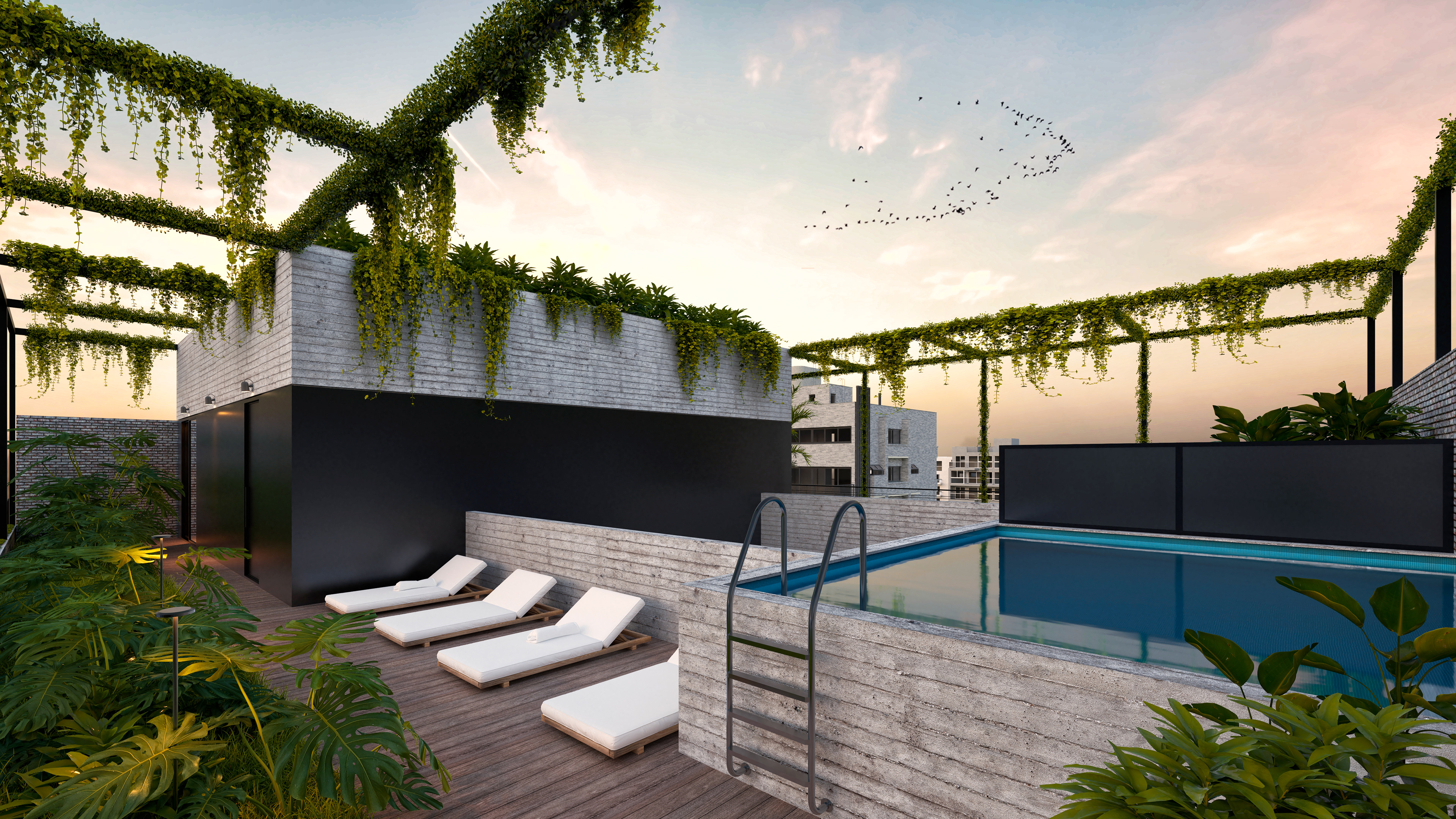
In response to the scarcity of vegetation in the area, the building incorporates greenery at multiple levels. Private unit expansions include a hybrid system combining planters on upper levels with exterior equipment storage below, while the rooftop terrace is conceived as a shared landscape, organized into public and private zones. Through these strategies, the project balances urban densification with spatial quality, material expression and the integration of outdoor living spaces.