
Agronomía, Buenos Aires, Argentina
2018
Private Residence
Total Area: 50 m²
Project designed and developed at FRAM Arquitectos by David Aliberti, Architectural Designer – Project Team Member.
2018
Private Residence
Total Area: 50 m²
Project designed and developed at FRAM Arquitectos by David Aliberti, Architectural Designer – Project Team Member.
MEMORY
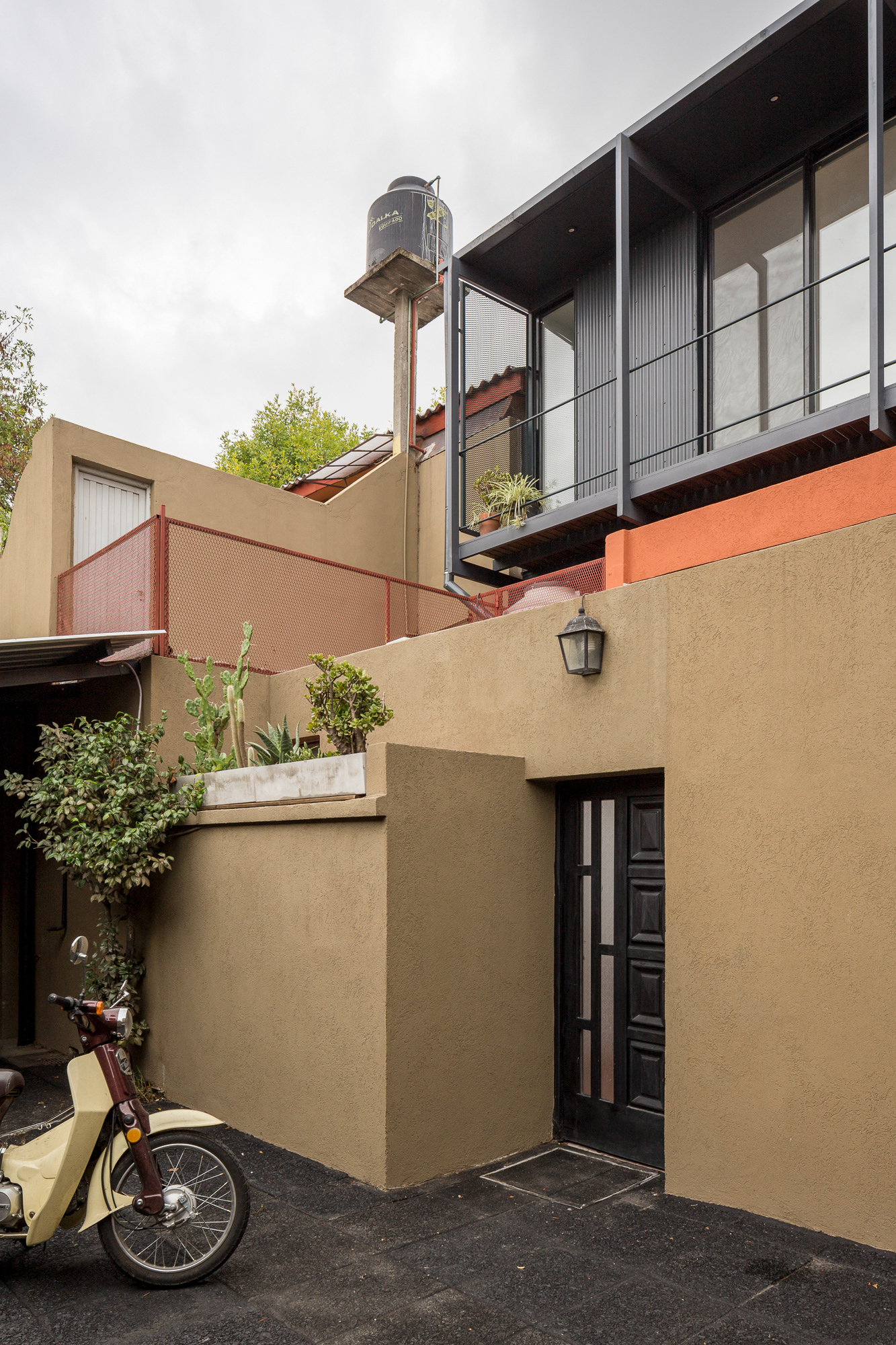
As its name suggests, the project consists of an intervention on an existing PH dwelling, a residential typology characteristic of Buenos Aires and inherited from the early twentieth-century “casa chorizo.” The imminent growth of the family required an increase in the house’s habitable area, while strong ties to the neighborhood, the unit’s potential for vertical densification, and the atypical condition of bordering a parish park—ensuring the long-term low-rise and wooded character of the block—encouraged a strategy focused on transforming the pre-existing structure.
Despite minor alterations over time, the original building preserved key features of the typology: two main rooms with generous ceiling heights organized around a small access and expansion patio, with service areas located along its shorter sides. Given this context, the project proposed vertical growth while preserving as much of the existing construction as possible, both due to its good structural condition and the clients’ need to continue inhabiting the house throughout the construction process.
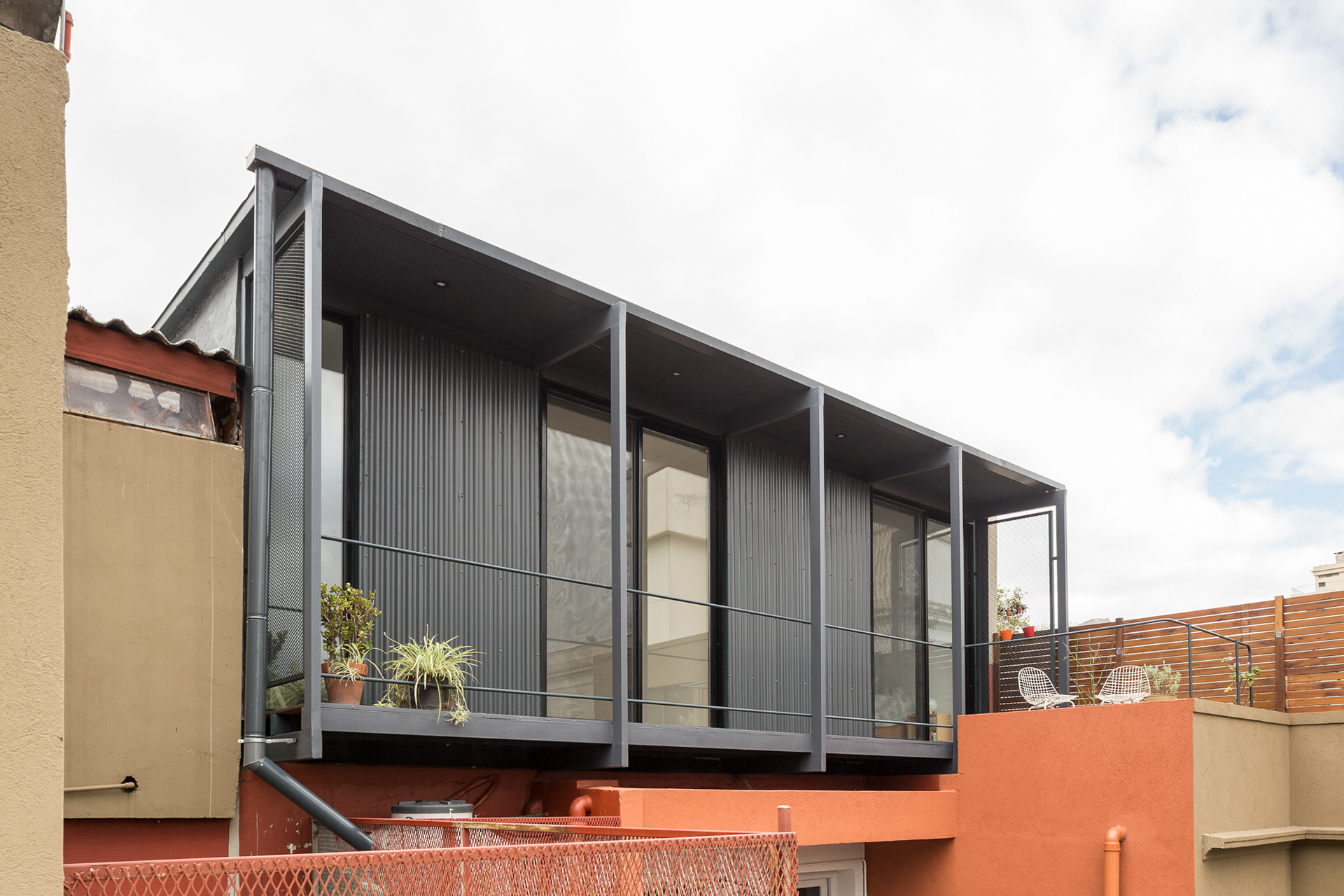
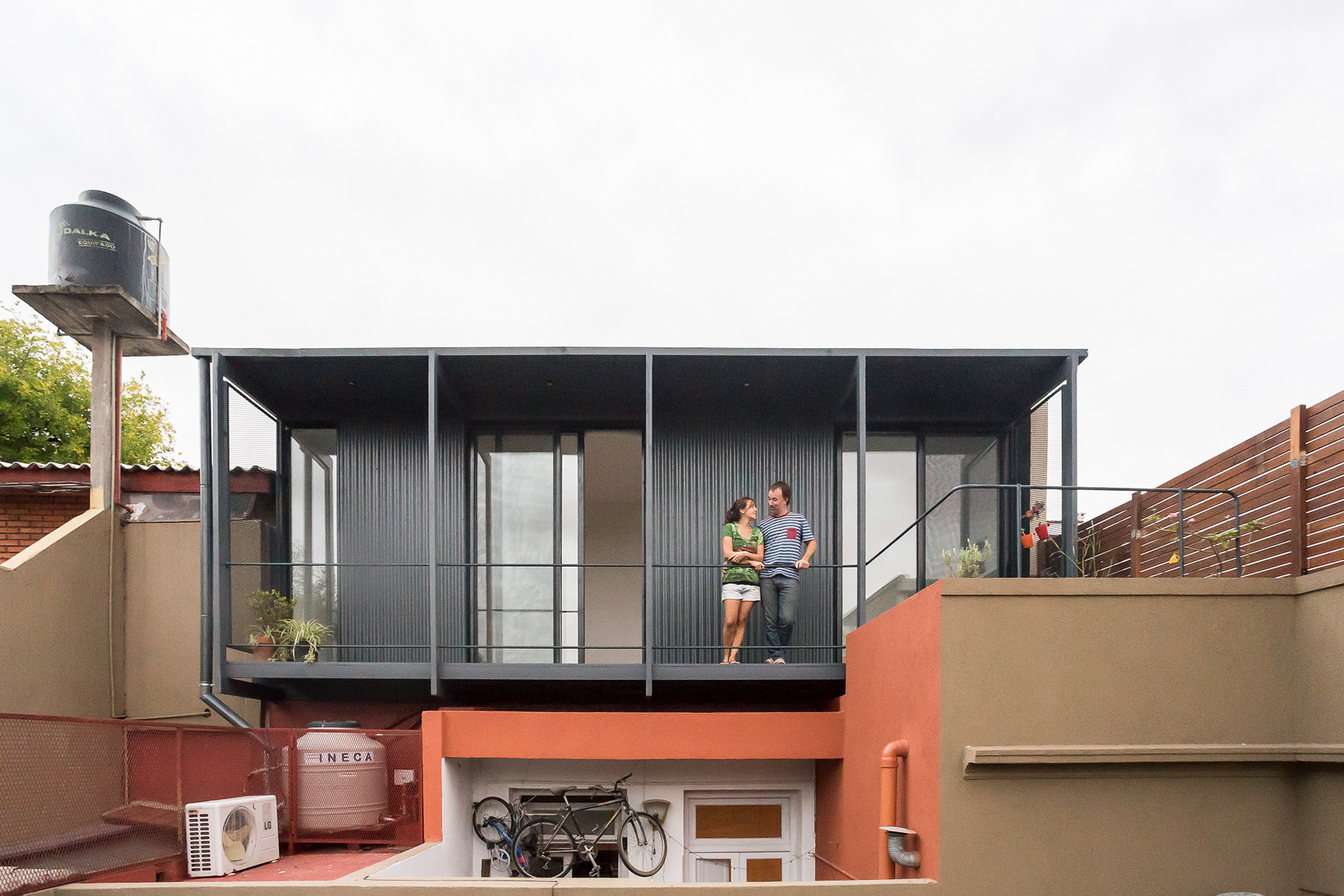
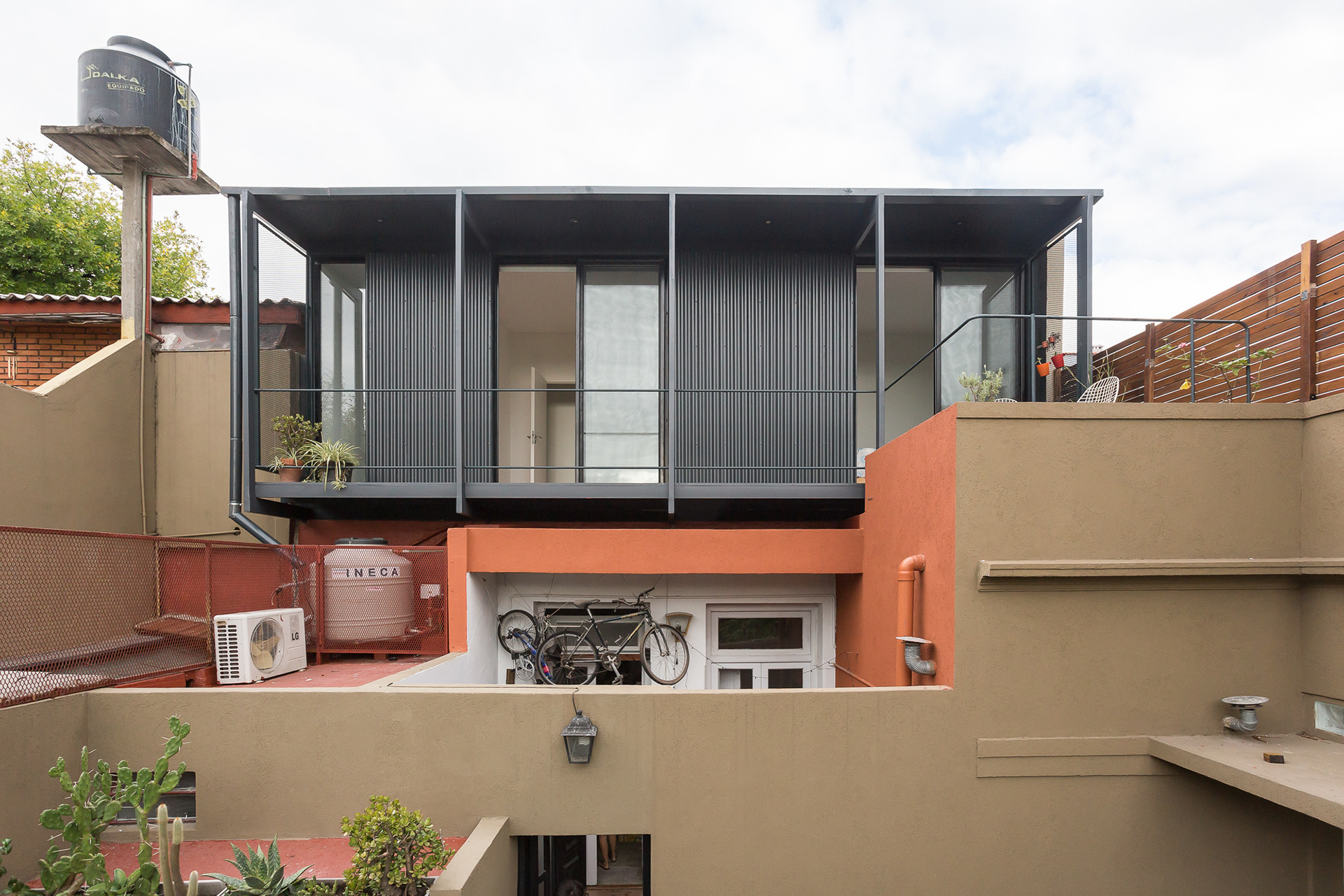
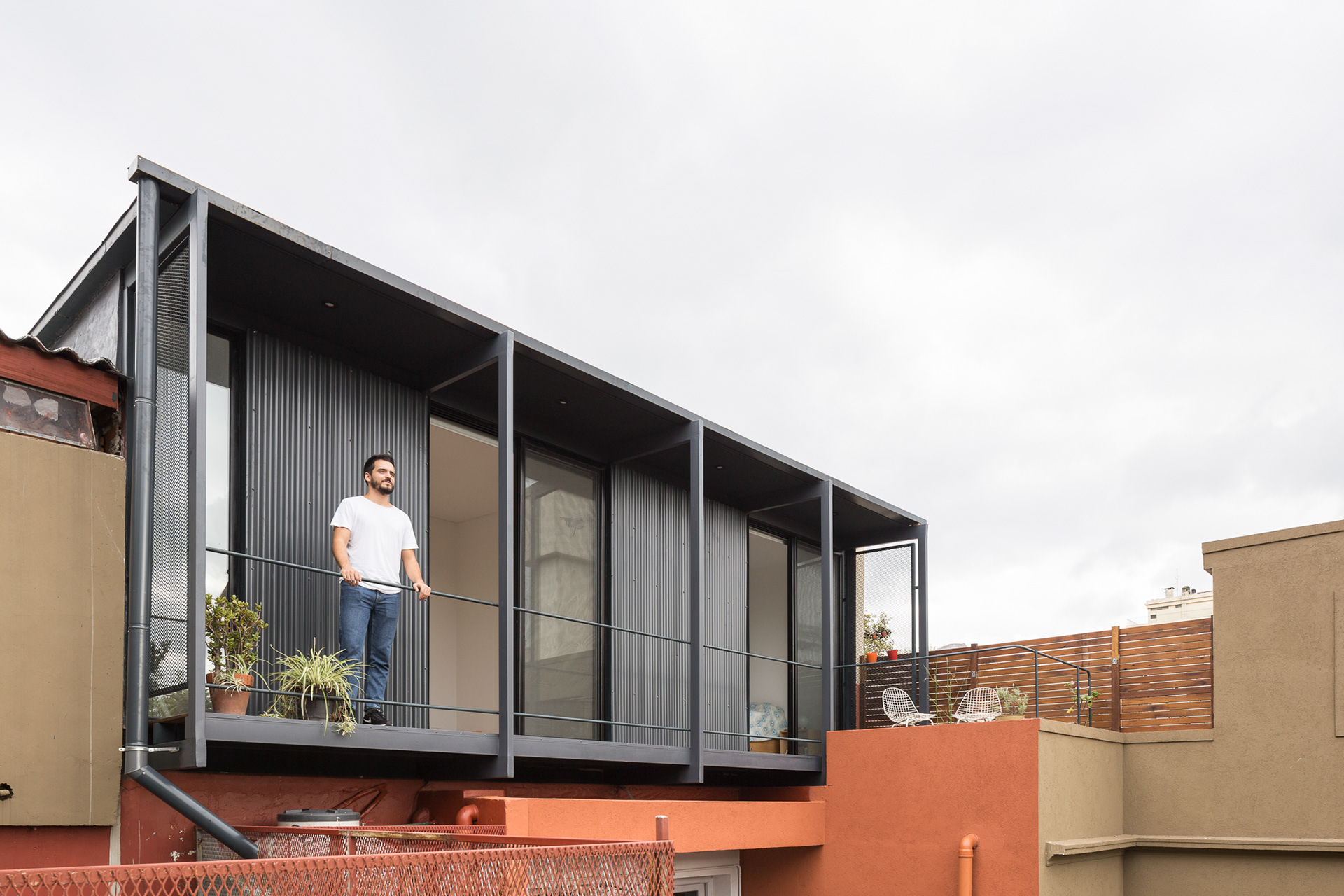
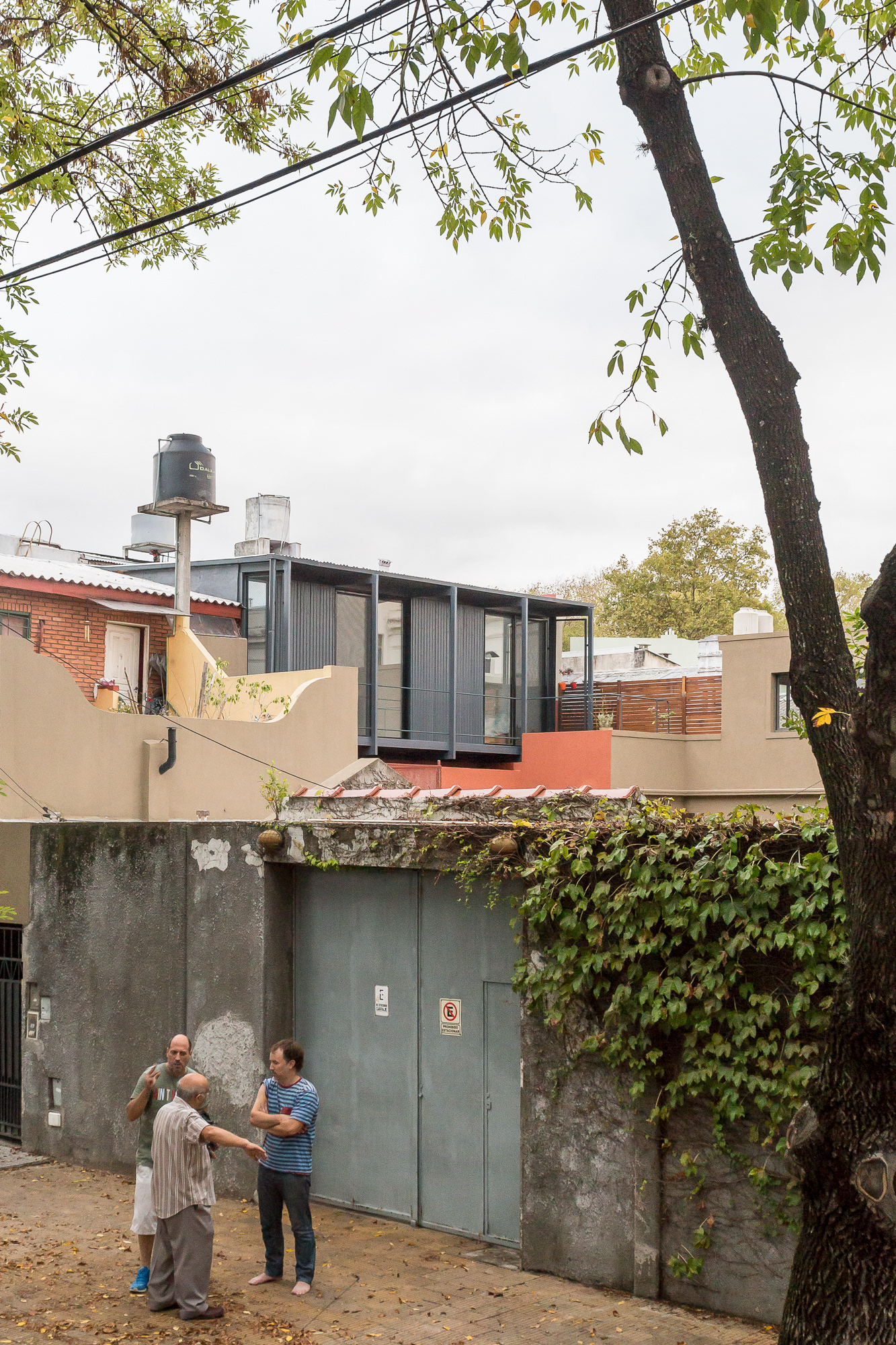
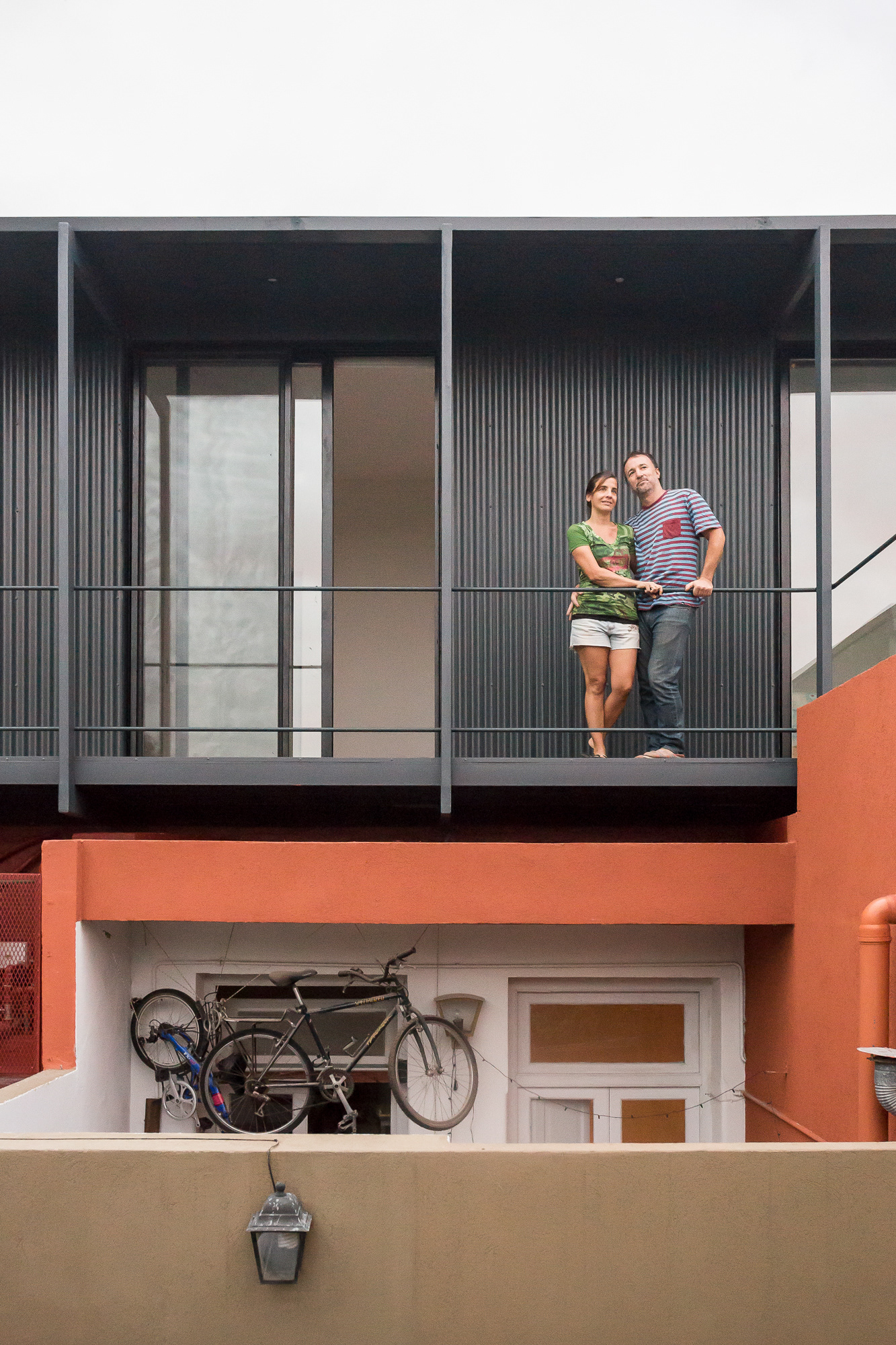
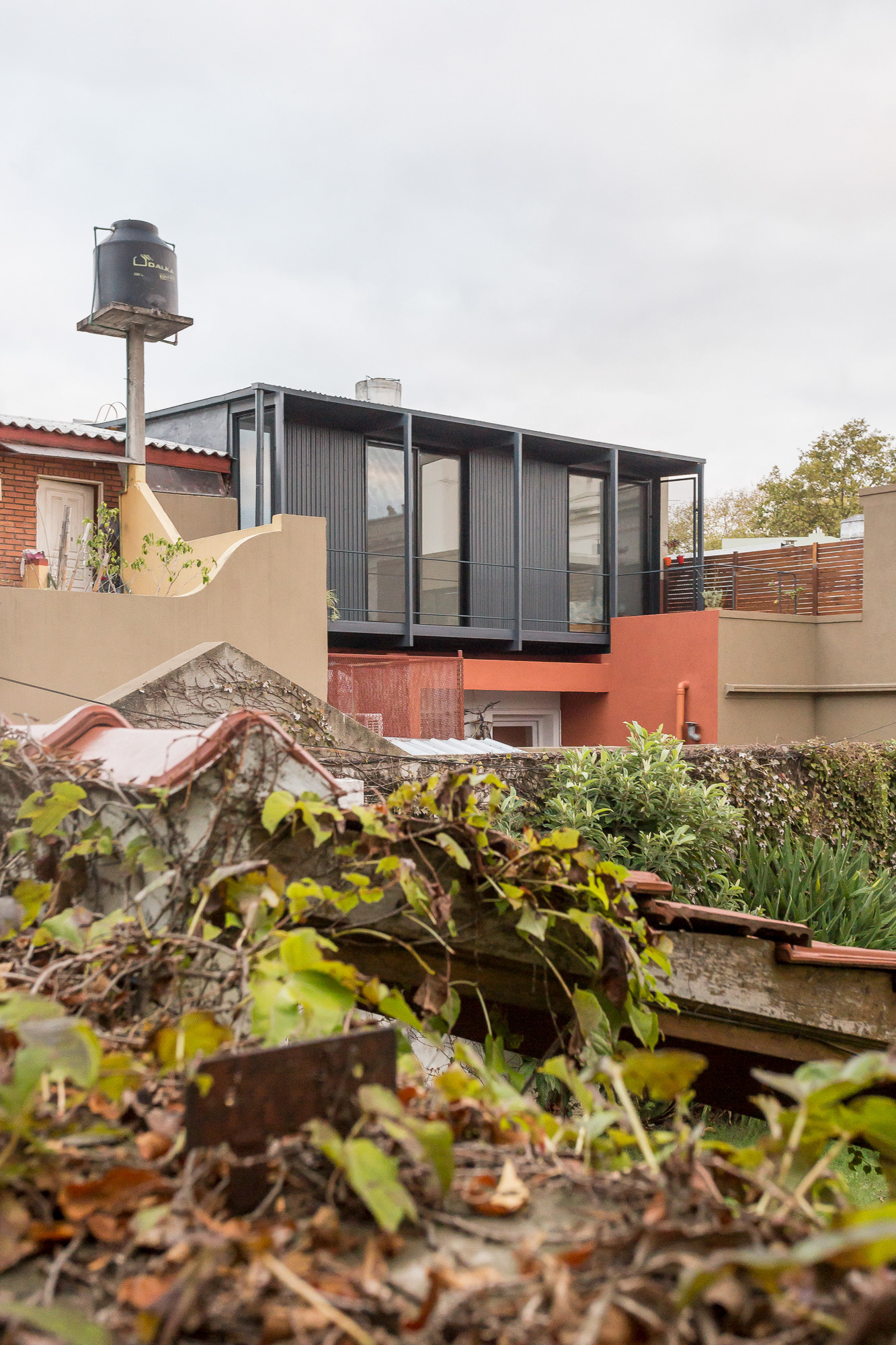
The rooftop above the main rooms—previously inaccessible—was identified as the ideal location for the extension. The intervention materializes as a lightweight new volume, clearly differentiated from the original structure through its architectural language, materiality, and color.
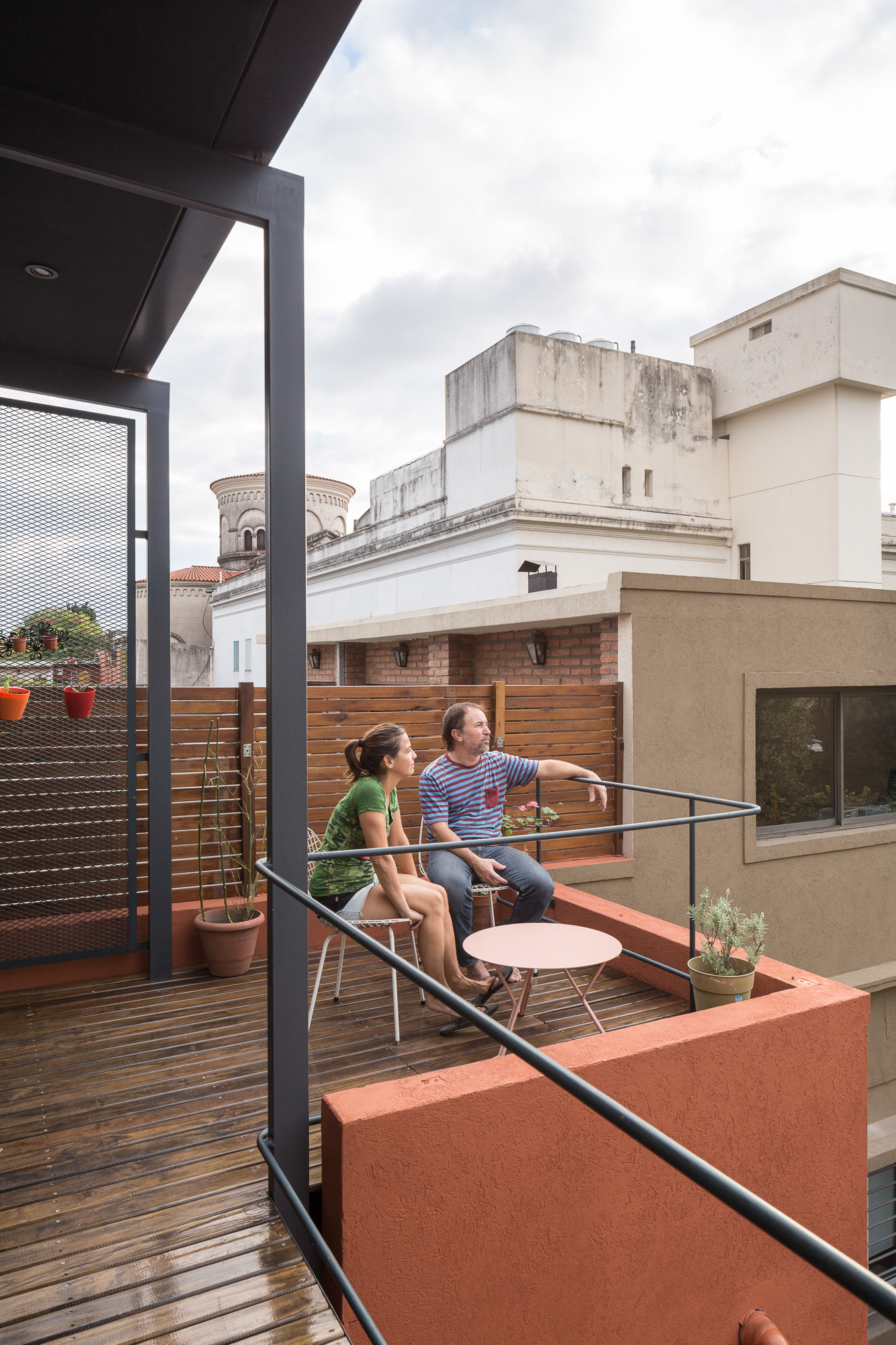
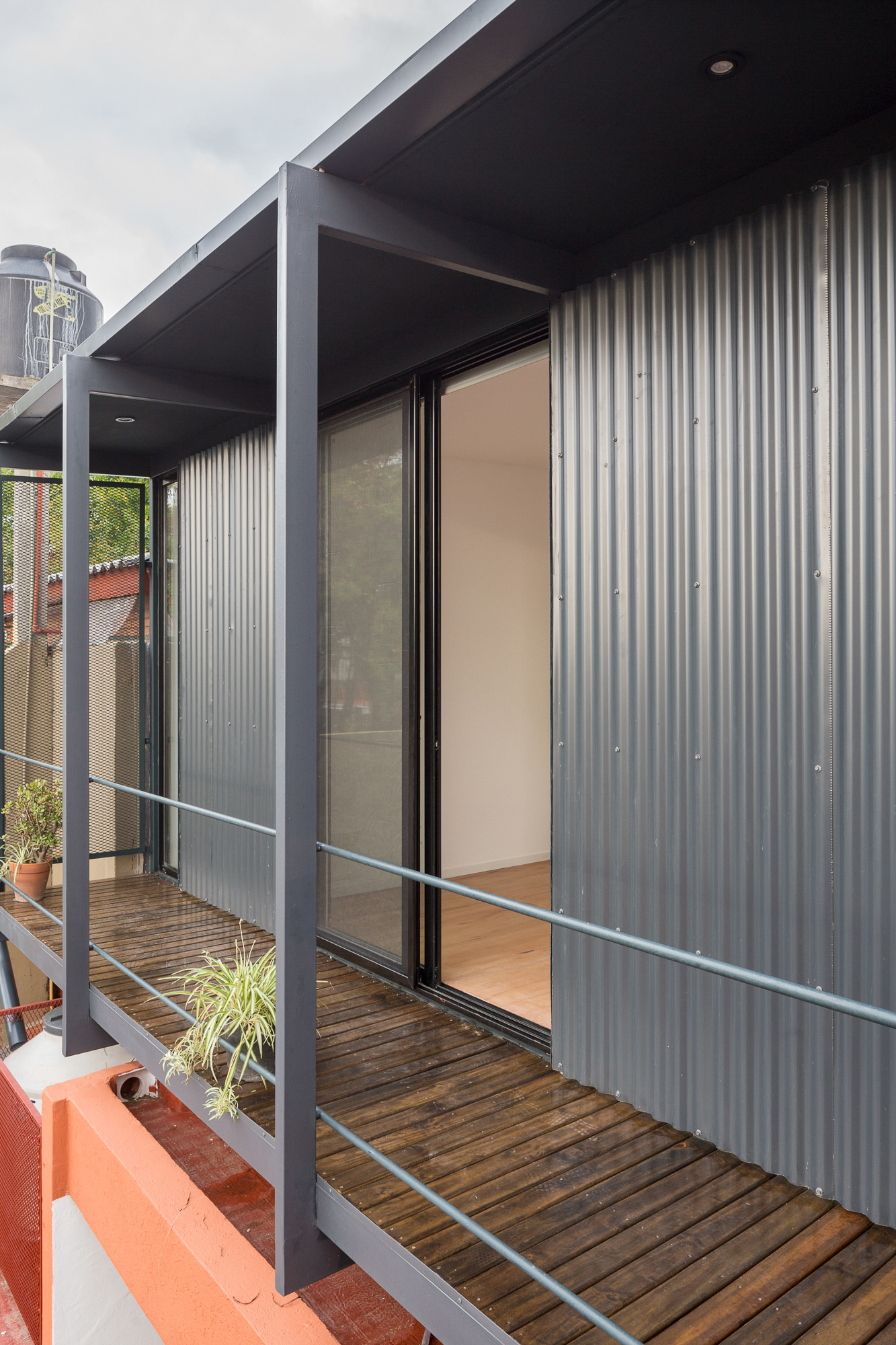
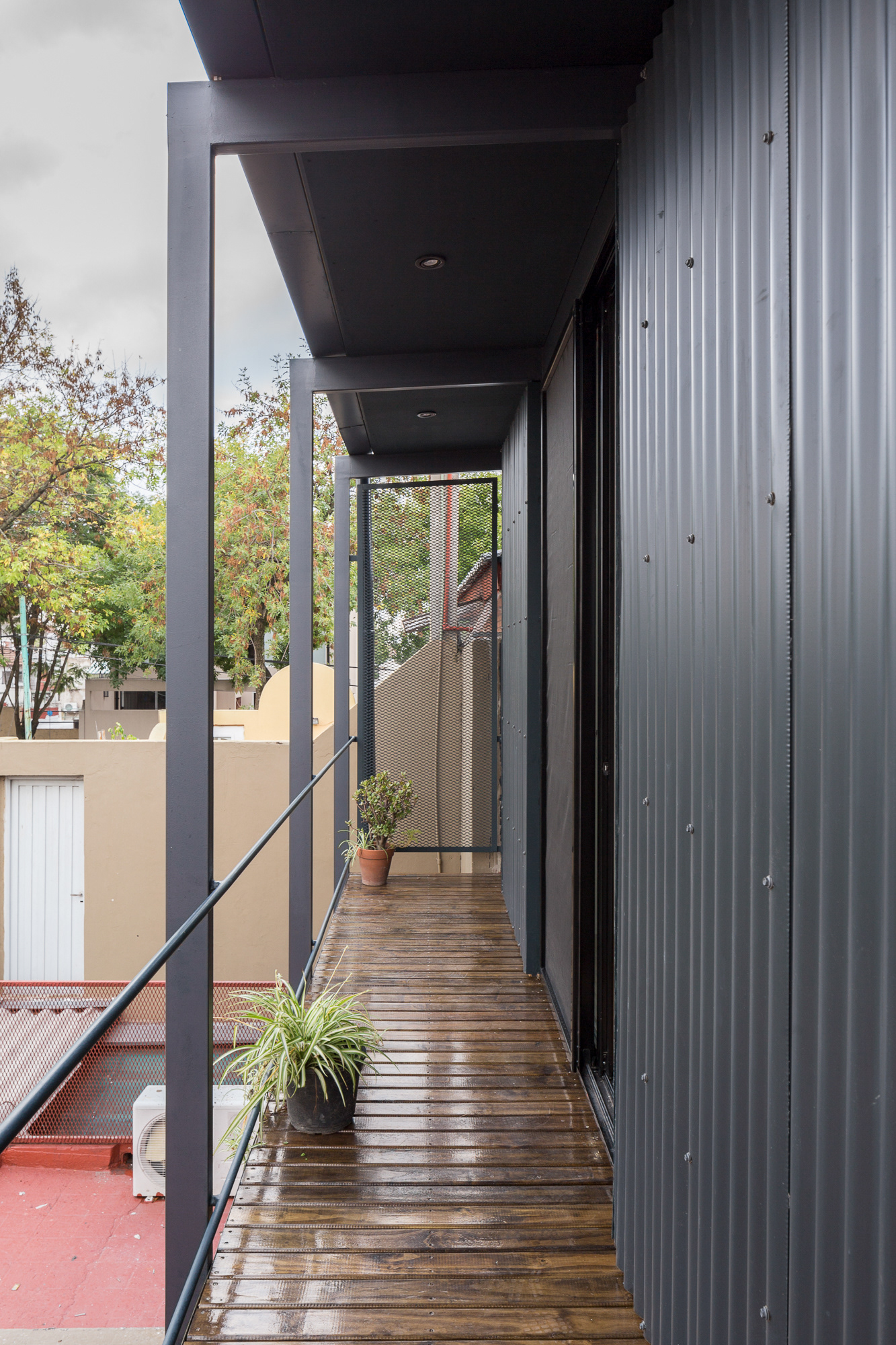
Five structural frames made of metal tubing rest on the existing load-bearing walls, minimizing the impact on the original construction. These frames define both interior and exterior spaces, functioning simultaneously as load-bearing and spatial elements. A gallery of constant depth runs along the new volume, expanding at its southern end over the kitchen and introducing a new programmatic layer that strengthens visual connections with the adjacent grove.
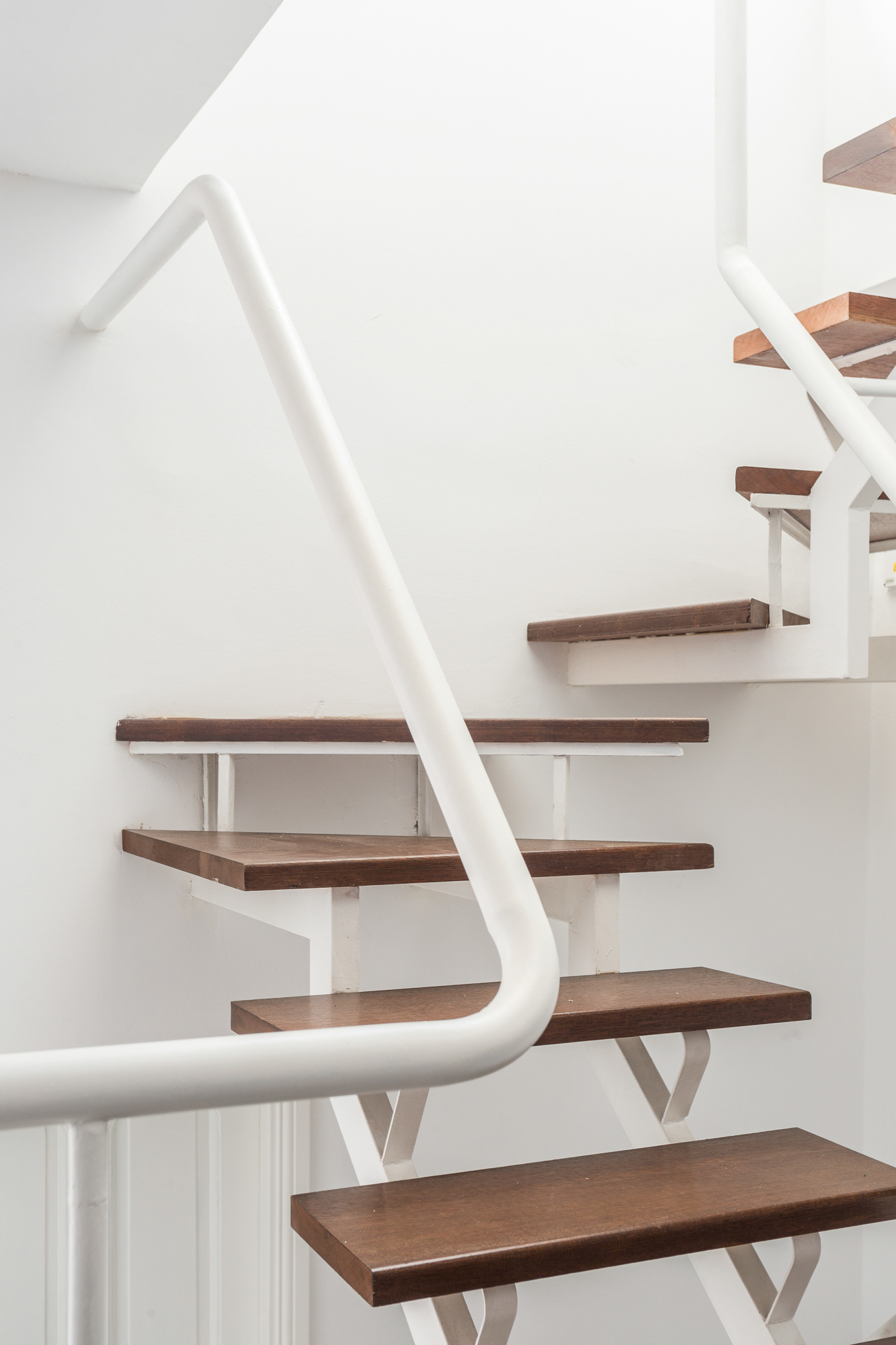
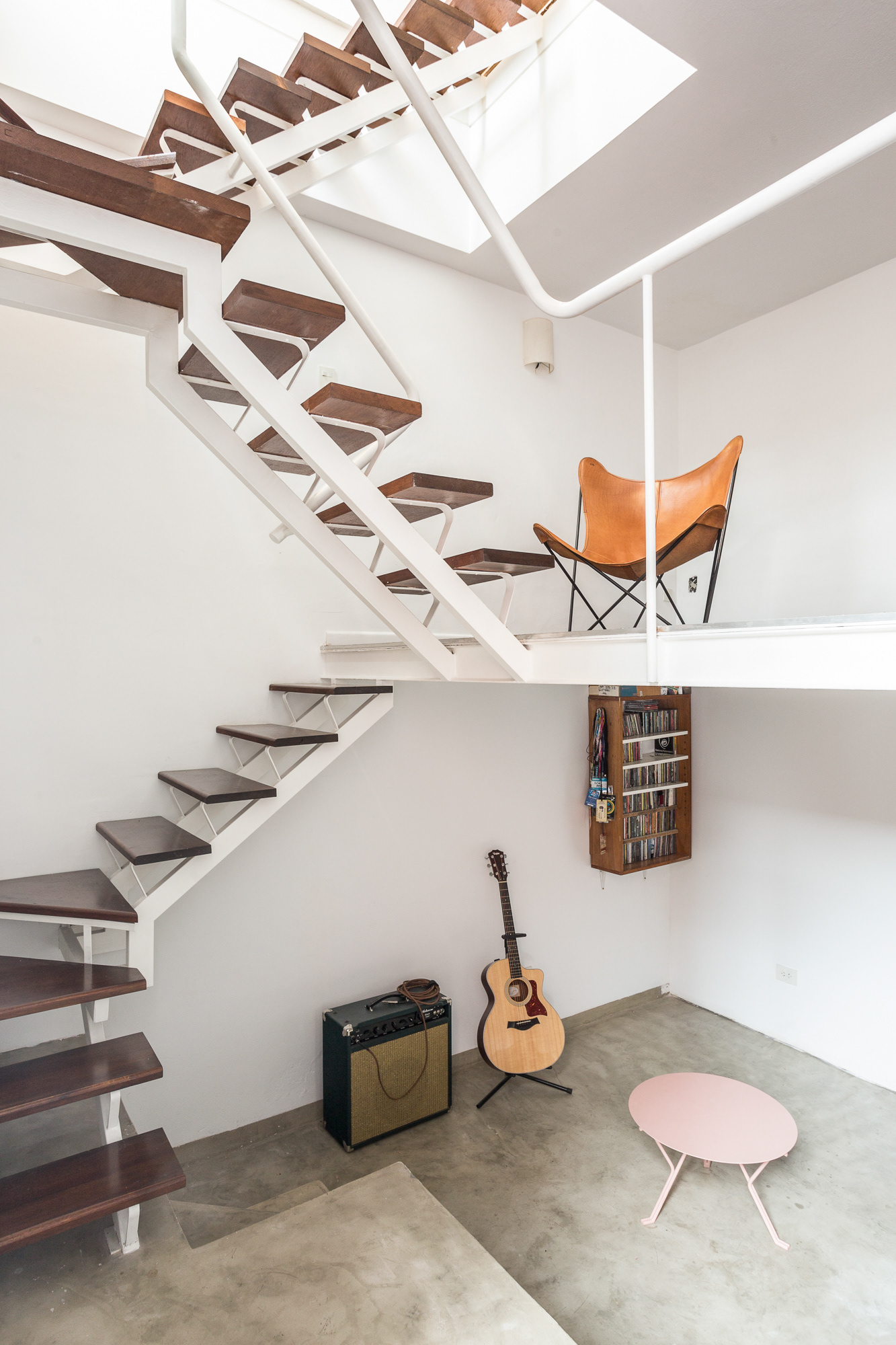
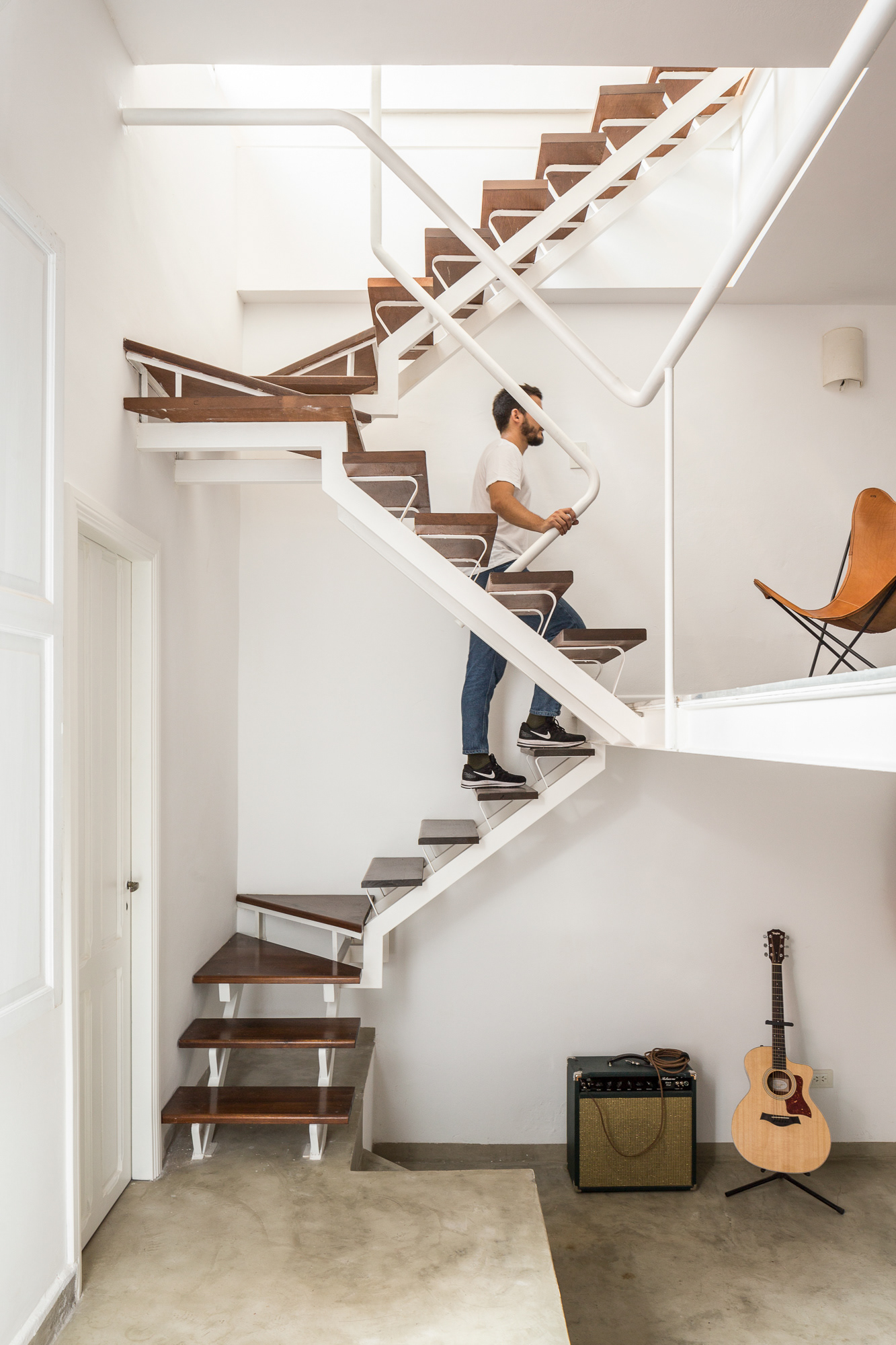
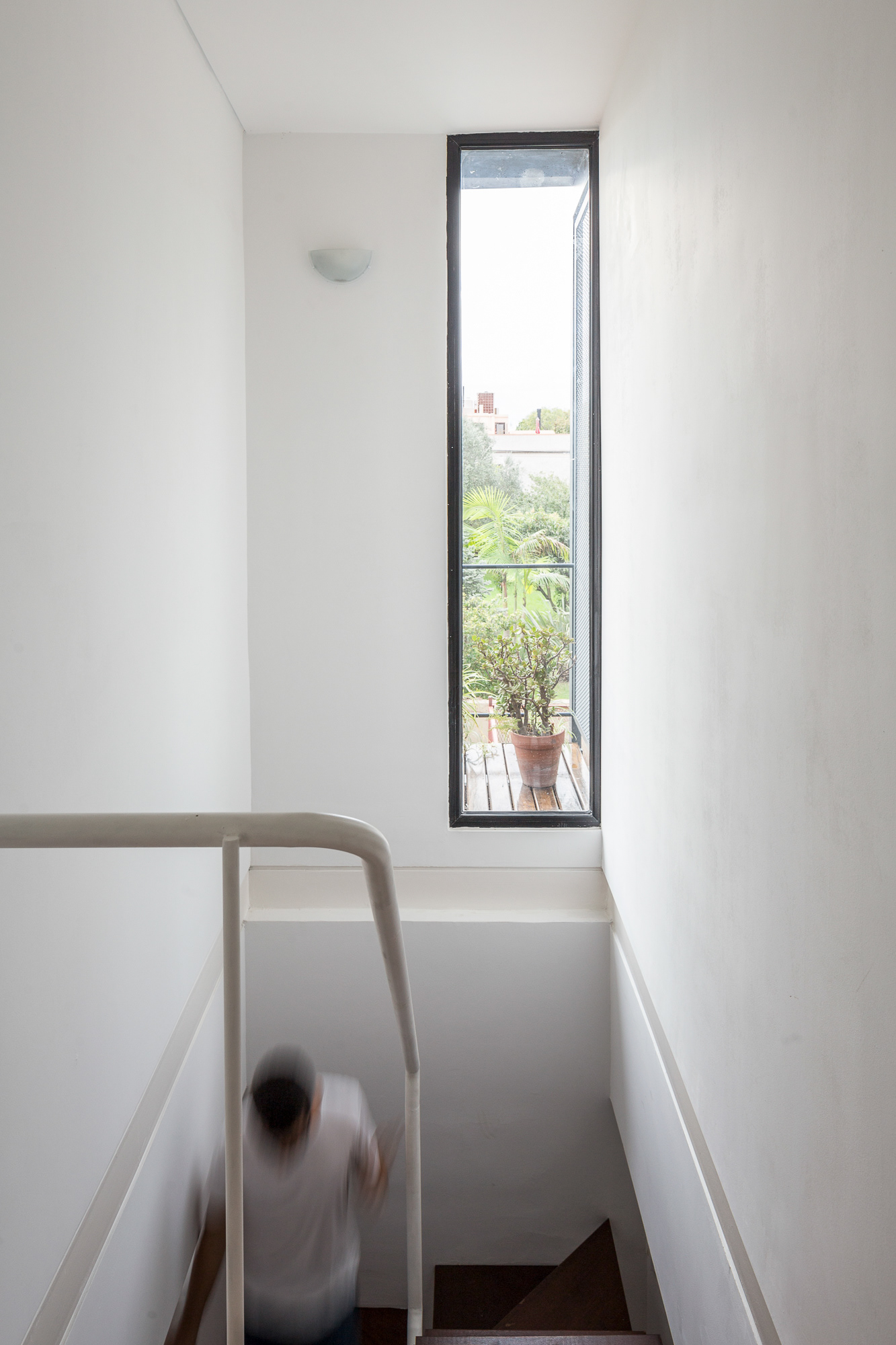
The staircase, conceived as the final element of the intervention, not only resolves the vertical connection between the new and existing areas—both public and private—but also allows natural light to reach the ground floor, redefining the spatial character and everyday use of the original house.
Despite minor alterations over time, the original building preserved key features of the typology: two main rooms with generous ceiling heights organized around a small access and expansion patio, with service areas located along its shorter sides. Given this context, the project proposed vertical growth while preserving as much of the existing construction as possible, both due to its good structural condition and the clients’ need to continue inhabiting the house throughout the construction process.
The rooftop above the main rooms—previously inaccessible—was identified as the ideal location for the extension. The intervention materializes as a lightweight new volume, clearly differentiated from the original structure through its architectural language, materiality, and color.
Five structural frames made of metal tubing rest on the existing load-bearing walls, minimizing the impact on the original construction. These frames define both interior and exterior spaces, functioning simultaneously as load-bearing and spatial elements. A gallery of constant depth runs along the new volume, expanding at its southern end over the kitchen and introducing a new programmatic layer that strengthens visual connections with the adjacent grove.
The staircase, conceived as the final element of the intervention, not only resolves the vertical connection between the new and existing areas—both public and private—but also allows natural light to reach the ground floor, redefining the spatial character and everyday use of the original house.